E11 — Type 2 Diabetes Mellitus: What This ICD-10 Code Means
Reviewed by the LabReadAI medical team
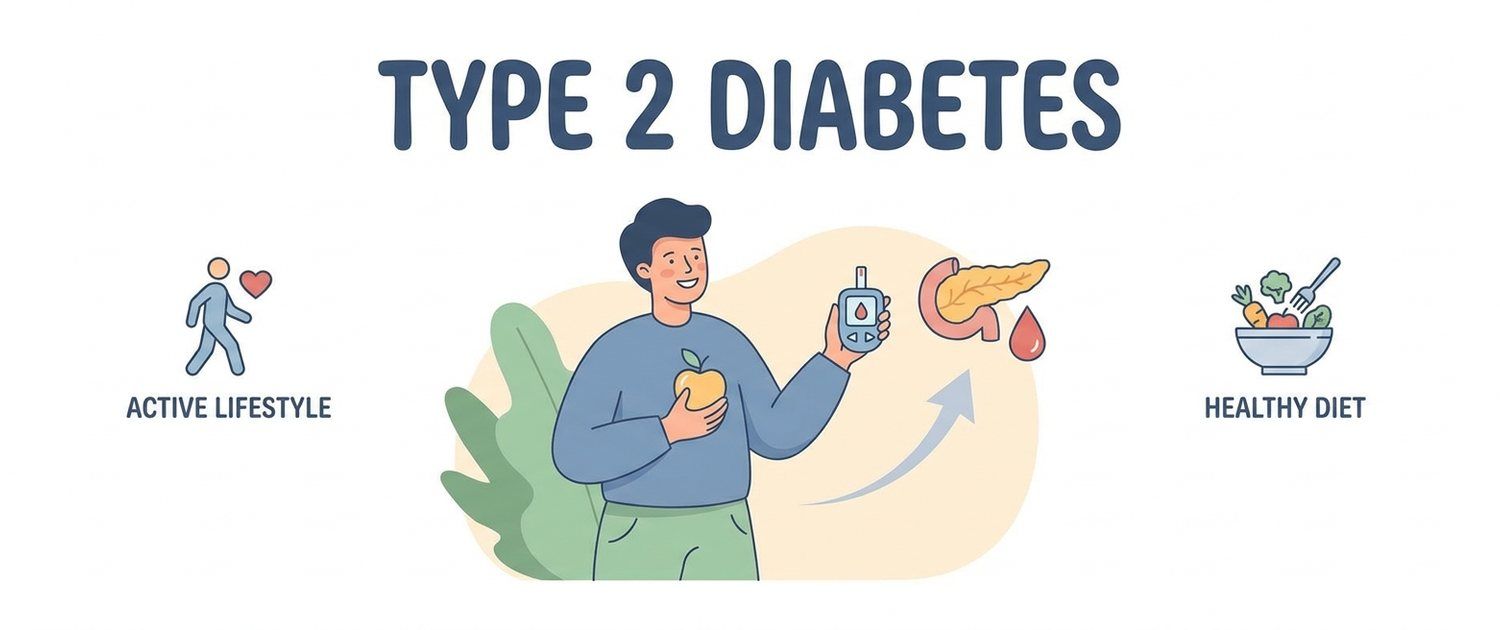
If the «Diagnosis» field of your discharge note, referral or certificate contains E11, there is a real condition behind the code — unlike the administrative Class Z codes that only record a reason for the visit. The wording is straightforward: type 2 diabetes mellitus. Below we take the code apart element by element, look at where it appears, answer honestly how serious it is, and set out what to do next.
The meaning of the E11 ICD-10 code, element by element
The official wording of E11 is «Type 2 diabetes mellitus». Broken down:
- E — the letter of ICD-10 Class IV: «Endocrine, nutritional and metabolic diseases» (E00–E90). This is a class of genuine diseases, not of reasons for contact.
- E10–E14 — the «Diabetes mellitus» block. Codes inside it differ by the type of diabetes, not by severity: autoimmune, insulin-independent, malnutrition-related and so on.
- E11 — the category «Type 2 diabetes mellitus»: the form in which insulin is still produced, but tissues respond to it poorly (insulin resistance), while secretion declines over time.
- The fourth character after the dot encodes complications. For example
E11.9means «without complications»,E11.2with renal complications,E11.3with ophthalmic complications,E11.4with neurological complications,E11.7with multiple complications.
So E11 names the type of diabetes, while the digit after the dot says whether target organs are affected. E11.9 in a document reads as «type 2 diabetes, no complications recorded at the time of issue». A plain-language overview of the condition itself follows further down this page.
Where you may have seen this code
E11 appears both before and after the diagnosis is confirmed — it is a disease code, not a one-off situation code:
| Document | Why E11 is there |
|---|---|
| Test referral | The doctor orders routine monitoring for someone with established diabetes |
| Outpatient visit record | The administrative record of the visit states the main diagnosis |
| Hospital discharge note | The final diagnosis after investigation, with the fourth character for complications |
| Certificate for work, study or sport | A chronic condition affecting clearances and daily routine is stated |
| Insurance claim | The clinic reports the service delivered; the code justifies payment |
| Chronic-care follow-up record | Type 2 diabetes requires regular monitoring, and the code fixes the follow-up group |
One nuance: a code is sometimes entered «on suspicion» when a referral is issued, before laboratory confirmation. If you had no such diagnosis before and the code is already there, ask your doctor whether it is final and which tests it rests on.
Is it dangerous or not — what the code says about your condition
Plainly and without softening: type 2 diabetes is a chronic disease. It does not resolve on its own and requires lifelong control. Left uncontrolled, persistently high glucose damages blood vessels over the years — kidneys, retina, nerves and heart all suffer. These are real risks, and pretending the code means nothing would be dishonest.
The other half of the picture is equally honest. Type 2 diabetes is one of the well-managed chronic conditions today. When values stay in the target range, the risk of complications falls dramatically, and people work, travel and exercise for decades. Many of the complications encoded by the fourth character never develop at all if the condition is brought under control in time.
What the code does not say:
- it does not tell you how high your blood sugar is right now;
- it does not give a prognosis — the numbers and their trend do;
- it does not mean you will necessarily need insulin;
E11without a fourth character carries no information about complications at all.
It is worth separating E11 from prediabetes: with borderline values a diagnosis of diabetes is not made, the situation is coded differently (R73.0), and at that stage the changes are still reversible. What counts as borderline is explained in the guide to prediabetes.
Neighbouring codes and how they differ
Codes in the diabetes block differ by mechanism, not by severity. Confusing them is a common source of anxiety, so here they are side by side:
| Code | Meaning | Key difference |
|---|---|---|
| E10 | Type 1 diabetes mellitus | Autoimmune destruction of pancreatic cells; insulin is required from the outset, onset is usually younger |
| E11 | Type 2 diabetes mellitus | Insulin resistance; insulin is produced but works poorly; linked to body weight and lifestyle |
| E13 | Other specified diabetes mellitus | Rare forms: genetic, post-pancreatic surgery, drug-induced |
| E14 | Unspecified diabetes mellitus | The type is undetermined or not stated — a placeholder code pending clarification |
| R73.0 | Abnormal glucose tolerance test | Not diabetes: borderline values, i.e. prediabetes; Class R covers symptoms and abnormal findings |
Note R73.0: the letter R belongs to Class XVIII, «Symptoms, signs and abnormal clinical and laboratory findings». It records an abnormal result, not a disease. If your document says R73.0, you have not been diagnosed with diabetes.
Another code that often sits next to E11 in the same note is E66, obesity — excess weight and insulin resistance are closely linked. Just as often you will see I10, essential hypertension, because raised blood pressure and type 2 diabetes amplify each other's vascular risk.
Which tests are usually ordered with this code
The diagnosis is made and monitored through laboratory numbers, so E11 is almost always followed by a set of tests. A doctor typically relies on:
- Fasting plasma glucose — the baseline value the conversation starts from.
- Glycated haemoglobin (HbA1c) — average blood sugar over the past two to three months; the key control marker, because it does not depend on what you ate yesterday. What its values show is covered in the HbA1c test overview, and reading glycated haemoglobin values is explained separately.
- Lipid profile — cholesterol and its fractions, since vascular risk in diabetes is assessed jointly.
- Creatinine with eGFR and urine albumin — kidney status, exactly what the fourth character
E11.2encodes. - Dilated eye examination — early detection of retinal changes.
- Foot examination with sensation testing — monitoring for neurological complications.
The composition and frequency of this panel are decided by the treating physician and depend on how long you have had the condition, your current values and coexisting problems. This page gives no treatment regimens, medicines or doses — those decisions belong to your doctor.
What to do next
A practical sequence once you see E11 in your documents:
- Confirm whether the diagnosis is final. Ask which tests the code rests on and whether there is a fourth character indicating complications.
- Gather your current numbers. Fasting glucose and HbA1c from recent months are the minimum basis for a conversation; how the main control marker is read is explained in the guide to glycated haemoglobin.
- Complete the ordered work-up in full. Kidneys, eyes, lipids, feet — these checks exist to catch changes before they become noticeable.
- Understand the condition itself. Knowing the mechanism makes recommendations easier to follow deliberately rather than by inertia: start with type 2 diabetes explained.
- Agree on your personal targets with your doctor. The target HbA1c is not the same for everyone; it depends on age, disease duration and coexisting conditions.
- Set a follow-up schedule. Type 2 diabetes is a condition of regular monitoring, and a skipped year costs more than it appears to.
The short version
E11 is the ICD-10 code for type 2 diabetes mellitus, and the digit after the dot describes the presence or absence of complications. It is a genuine chronic disease requiring lifelong control — and at the same time one of the best-managed ones: with values held in the target range, the risk of complications drops sharply. Meaning lies not in the code but in your numbers over time, and in the doctor who reads them.
For informational purposes only
This article is for informational purposes only and does not constitute medical advice, diagnosis, or treatment. Please consult a healthcare professional for medical guidance.