Glycated Hemoglobin: What HbA1c Shows and How to Lower It
Reviewed by the LabReadAI medical team
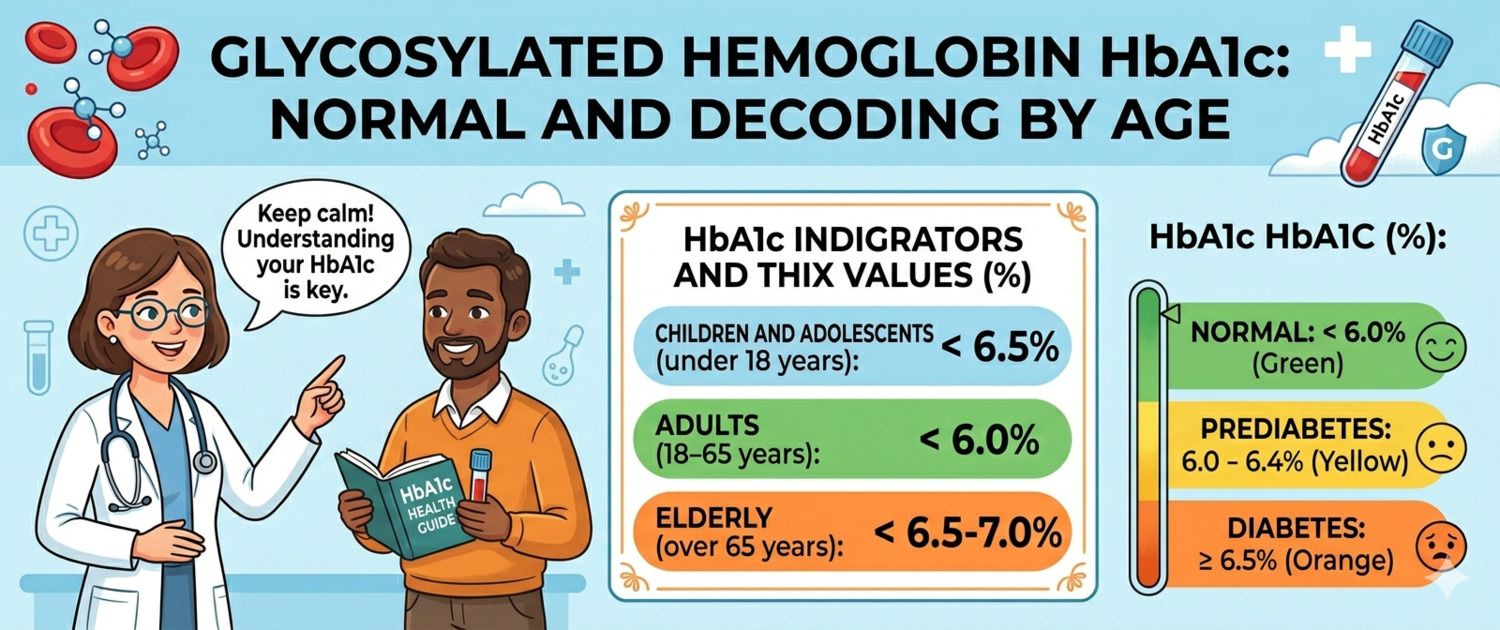
One blood test tells you how your body managed blood glucose for the past three months — not on the morning of the test, not after breakfast, but on average over the whole quarter. That is what makes HbA1c irreplaceable: a single fasting glucose is influenced by sleep, stress and the last meal. HbA1c is not.
What Is Glycated Haemoglobin and What Does It Show?
Glycated haemoglobin (HbA1c) is the fraction of haemoglobin molecules that have had glucose permanently attached. The process — glycation — occurs in proportion to blood glucose exposure: the higher the average blood sugar, the more haemoglobin is glycated.
Red blood cells live 90–120 days. Over that period they progressively accumulate glycated haemoglobin proportional to glucose exposure. The HbA1c test measures this accumulated fraction — in effect, the average blood glucose concentration over the preceding three months, expressed as a percentage.
This is why HbA1c is called "glucose memory": it cannot be fooled. A single fasting glucose can easily be normalised with careful eating in the days before the test. HbA1c cannot.
HbA1c Normal Ranges
| Value | Interpretation |
|---|---|
| < 5.7% | Normal (no diabetes) |
| 5.7–6.4% | Prediabetes / impaired glycaemia |
| ≥ 6.5% | Diabetes (when confirmed on a second occasion) |
However, "normal below 5.7%" is a clinical cut-off, not a longevity optimum. Prospective studies (EPIC-Norfolk, NHANES, Whitehall II) show all-cause mortality is lowest at HbA1c 4.8–5.4%. Risk starts rising above 5.5%, still within the "normal" range.
In adults over 65 with multiple comorbidities, targets are more relaxed: aggressive lowering below 5.5% increases hypoglycaemia risk — the target here is 7–7.5%.
Why HbA1c Matters More Than a Single Glucose Reading
A fasting glucose is a snapshot of one moment. HbA1c is a documentary over a quarter.
In early insulin resistance, fasting glucose can remain normal for three to five years while the pancreas compensates. During this time HbA1c slowly climbs — from 5.3% to 5.6–5.7% — flagging metabolic deterioration that a single glucose test misses.
HbA1c also captures postprandial glucose spikes — the surges after meals that are particularly damaging to blood vessels. Post-meal hyperglycaemia contributes most to endothelial damage at HbA1c values of 5.5–6.0%.
What Raises HbA1c Besides Blood Sugar?
Several conditions affect HbA1c independently of glycaemia:
Iron deficiency anaemia — red blood cells live longer than normal → more time to accumulate glycated haemoglobin → HbA1c is falsely elevated. Check ferritin before interpreting a borderline result.
Haemolytic anaemia — red blood cells are destroyed faster → less glycation time → HbA1c is falsely low.
Haemoglobinopathies (sickle cell disease, thalassaemia) — abnormal haemoglobin variants produce unreliable results on most analysers.
Advanced chronic kidney disease (CKD 4–5) — shortened red cell survival lowers HbA1c below the true glycaemic level.
Optimal HbA1c for Slowing Ageing
In longevity medicine, HbA1c is a core metabolic ageing marker. Chronically elevated blood glucose accelerates the formation of advanced glycation end-products (AGEs) — molecules that cross-link collagen and elastin (stiffening vessels), damage mitochondria and amplify inflammation.
The Whitehall II study (11,000 participants, 18 years of follow-up) showed that cognitive function at age 70 was 20% better in people with HbA1c 5.0–5.4% than in those with 5.7–6.4%, even without a diabetes diagnosis.
Together with C-reactive protein, homocysteine and fasting insulin, HbA1c forms the metabolic cluster of biological age assessment. For a full overview of these markers, see biological age by blood tests.
How to Lower HbA1c in One Quarter
A realistic reduction in 12 weeks is 0.5–1.5% with a structured approach:
Reducing refined carbohydrates — white bread, sugary drinks, processed rice create high postprandial spikes. Replacing them with whole grains, legumes and non-starchy vegetables lowers HbA1c by 0.5–0.7% on average.
Walking after meals — a 15-minute walk after each meal reduces the postprandial glucose peak by 12–22%. Muscle cells take up glucose without insulin during physical activity.
Weight loss — a 5–7% reduction in body weight lowers HbA1c by 0.5–1.0% in people with prediabetes.
Sleep — chronic sleep deprivation (< 6 hours) raises cortisol and reduces insulin sensitivity, adding 0.3–0.5% to HbA1c.
Berberine — a plant alkaloid that lowers HbA1c by 0.9–1.2% in randomised trials, comparable to metformin.
Recheck after exactly three months. For a full annual health monitoring system, see how to live long and healthy.
Who Should Test HbA1c and How Often?
All adults 35+ — at least once a year as part of a metabolic check-up. At HbA1c 5.5–6.4% — recheck after three months of lifestyle change. With type 2 diabetes — every three months. The test requires no fasting — glycation is not affected by the last meal. Do not test during acute illness or immediately after a blood transfusion.
For informational purposes only
This article is for informational purposes only and does not constitute medical advice, diagnosis, or treatment. Please consult a healthcare professional for medical guidance.