Fasting Insulin: Normal Levels, HOMA-IR and Insulin Resistance
Reviewed by the LabReadAI medical team
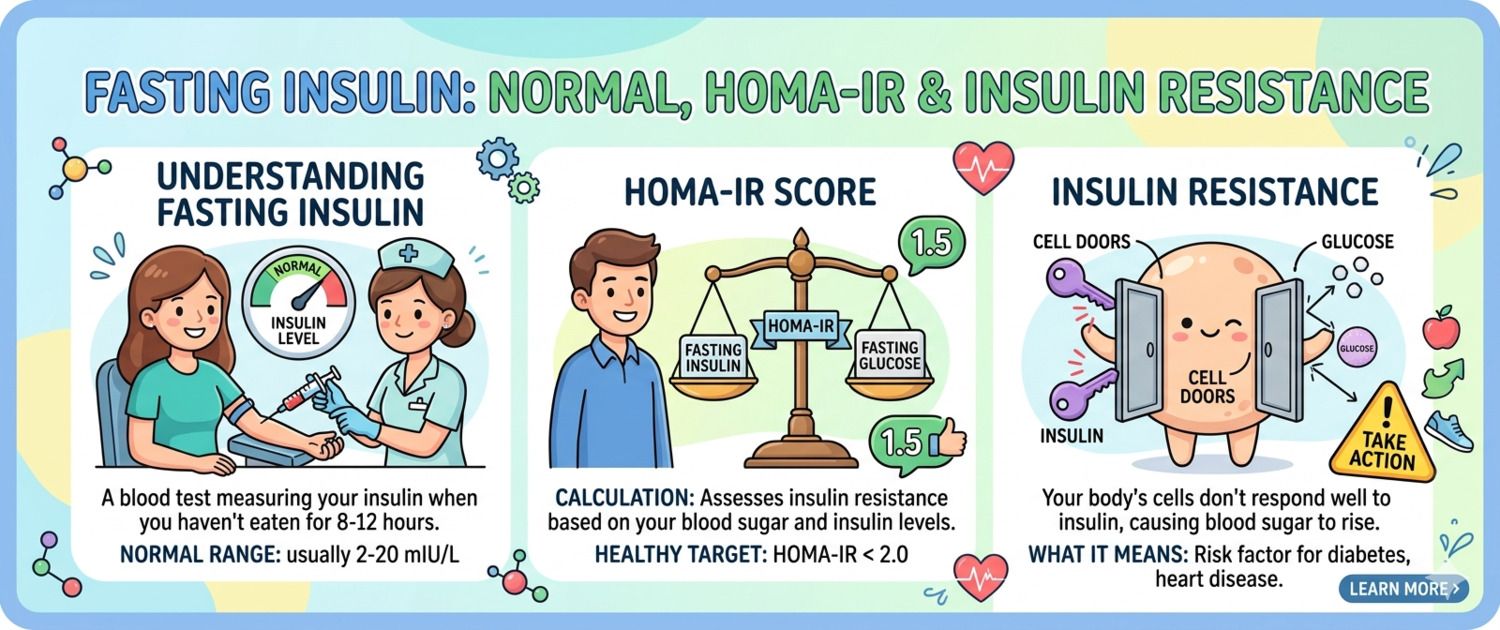
Fasting glucose is normal — yet metabolic health has already deteriorated. This is the early phase of insulin resistance: the pancreas compensates by producing ever-higher amounts of insulin, keeping blood sugar "within range" at the cost of chronic hyperinsulinaemia. By the time fasting glucose rises, elevated insulin may have been present for years.
Fasting insulin directly measures this compensation — years before glucose, HbA1c or clinical symptoms change. For assessing metabolic health and biological ageing, it is more informative than a standard fasting blood sugar test.
Why Fasting Insulin Matters More Than Fasting Glucose
Fasting glucose rises above 5.6 mmol/L (the prediabetes threshold) only after insulin resistance has progressed significantly. By this stage, pancreatic β-cells have often already lost 50–60% of their functional capacity.
Fasting insulin detects the problem earlier. When tissues become resistant, the pancreas must secrete increasing amounts of insulin to maintain normal blood sugar. Elevated fasting insulin and HbA1c together answer the question: how hard is the pancreas working to keep glucose normal?
The IRAS study (Insulin Resistance Atherosclerosis Study, 1,600 participants) showed that fasting insulin predicted insulin resistance 7–10 years ahead of fasting glucose and HbA1c.
Fasting Insulin Normal Ranges: Lab vs Longevity Optimal
Standard lab reference ranges list the upper limit as 25 µU/mL. This is a population average that reflects a society with widespread overweight — not the target for optimal metabolic health.
For biological age assessment and longevity, the following thresholds are used:
| Fasting Insulin | Interpretation |
|---|---|
| 3–8 µU/mL | Metabolic health optimum |
| 8–12 µU/mL | Borderline; monitor closely |
| 12–20 µU/mL | Moderate insulin resistance |
| > 20 µU/mL | Marked insulin resistance |
Preparation: strict 8–12 hour fast (water is allowed), no exercise the day before, no stress. Any deviation produces falsely elevated results.
HOMA-IR: Formula, Interpretation and Thresholds
HOMA-IR (Homeostatic Model Assessment of Insulin Resistance) combines fasting insulin and glucose into a single insulin resistance index:
HOMA-IR = (Insulin µU/mL × Glucose mmol/L) / 22.5
HOMA-IR interpretation:
- < 1.5 — longevity optimum
- 1.5–2.5 — normal, worth monitoring
- 2.5–5.0 — moderate insulin resistance
5.0 — marked insulin resistance
Most labs list the upper normal as 2.7 — a population norm. For preventive medicine, the target is < 2.0; for optimal metabolic health, < 1.5. HOMA-IR is not valid in type 1 diabetes, pancreatic disease, or when taking exogenous insulin.
Insulin Resistance: Mechanism and Health Consequences
Insulin resistance means cells — primarily muscle and fat — have reduced sensitivity to insulin's signal. The cycle: high insulin → receptor downregulation → cells need even more insulin → the spiral continues.
Consequences span every system:
- Cardiovascular: C-reactive protein rises, triglycerides increase, extended lipid panel worsens
- Oncological: chronic hyperinsulinaemia is a mitogenic signal promoting cell proliferation
- Neurological: brain insulin resistance is a mechanism in Alzheimer's disease (called "type 3 diabetes")
- Accelerated ageing: biological ageing through inflammaging, oxidative stress and protein glycation
IDF data: 40% of normal-weight individuals have metabolically hidden insulin resistance — no obesity, no hyperglycaemia, yet the metabolic machinery is already impaired.
What Raises Fasting Insulin: Seven Main Drivers
Excess refined carbohydrate: rapid carbohydrates cause sharp insulin spikes; chronic consumption raises baseline fasting insulin over weeks and months.
Visceral fat: secretes free fatty acids that disrupt insulin signalling in the liver and muscle independently of total body weight.
Sleep deficit: one night of 4-hour sleep reduces insulin sensitivity by 25%; chronic sleep deprivation is a consistent driver of insulin resistance.
Physical inactivity: muscles are the primary glucose consumer; without training they lose insulin sensitivity within 2–3 weeks.
Chronic stress: cortisol raises hepatic glucose output while simultaneously reducing tissue glucose uptake.
Magnesium and iron imbalance: ferritin and magnesium are frequently disrupted together in metabolic syndrome; magnesium deficiency impairs insulin receptor signalling directly.
Excess fructose: fructose from added sugar (not whole fruit) drives hepatic lipogenesis and worsens insulin resistance independently of total calorie intake.
How to Lower Fasting Insulin in 12 Weeks
16:8 intermittent fasting: restricting eating to an 8-hour window lowers basal insulin by 25–30% in 8 weeks without changing total calorie intake.
Resistance training: three 40–50 minute sessions per week is the most powerful tool for restoring muscle insulin sensitivity. Measurable improvements appear within 2–3 weeks.
Reducing refined carbohydrates: eliminating ultra-processed foods, sugary drinks and white bread reduces postprandial insulin spikes and normalises fasting insulin within 12 weeks.
Berberine 500 mg 2–3× daily: meta-analysis of 37 RCTs: 18% reduction in fasting insulin, 28% reduction in HOMA-IR over 3 months. Mechanism: AMPK activation, comparable to metformin.
Sleep normalisation: 7–9 hours with a consistent wake time restores insulin sensitivity to pre-deprivation levels within 3–4 weeks.
Stress reduction: chronic cortisol is a direct insulin antagonist. Managing chronic stress lowers fasting insulin through cortisol normalisation.
Who Should Test and How Often
Primary screening: all adults 35+ without prior testing. Priority cases: overweight, hypertension, elevated triglycerides, polycystic ovary syndrome, family history of type 2 diabetes.
Panel: fasting insulin + fasting glucose (for HOMA-IR calculation). Adding HbA1c creates a complete baseline metabolic panel.
Frequency: with optimal values (insulin < 8, HOMA-IR < 1.5) — once yearly as part of the annual blood test checklist. With borderline values — every 3 months until normalised.
Units note: insulin is reported in µU/mL or pmol/L depending on the lab. Conversion: 1 µU/mL = 6 pmol/L. Verify units before comparing results between labs.
The complete metabolic monitoring system is described in how to live longer: the evidence base.
For informational purposes only
This article is for informational purposes only and does not constitute medical advice, diagnosis, or treatment. Please consult a healthcare professional for medical guidance.