Allergy Testing: How It Is Done, Prep and Results Guide
Reviewed by the LabReadAI medical team
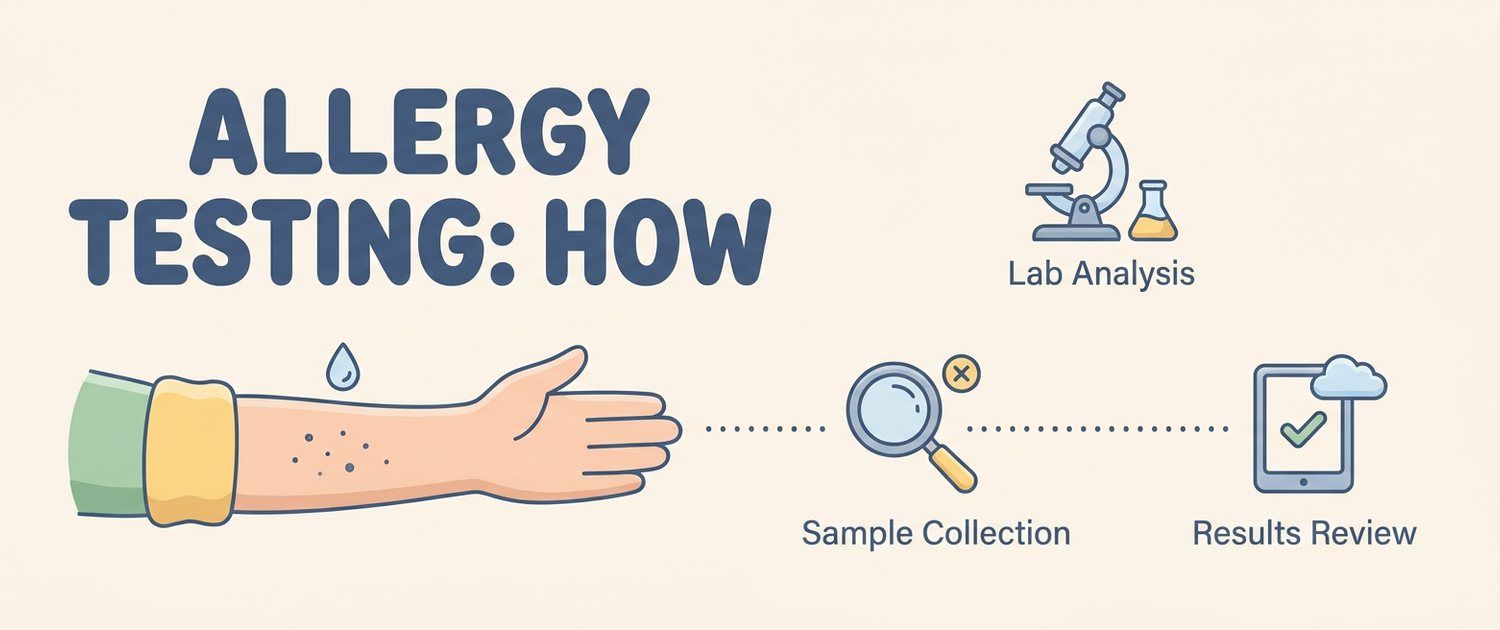
When allergy disrupts life, the logical step is to find the specific allergen. That is what allergy testing is for, and patients have many questions: blood or skin, how to prepare, is it fine for a child, what to do about antihistamines. Let's calmly go through both routes, how to prepare for them, and how to read the result — without scare tactics or needless procedures.
How Allergy Testing Is Done: Two Routes
There are two ways to find the culprit. First — a blood test for specific IgE: antibodies to particular allergens are measured in a tube (ImmunoCAP and similar methods). Second — skin prick tests: drops of allergens are placed on the skin with light pricks, and the reaction is assessed. Both look for the same thing — what the body actually reacts to.
The Blood Test for Specific IgE
Blood for specific IgE is convenient because it is safe anytime, needs no antihistamines stopped, and suits cases where skin tests are not possible: children, marked skin conditions, a high risk of a severe reaction. One allergy panel or individual allergens are measured. How the marker itself works is described in the article on immunoglobulin E.
Skin Prick Tests: How They Are Done
Prick tests are performed by an allergist: allergens are placed on the forearm or back, and after 15–20 minutes redness and a wheal are assessed. The method is visual and fast, but it has conditions: it is not done during an allergy flare and requires stopping antihistamines beforehand (otherwise the result is falsely negative). So skin tests are always planned with a doctor.
Preparing for Allergy Testing
Preparation depends on the method. Blood for specific IgE usually needs no strict special prep. For skin tests it matters more: antihistamines are stopped a few days before (the doctor sets the timing), and tests are not done during a flare or on certain medicines. General blood-draw rules are in how to prepare for a blood test.
Blood or Skin Tests: Which to Choose
There is no single "best" method — the choice is the doctor's by situation. Blood is preferred in children, with skin conditions, when medicines cannot be stopped, or when there is a risk of a severe reaction. Skin tests suit a fast visual answer with no contraindications. Sometimes both are used. The overall logic of allergy diagnosis is in the allergy guide.
How to Read Allergy Test Results
A result is not a verdict or a "list of bans". A positive test means sensitization (readiness to react), but it is clinically meaningful only if it matches real symptoms. The reverse also happens: a test is "positive" yet there is no allergy to that food. So the outcome is always compared with the history — especially in food allergy.
What to Do After Allergy Testing
Do not put yourself on a strict diet or "lifelong bans" from one report. Discuss the result with an allergist: they decide what is meaningful and what is just sensitization. If the report is confusing, you can upload it for decoding — the service explains the values in plain language and suggests questions for your doctor.
This article is for informational purposes only and does not replace a doctor's consultation. The method and interpretation of allergy tests are chosen by a specialist with your complaints in mind.
For informational purposes only
This article is for informational purposes only and does not constitute medical advice, diagnosis, or treatment. Please consult a healthcare professional for medical guidance.