Male Infertility: Which Tests to Take and Where to Start
Reviewed by the LabReadAI medical team
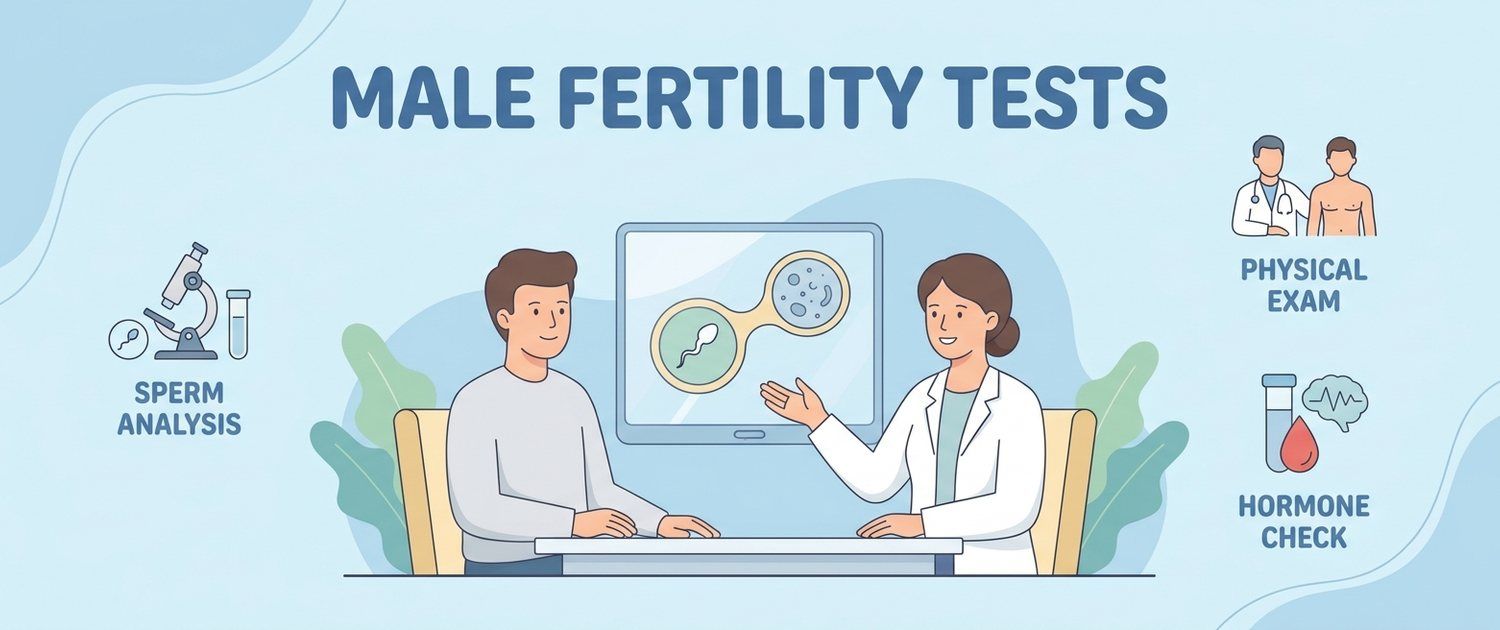
When pregnancy does not happen for a long time, the work-up is for the couple, not only the woman: in about half of cases the male factor contributes. The good news — starting is simple, and the first step is usually a single test. Let's look at which tests to take for male infertility, when it is time to be checked, why hormones are needed and how lifestyle affects conception.
Where to Start a Male Infertility Work-up
A male infertility work-up almost always starts with one test — the spermogram — not with a long list. It shows whether there is a problem and what it is, and only then does the doctor decide what to add. In parallel a urologist takes a history and examines: past surgeries, infections, injuries, medications. This order saves time and money.
The Spermogram — the Core Test
A spermogram assesses the main things: concentration (how many sperm), motility (how many move actively) and morphology (how many have normal structure). Additionally volume, viscosity and liquefaction time are checked. One "bad" result is not yet a diagnosis — a spermogram is often repeated after a few weeks because the values fluctuate. Detailed structure is assessed by strict Kruger criteria.
Hormones: FSH, LH, Testosterone, Prolactin
If the spermogram is abnormal, hormones are added to understand the level of the problem. FSH reflects sperm production, LH and testosterone the hormonal axis, prolactin possible pituitary disorders. A high FSH with low concentration points to a problem in the testicles themselves, low FSH and LH to the brain level. The set of hormones is chosen by a doctor for the specific picture, not "just in case".
When a Couple Should Be Tested
The general rule: a work-up starts if pregnancy does not happen after about 12 months of regular intercourse without contraception. Test sooner if the partner is over 35 or there are clear factors in the man — past orchitis, undescended testicle, groin surgery, chemotherapy. It is better for the couple to see a specialist at the same time so as not to lose time.
Lifestyle and Reversible Factors
Sperm quality is affected by factors that can often be corrected: smoking, alcohol, excess weight, overheating (sauna, laptop on the lap), stress, sleep deprivation, some medications and anabolic steroids. Improvement after changing habits is not immediate — sperm take about three months to mature, so the effect is judged by a repeat spermogram after that period.
Varicocele and Other Causes
A separate common and reversible cause is varicocele, an enlargement of the scrotal veins that can worsen sperm values. Infections, hormonal and genetic causes and the patency of the sperm ducts are also considered. Each cause needs its own management, which is exactly why it matters not to guess but to follow the tests.
What to Do with the Results
Do not draw conclusions from a single line: sperm values fluctuate, and a single "bad number" is not yet a verdict. It is sensible to repeat the test and discuss it with a urologist-andrologist. If the report is unclear, you can upload it for decoding — the service explains the values in plain language and suggests questions for your doctor.
This article is for informational purposes only and does not replace a doctor's consultation. The set of tests for male infertility and their interpretation are chosen by a specialist individually.
For informational purposes only
This article is for informational purposes only and does not constitute medical advice, diagnosis, or treatment. Please consult a healthcare professional for medical guidance.