Poplar Allergy: Symptoms, Pollen vs Fluff and Treatment
Reviewed by the LabReadAI medical team
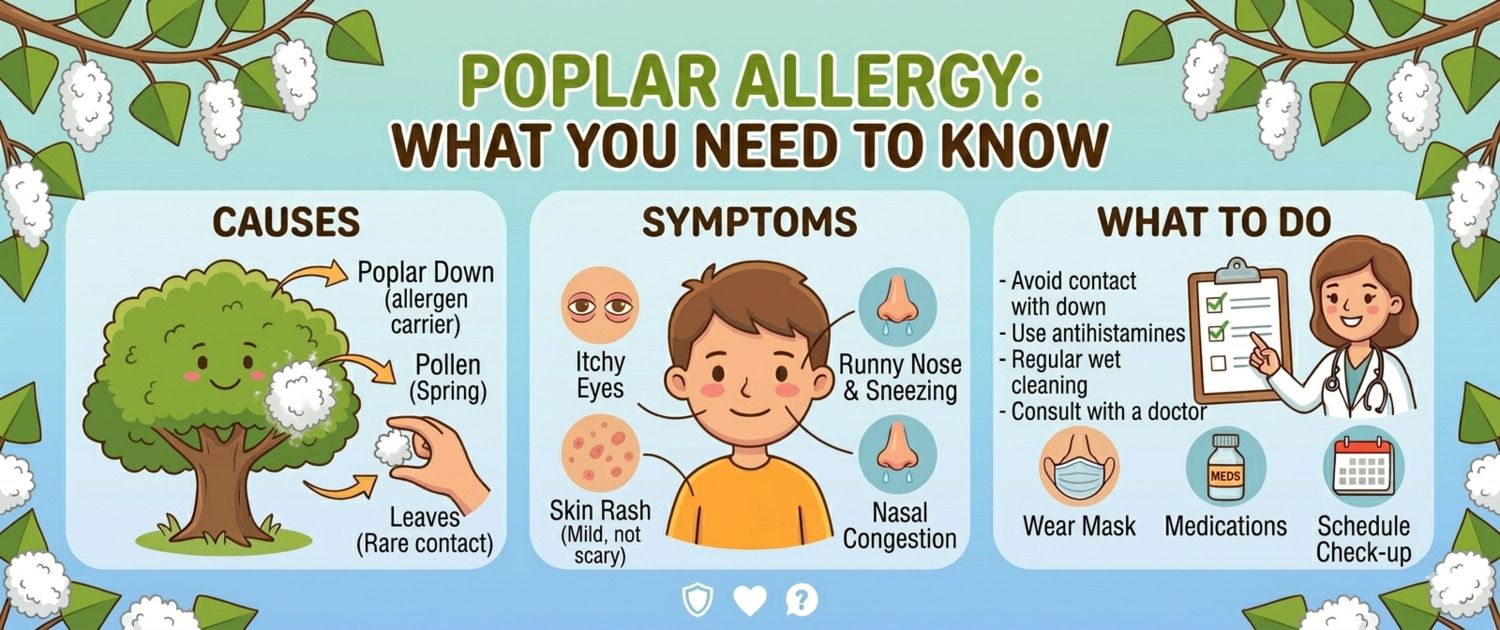
Every summer, millions of people blame poplar fluff for their runny noses, watery eyes, and sneezing fits. But this accusation has one problem: poplar fluff is not itself an allergen. This is one of the most persistent medical myths — and it prevents people from getting the right treatment. This article explains what actually triggers allergic symptoms during poplar season, why the fluff is more of a witness than a culprit, what genuine pollinosis looks like, and how to get through the season with minimum suffering. For a complete overview of allergy mechanisms and treatment, see the complete allergy guide.
What Is Poplar Allergy and What Role Does the Fluff Play?
The poplar is a dioecious plant: male and female trees are separate. Allergy is caused exclusively by pollen from male poplar trees — microscopic grains that disperse through the air during the flowering period. These grains contain allergenic proteins capable of triggering an immune response in sensitised individuals.
Poplar fluff is the seed of female poplar trees, covered in fine fibres for wind dispersal. The fluff itself is hypoallergenic: the fibres are too large to reach the bronchi and alveoli, and they contain no significant allergenic proteins. However, fluff works brilliantly as a carrier: it collects pollen from other plants — grasses, birch, alder, mugwort — and deposits it directly onto mucous membranes. This is why symptoms during fluff season are so intense: simultaneous contact with multiple allergens.
The key insight: if you react "to poplar fluff," your true allergen is most likely grass pollen or another plant flowering at the same time. This distinction matters enormously for getting the right treatment.
When Poplar Blooms and the Difference Between Pollen and Fluff
The poplar season in temperate climates divides into two distinct phases:
Poplar flowering (April – early May) — male poplars release fine pollen well before the fluff appears. At this stage the trees are bare, heavy with catkins. The pollen is light and travels for kilometres; airborne concentrations can be high. People sensitised to poplar pollen begin experiencing pollinosis symptoms now. This period typically overlaps with birch flowering — many patients have cross-sensitivity to both trees.
Fluff season (late May – June) — female poplars release their mature seeds on white fibres. Visually it resembles a snowfall. At exactly this time, grass pollens are at their peak — timothy, cocksfoot, meadow foxtail. Most "poplar fluff allergies" are actually reactions to these grass pollens, which the fluff mechanically transports.
To find out exactly what you are allergic to, allergy testing with skin prick tests or specific IgE blood testing is needed. Without this, you risk treating the wrong allergen.
Symptoms of Poplar Allergy: How to Tell It Apart from a Cold
Pollinosis symptoms during poplar season are typical of any pollen allergy. The key distinction from a cold is the character, rhythm, and seasonality of symptoms.
Typical symptoms:
- Profuse watery nasal discharge — clear, odourless
- Paroxysmal sneezing, often in bursts of 5–10 consecutive sneezes
- Itching of the nose, eyes, palate, and ears — relentless and impossible to stop
- Red, watering eyes (allergic conjunctivitis)
- Nasal congestion, especially at night
- Dry, persistent cough that worsens outdoors
How to distinguish from a cold:
- No fever or general malaise with allergy
- Symptoms appear within minutes of allergen exposure
- Improve rapidly in rainy weather and indoors with windows closed
- Last the entire season, not the 5–7 days typical of a respiratory infection
- Antihistamines help; antiviral medications do not
In some patients, pollinosis is accompanied by skin manifestations: urticaria or a flare of atopic dermatitis. Cutaneous allergy presentations are covered in detail in atopic dermatitis.
In severe pollinosis, allergic bronchospasm can develop — wheezing, breathlessness. This requires prompt medical attention: without treatment, pollinosis can progress to bronchial asthma.
Cross-Reactive Allergy: What Is Poplar Linked To?
Allergy is rarely isolated. Allergenic proteins from different plants share structural similarities, and an immune system trained on one allergen begins reacting to others — cross-reactivity.
Poplar has the following cross-reactive associations:
- Grasses — the most clinically important cross-reactive group. Timothy, cocksfoot, and meadow foxtail bloom simultaneously with poplar fluff. Most people who believe they are allergic "to poplar" have grass pollen as their primary allergen. More detail in grass pollen allergy.
- Birch and alder — bloom earlier than poplar, but their pollen proteins are structurally similar. Approximately 40% of people with birch allergy also react to poplar.
- Mugwort — a late-summer allergen with shared epitopes with poplar.
- Food allergens — sensitisation to poplar may be associated with reactions to apples, pears, stone fruits (peach, plum), carrots, and celery during the pollen season.
Cross-reactivity explains why symptoms during fluff season can be so severe: the body is simultaneously responding to multiple structurally similar allergens.
Diagnosis: Which Tests to Order
Self-diagnosing "I'm allergic to poplar fluff" is not a medical diagnosis. Accurate allergen identification is essential for effective treatment.
Skin prick tests — the gold standard of allergy diagnosis. Standardised allergen extracts are applied to the forearm and a small prick is made through each drop. After 15–20 minutes, a wheal larger than 3 mm is considered positive. Tests are performed outside the pollen season and after antihistamines have been stopped.
Specific IgE blood testing — an alternative to skin prick tests. Allows simultaneous testing of a panel of 20–30 allergens: tree pollens, grasses, weeds, dust mites, mould. No medication withdrawal is required, and it is safe regardless of symptom severity.
On a complete blood count, allergy frequently produces eosinophilia — elevation of the eosinophil fraction. This is a non-specific marker of allergic inflammation that helps a doctor suspect an allergic cause before specific testing is performed.
Testing is best done with an allergist outside the acute season: during the season, skin tests are less informative and the risk of a pronounced reaction is higher.
Treatment During Poplar Season
Managing pollinosis works on three levels: symptom relief, anti-inflammatory therapy, and — when indicated — allergen-specific immunotherapy (ASIT).
Second-generation antihistamines (loratadine, cetirizine, fexofenadine) — first line. Non-sedating, 24-hour action, effective for itching, sneezing, and watery eyes. Taken continuously throughout the season, not just when symptoms flare.
Intranasal corticosteroids (mometasone, fluticasone, budesonide) — the most effective treatment for moderate and severe rhinitis. Onset of action takes 3–7 days, so starting 1–2 weeks before the season begins is important. Minimal systemic absorption — safe for long-term use.
Antihistamine or mast cell-stabilising eye drops (olopatadine, cromoglicic acid) — for prominent conjunctivitis.
ASIT (allergen-specific immunotherapy) — the only treatment that addresses the cause of allergy rather than symptoms. A course lasts 3–5 years and is conducted outside the pollen season. It significantly outperforms symptom-based treatment and prevents the development of asthma. Prescribed by an allergist after precise allergen identification.
How to Survive Poplar Season: Practical Advice
Reducing allergen load means fewer symptoms even with the same medication. Several evidence-based strategies:
- Monitor pollen maps and apps with real-time pollen counts; plan outdoor activities on low-count days.
- Rain washes pollen out of the air — the best time to go outside.
- Keep windows closed during peak pollen hours (10:00–17:00). Ventilate in the late evening and at night.
- An air conditioner with a HEPA filter substantially cleans indoor air.
- After coming home, change clothes immediately and rinse your nose with saline — removing deposited pollen from mucous membranes.
- Do not hang laundry outside during the season; pollen settles on fabric.
- Wraparound sunglasses provide partial protection for the eyes against airborne pollen.
- For severe allergy, consider leaving the city at peak season: mountain and coastal areas typically have significantly lower pollen concentrations.
When to Seek Urgent Medical Attention
Most pollinosis cases are well managed on an outpatient basis. But certain symptoms require immediate care:
- A choking episode, significant breathlessness, or wheezing — possible allergic bronchospasm
- Angioedema: swelling of the lips, tongue, or throat — risk of airway obstruction
- Anaphylaxis: sudden drop in blood pressure, loss of consciousness, widespread urticaria
- Symptoms not controlled by standard-dose antihistamines
- Pollinosis appearing for the first time in a child under 3 — paediatric allergology consultation required
- Season-on-season worsening with new cough and breathlessness — risk of progression to asthma
This content is for informational purposes only and does not replace professional medical advice.
For informational purposes only
This article is for informational purposes only and does not constitute medical advice, diagnosis, or treatment. Please consult a healthcare professional for medical guidance.