Wormwood Allergy (Mugwort): Symptoms, Cross-Reactivity and Treatment
Reviewed by the LabReadAI medical team
While most people think of allergy season as a spring problem, millions experience their worst symptoms in midsummer through the first frosts. Wormwood (mugwort) allergy is the main autumn hay fever in temperate climates. Its particular challenge: it rarely comes alone — wormwood belongs to the same botanical family as ragweed, and it cross-reacts with spices and vegetables that are hard to suspect as allergens. Let's look at why wormwood is so aggressive and what to do about it.
Why Wormwood Causes Allergy
Wormwood (Artemisia) belongs to the daisy family (Asteraceae) — one of the most allergenic plant families. The main allergen is Art v 1, which is structurally related to allergens from other members of the same family: ragweed, chrysanthemums, sunflower, and chamomile.
A single wormwood plant releases up to one billion pollen grains per season. The pollen is small and light, carried by wind for tens of kilometres. Airborne concentrations are highest on dry, windy days, in wastelands, along roadsides, and near abandoned fields — exactly where wormwood grows most abundantly.
A distinctive feature of wormwood: its pollen is released primarily in the evening and night hours (6 pm to 11 pm) — unlike most trees, which peak in the morning. This explains why patients with wormwood allergy often report symptoms worsening in the evenings.
Wormwood Flowering Season
Wormwood blooms later than spring trees and grasses: depending on the region, from late June through October, with peak concentration in August–September.
An important point: the wormwood season overlaps with the ragweed and grass pollen seasons. Patients sensitised to all three can experience an uninterrupted hay fever period from June through October. This is exactly why early diagnosis and AIT matter most for polysensitised patients.
Symptoms of Wormwood Allergy
Symptoms appear in late June–early July and disappear after the first frosts. Clinically they do not differ from other hay fevers, but carry a characteristic evening pattern.
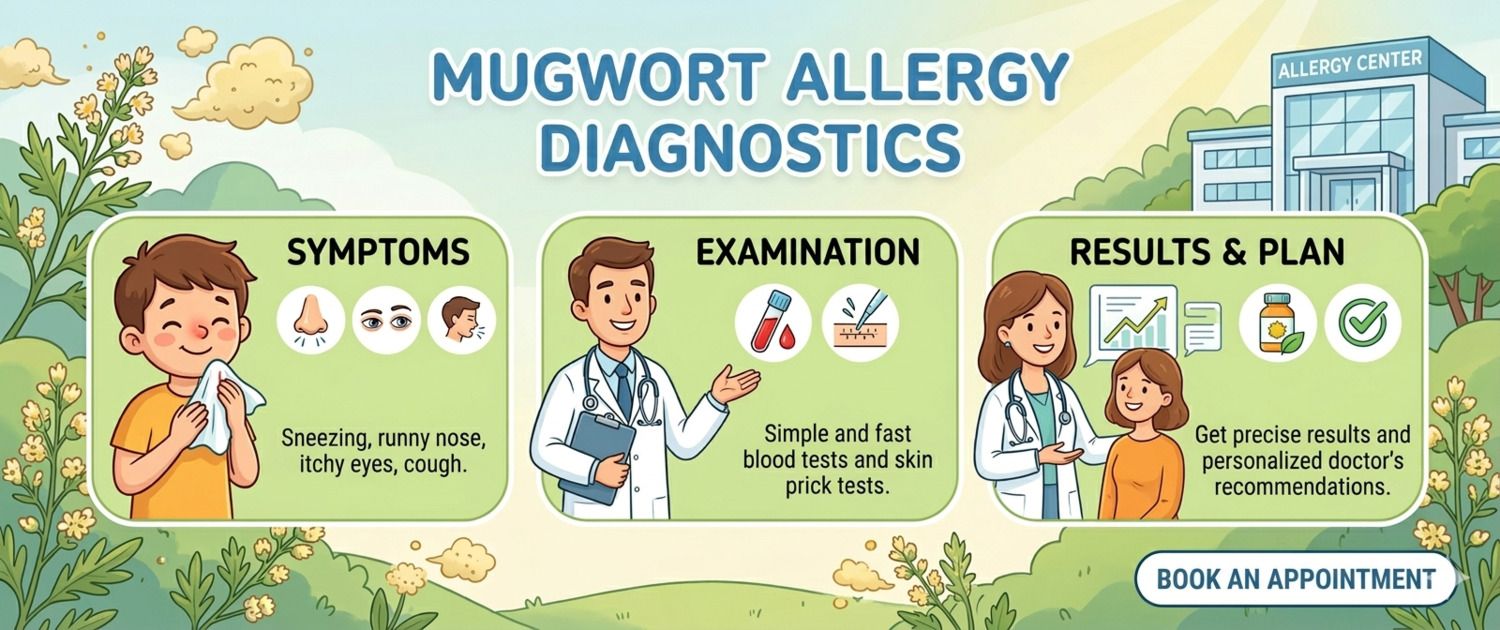
Allergic rhinitis — nasal congestion, clear watery discharge, paroxysmal sneezing, nasal itch. Postnasal drip — the sensation of mucus running down the back of the throat — is common.
Allergic conjunctivitis — redness, itch, tearing, light sensitivity. In some patients conjunctivitis is more prominent than nasal symptoms.
Bronchospasm — in patients with asthma or predisposition to it. The autumn wormwood season frequently coincides with asthma flares.
Skin reactions — skin itch, urticaria on contact with the plant or its extracts (cosmetics, herbal teas containing chamomile or wormwood).
Characteristic pattern: symptoms worsen in the evening (peak pollen release), intensify in open areas with abundant weedy vegetation, in dry and windy conditions.
Cross-Reactivity: The Mugwort–Celery–Spice Syndrome
Food cross-reactivity in wormwood pollinosis is one of the most specific and least obvious. The main targets are not fruits (as with birch) but spices and aromatic vegetables.
Art v 1 is structurally similar to proteins of plants in the carrot family (Apiaceae) and daisy family. This underlies the "mugwort–carrot–celery–spice syndrome" — one of the most diagnostically challenging food allergy syndromes.
| Group | Foods |
|---|---|
| Asteraceae | Ragweed, chrysanthemum, chamomile, sunflower, Jerusalem artichoke |
| Apiaceae (spices) | Anise, caraway, coriander, fennel, dill, parsley, tarragon |
| Apiaceae (vegetables) | Celery, carrot, parsnip |
| Other | Mango, chamomile tea, honey (from Asteraceae pollination) |
Reactions present as oral allergy syndrome: itching and burning in the mouth and lips within minutes of eating raw foods. In some patients — more pronounced systemic reactions to spices (coriander, caraway), especially in powder form, since inhaling spice dust additionally loads the airways.
Heat destroys Art v 1 — cooked celery and carrots are usually safe, raw ones may trigger reactions. Dried ground spices are more dangerous than fresh herbs.
Diagnosing Wormwood Allergy
Skin prick tests with wormwood pollen extract — the diagnostic standard. Performed outside the season, at least 2 weeks after stopping antihistamines. Ragweed and grass are often tested simultaneously — co-sensitisation to several autumn allergens is common.
Specific IgE blood test for Art v 1 and total wormwood allergen — done any time of year. Especially valuable in severe dermatitis or when prick testing is not feasible.
Molecular diagnostics (Art v 1, Art v 3) — refines sensitisation profile. Art v 3 is a lipid transfer protein associated with more severe systemic food reactions.
Complete blood count — elevated eosinophils indirectly support allergic inflammation. A normal count does not exclude hay fever.
Treatment of Wormwood Allergy
Reducing Pollen Exposure
- During peak season (August–September), avoid outdoor activity in the evening — wormwood releases most pollen between 6 and 11 pm
- Keep windows closed in the evening and at night; use a HEPA air purifier
- After every outing: shower, rinse nose with saline, change clothes
- Avoid wastelands, roadsides, and abandoned fields — wormwood's primary habitats
- Wear wraparound sunglasses outdoors
Medication
Second-generation antihistamines (cetirizine, fexofenadine, bilastine) — taken daily throughout the season, starting 1–2 weeks before expected bloom.
Intranasal corticosteroids (mometasone, fluticasone) — most effective for nasal symptoms; start 2 weeks before the season.
Eye drops with antihistamine or mast cell-stabilising action — for significant conjunctivitis.
Antileukotriene agents (montelukast) — when rhinitis is combined with asthma.
AIT for Wormwood Allergy
Allergen-specific immunotherapy with wormwood allergen is the only treatment that modifies the immune response rather than just controlling symptoms. Course duration: 3–5 years; sublingual or subcutaneous forms available. Most patients report 40–60% symptom reduction after the first year.
AIT is started only during remission — in winter or early spring, at least 3–4 months before the expected bloom. In patients co-sensitised to wormwood and ragweed, an allergist may prescribe AIT targeting both allergens simultaneously.
When to Seek Urgent Medical Attention
Immediately if: breathing difficulty or wheezing; swelling of lips, tongue, or throat; sudden drop in blood pressure, loss of consciousness.
Routine allergist visit: symptoms recur every summer-autumn; antihistamines no longer provide adequate relief; reactions to spices or celery have appeared; you want to start AIT.
Summary
Wormwood allergy is an autumn hay fever with a distinctive evening rhythm and a specific food cross-reactivity pattern. The mugwort–celery–spice syndrome often goes unrecognised for years until the patient realises that their "spice intolerance" is part of an allergic picture. Early AIT, combined with coverage of ragweed and grasses in polysensitised patients, is the best long-term control strategy. For more on allergy mechanisms, see the complete allergy guide.
This article is for informational purposes only. Interpretation of test results and treatment decisions are the responsibility of a physician.
For informational purposes only
This article is for informational purposes only and does not constitute medical advice, diagnosis, or treatment. Please consult a healthcare professional for medical guidance.