Anti-TPO Antibodies: Normal Range and What Results Mean
Reviewed by the LabReadAI medical team
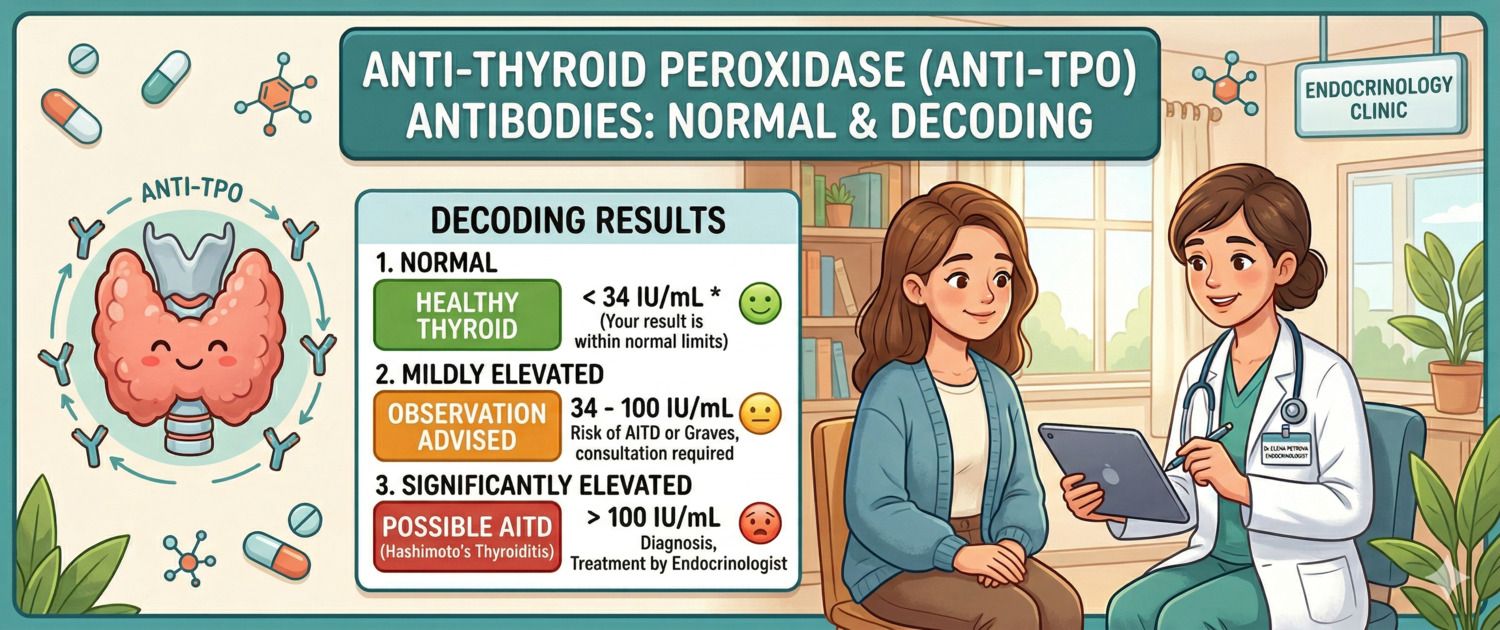
You receive your blood results and notice an "anti-TPO" line with a value above the reference range. What are these antibodies, why do they appear in the blood, and what does an elevated result actually mean? Anti-thyroid peroxidase antibodies are the primary marker of autoimmune thyroid inflammation — their presence signals that the immune system is attacking the thyroid gland.
What Is Thyroid Peroxidase and Why Does the Body Produce Antibodies Against It
Thyroid peroxidase (TPO) is an enzyme essential for producing thyroid hormones T3 and T4. Normally, this protein is confined inside thyroid cells and is invisible to the immune system. In autoimmune inflammation, this barrier breaks down: the enzyme enters the bloodstream, the immune system identifies it as foreign, and begins producing anti-TPO antibodies.
These antibodies are not merely a passive marker — they actively damage thyroid tissue by activating the complement system and triggering thyrocyte death. Chronically elevated anti-TPO therefore leads, over time, to reduced thyroid function.
The test is ordered alongside TSH and Free T4 — only together can you assess both thyroid function and autoimmune activity. The full set is included in the thyroid panel.
Anti-TPO Normal Range in Adults
Reference values vary slightly by laboratory method, but most use a common threshold:
| Category | Normal Range (IU/mL) |
|---|---|
| Adults (men and women) | < 35 IU/mL |
| Pregnant women (1st trimester) | < 2.5 IU/mL (recommended) |
Values between 35–100 IU/mL are considered mildly elevated and warrant monitoring. Values above 100 IU/mL indicate marked elevation, typical of active autoimmune disease. Always compare your result against your specific laboratory's reference range.
Why Anti-TPO Is Elevated: Main Causes
Elevated anti-TPO almost always points to an autoimmune process. The most common causes:
Hashimoto's thyroiditis — the most frequent cause. In Hashimoto's thyroiditis, anti-TPO can exceed the upper limit 10–1000 times. The disease gradually destroys thyroid tissue and leads to hypothyroidism.
Graves' disease — autoimmune hyperthyroidism. Anti-TPO is elevated in 70–80% of patients, although TSH receptor antibodies (TRAb) are the primary diagnostic marker here.
Postpartum thyroiditis — temporary autoimmune inflammation in the first year after delivery. Anti-TPO is elevated before pregnancy, allowing early identification of at-risk women.
Other autoimmune diseases — type 1 diabetes, rheumatoid arthritis, lupus. Thyroid autoimmunity often accompanies systemic disease.
Mildly elevated anti-TPO (35–60 IU/mL) in isolation, with a normal TSH, is found in 10–15% of healthy individuals and requires annual monitoring — not treatment.
Anti-TPO in Women: Why They Are at Higher Risk
Autoimmune thyroid disease is 7–10 times more common in women than in men. Elevated anti-TPO is detected in 10–15% of women of reproductive age — often without any symptoms.
Anti-TPO deserves special attention when planning pregnancy. Even with normal TSH, elevated antibodies raise the risk of miscarriage in the first trimester, postpartum thyroiditis, and impaired neurodevelopment in the child if maternal hypothyroidism goes uncontrolled. This is why anti-TPO screening is included in most preconception protocols.
Anti-TPO vs Anti-TG Antibodies: What Is the Difference
Both markers indicate autoimmune thyroid involvement, but they target different proteins. Anti-TPO antibodies target the hormone synthesis enzyme, while anti-thyroglobulin antibodies (anti-TG) target the hormone precursor protein.
For diagnosing Hashimoto's thyroiditis, anti-TPO alone is sufficient — it is positive in 95% of patients. Anti-TG is added in ambiguous cases or for post-surgical monitoring of thyroid cancer.
How to Prepare for the Anti-TPO Test
Blood is drawn from a vein after an 8-hour fast. Key preparation rules:
- stop thyroid hormone medication 30 days before the test (consult your doctor first)
- avoid iodine-containing supplements and contrast agents 2–3 days before
- no intense exercise or alcohol 24 hours before
- time of day and menstrual cycle phase do not affect results
Results are typically ready within 1–2 business days. Interpreting anti-TPO without TSH data gives only half the picture.
When to See a Doctor
See an endocrinologist within a few days if anti-TPO is markedly elevated (>100 IU/mL) alongside an abnormal TSH, if you are pregnant or planning pregnancy with any degree of elevation, or if you have symptoms: persistent fatigue, swelling, hair loss, palpitations, or unexplained weight changes.
Elevated anti-TPO without symptoms and with normal TSH is not an emergency, but warrants annual thyroid function monitoring.
This information is for educational purposes only. Diagnosis and treatment are provided exclusively by a qualified physician.
For informational purposes only
This article is for informational purposes only and does not constitute medical advice, diagnosis, or treatment. Please consult a healthcare professional for medical guidance.