Feeding a Dog With Pancreatitis: Fat, Portions and Treats
Reviewed by the LabReadAI medical team
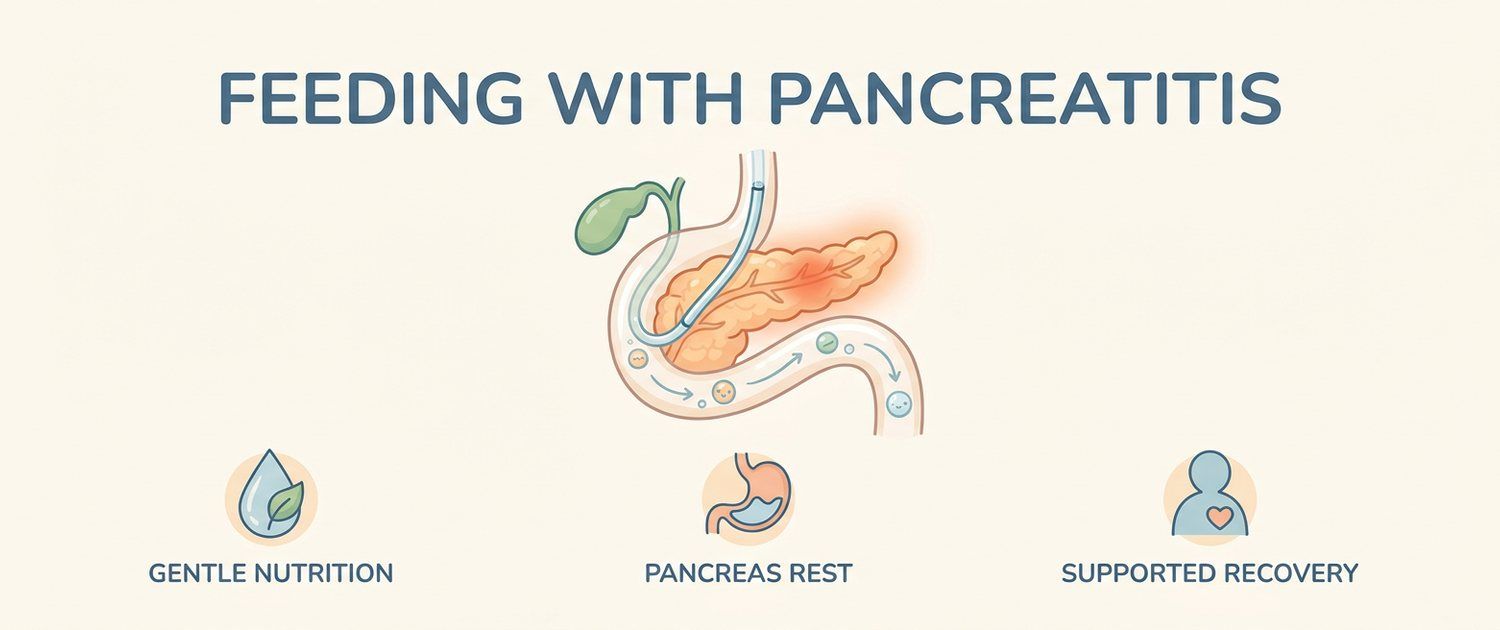
The pancreas makes the enzymes that digest food. In pancreatitis they activate too early and start digesting the gland itself — hence the pain, the vomiting and the collapse. Food here is both the provocation and the treatment, so feeding a dog with pancreatitis deserves a step-by-step answer.
What Happens in Pancreatitis
Acute disease usually starts abruptly: vomiting, refusal to eat, abdominal pain (the dog arches its back or adopts the "praying" posture with chest down and rump up), diarrhoea, lethargy. The chronic form is quieter — occasional refusal of food, episodes of vomiting, weight loss, a "sensitive stomach" for years.
The general signs are covered in diarrhoea in dogs and dog not eating. What separates pancreatitis from ordinary upset is marked pain and stubborn vomiting.
Feeding a Dog With Pancreatitis: Fat, Portions, Routine
For years the standard was "nothing by mouth for two or three days". That is now considered a mistake: early feeding is tolerated better, supports the gut lining and shortens recovery. Food is withheld only while vomiting is uncontrolled.
The working principles:
- Low fat. Fat is the strongest stimulus for the pancreas. This is why "a rich broth to build up strength" makes things worse.
- Small portions, often. Four to six meals a day instead of two: the smaller each portion, the smaller the enzyme surge.
- Moderate but good protein. It is not removed: recovery needs protein, and wasting is a real risk here.
- Nothing new. A flare is not the time to try another food, a supplement or home cooking.
- Water always available. Dehydration with vomiting develops faster than owners expect.
Feeding is planned for the long run: going back to the old fatty ration after recovery is the commonest route to a second attack.
The First Days of a Flare
In the first day or two the bowl decides little: pain relief, anti-nausea drugs and fluids do the work, and that belongs in a clinic. Once vomiting is controlled, a small portion of low-fat, digestible food is offered and the response watched. If vomiting stays away, the volume grows carefully over three or four days.
If the dog has not eaten for more than three days, a feeding tube is discussed. That is not an extreme measure but a way to keep muscle and gut lining while treatment works. The same recovery logic is covered in feeding after poisoning.
Treats and Supplements — the Hidden Fat
This is where most diets break. The main food is chosen correctly, and alongside it the dog gets a piece of cheese, chicken skin, a spoon of sour cream "with the tablet", a flavoured chew and the leftovers. In fat terms that can outweigh the entire daily ration.
Worth remembering:
- treats count as part of the ration, not as a detail;
- flavoured chews and supplements are often fattier than they look;
- the household agrees once: one person feeds, nobody else adds anything;
- bins and scavenging outdoors are the second commonest cause of relapse;
- holiday tables are the worst of all: clinics see a predictable wave after long weekends.
Does Fatty Food Really Cause Pancreatitis
The link between fat and pancreatitis was treated as obvious, but a systematic look found the evidence thinner than assumed: much of it comes from models and retrospective series. That is not a reason to drop the restriction — in a dog that has already had pancreatitis, and in one with high triglycerides, it is justified. It is a reason to know the limit: a fatty morsel is a risk factor, not the sole cause.
Some breeds — miniature schnauzers, for instance — tend to high triglycerides, and fat restriction means more in them than in others. Obesity, diabetes and hypothyroidism change the picture: in an older pet the diets often conflict, and how that is resolved is covered in feeding senior pets.
Feeding a Cat With Pancreatitis: Why Cats Are Different
Feline pancreatitis is a different disease under the same name.
- It is rarely linked to fatty food, and strict fat restriction is usually unnecessary in cats.
- It often runs together with intestinal and biliary inflammation — the combination called triaditis, which has to be treated as a whole.
- The signs are vague: not pain and vomiting but lethargy, dehydration and refusal of food, see a lethargic cat.
- The main task is to get the cat eating. Two or three days of starvation trigger hepatic lipidosis, which is worse than the pancreatitis itself. So whatever the cat accepts is offered, and a tube is placed if it refuses.
Concurrent gut inflammation is covered separately in gastritis and food allergy.
Which Tests Confirm Pancreatitis
| What is checked | What it gives |
|---|---|
| Specific pancreatic lipase | The main laboratory test; total amylase and lipase are unreliable |
| Complete blood count | Inflammation, dehydration, how ill the animal is |
| ALT, ALP, bilirubin | Liver and bile ducts — often involved alongside the gland |
| Triglycerides | High values argue for strict fat restriction |
| Glucose | Pancreatitis and diabetes frequently travel together |
| Ionised calcium | In cats a low value marks severe disease |
| Abdominal ultrasound | Sees the gland itself, free fluid and neighbouring organs |
How the form reads by species is covered in dog blood test and cat blood test. Images of the gland come from abdominal ultrasound for a dog; a finished report can be explained by pet imaging interpretation.
Chronic Pancreatitis: Feeding for the Long Run
After an episode the ration does not go back to what it was. What usually stays is low fat, frequent small meals and a firm ban on fatty treats. Some dogs live like this for years without a flare; others lose enzyme capacity and weight, and then enzyme support is discussed and prescribed by a vet. What therapeutic ranges are is covered in therapeutic pet food.
When to See a Vet Urgently
- repeated vomiting, especially with refusal of water;
- the chest-down, rump-up posture, or crying when the abdomen is touched;
- a distended, tense abdomen;
- yellow gums or whites of the eyes;
- a dog that has not eaten for over two days (a cat, over one).
If there are signs but no diagnosis yet, they can be described in a dog symptom review. A finished form is explained by pet results interpretation — it shows which markers point at the pancreas and what to discuss with the vet; how that differs from a consultation is described in online vet results review.
This article is informational. Diagnosis and treatment of your pet are the job of a veterinarian.
For informational purposes only
This article is for informational purposes only and does not constitute medical advice, diagnosis, or treatment. Please consult a healthcare professional for medical guidance.