A Lethargic Cat: What to Check First and When to See a Vet
Reviewed by the LabReadAI medical team
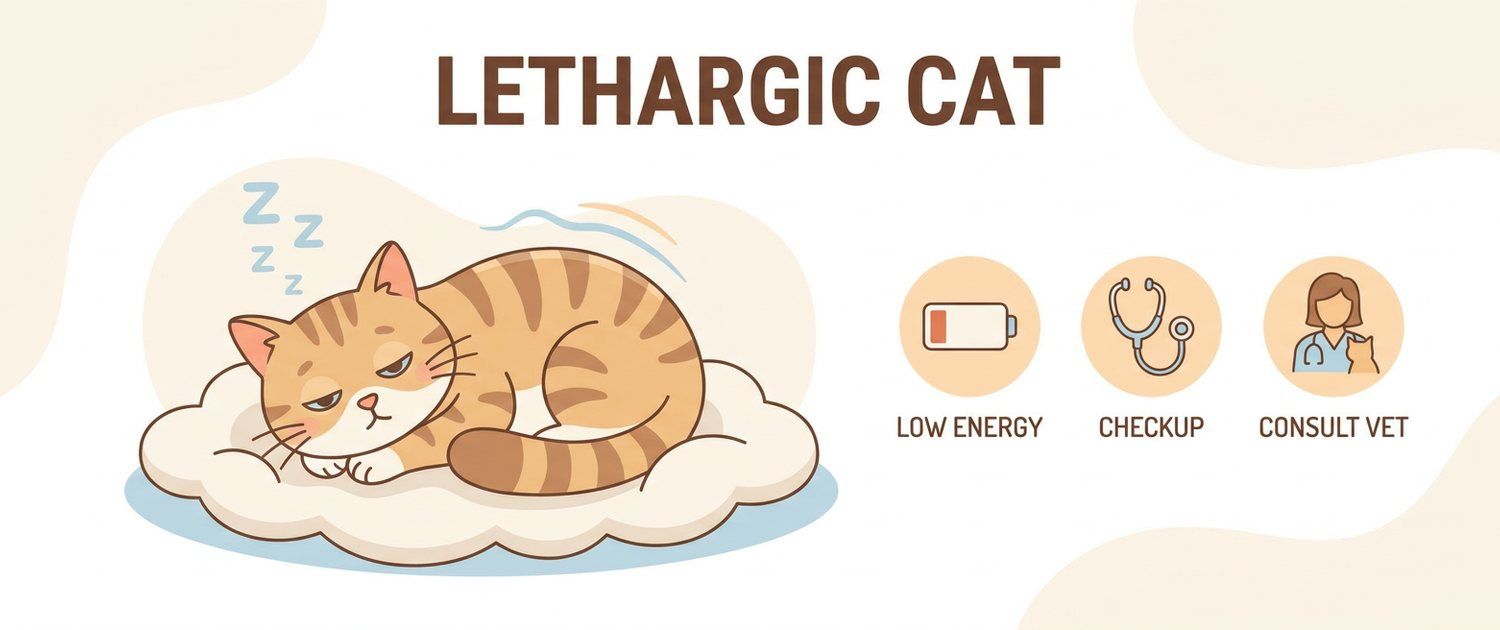
A healthy cat sleeps a great deal — up to sixteen hours a day, and that is normal. But between naps it gets up, eats, comes running at the sound of a packet, grooms and answers your voice. A lethargic cat stops doing all of that: it lies in one position, does not lift its head, and retreats behind the sofa. The difference is not how much it sleeps but what happens in between.
Why a Cat Is Lethargic: What the Sign Means
Lethargy is a signal, not an illness. It comes with almost any serious condition — pain, dehydration, anaemia, fever, poisoning, kidney and liver failure, infection. That is why no one reads it alone: it is weighed together with appetite, thirst, the litter tray, breathing, temperature and weight.
There is a second point. In a cat, "just tired" is rare. Cats are wired to hide weakness, so by the time an owner says the cat has gone quiet, the process has usually been running for days. Describing the whole picture — what changed, when, and in what order — narrows the versions quickly; that is what the cat symptoms page is for.
What to Check First at Home
The order is deliberate: first what signals urgency, then what narrows the cause.
- Dehydration. Lift the skin over the shoulders into a tent and let go. In a healthy cat it snaps back instantly; if it stays up for a second or longer, the cat is dehydrated. The second clue is dry, tacky gums.
- Gum colour. Normal is pale pink and moist. White or very pale means anaemia or blood loss, yellow points to the liver or red-cell destruction, blue-grey means poor oxygen, brick red suggests severe infection. Press with a finger: colour should return within one to two seconds.
- Breathing. Count chest movements at rest, ideally while the cat sleeps. Up to 30 a minute is normal, 30–40 means a vet in the next days, above 40 means today. A cat breathing with an open mouth is driven to a clinic immediately.
- Temperature. Normal is 38.0–39.2 °C. In a lethargic cat, below 37.5 °C is more alarming than above 40 °C — a low reading suggests shock or a severe metabolic problem.
- Looking for pain. Slowly feel along the spine, abdomen and joints. A reaction at one spot, limping (cat limping), a tense belly, or refusing hard food while still wanting to eat — each of these localises the problem.
A Lethargic Cat That Is Not Eating or Drinking
This is the dangerous pair. Two or three days without food can trigger hepatic lipidosis in a cat — fatty liver that is itself life-threatening, covered in why a cat is not eating. Count water separately: a cat that is neither eating nor drinking dehydrates faster than one that is simply off its food.
The mirror picture — a lethargic cat drinking noticeably more than usual — points at metabolism rather than starvation: kidneys, diabetes, thyroid. That is read differently, see a cat drinking a lot. Add vomiting and diarrhoea in cats and fluid is being lost both ways, which turns days into hours.
Common Causes by Age
- Kittens. Viral infection, worms, flea anaemia, low blood sugar. Lethargy is most dangerous here: reserves are tiny and decline is measured in hours.
- Adult cats. Trauma, a bite from a fight and the abscess that follows — a bacterial infection under the skin that causes fever and lethargy before any wound is visible; poisoning by household chemicals or plants; a foreign body; cystitis with straining, see blood in cat urine.
- Older cats. Chronic kidney disease, hyperthyroidism, diabetes, heart disease, tumours. Here lethargy usually travels with weight loss — see a cat losing weight.
When to See a Vet Urgently
Do not wait for morning and do not watch for a day if any of these is present:
- open-mouth breathing, rapid breathing, or effort from the abdomen;
- pale, white, yellow or blue-grey gums;
- temperature below 37.5 °C, or cold paws and ears in a lethargic cat;
- a male cat straining in the tray and passing no urine — a urethral blockage, fatal within a day;
- complete refusal of food beyond 24 hours, or 12 hours in a kitten;
- seizures, a wobbly gait, or no response to your voice;
- lethargy after a fall, a fight, or access to chemicals or plants.
If you are unsure whether it is urgent, describe in plain words what you see and get an urgency read: that is what the symptom review is for. It does not replace a vet, but it tells you whether to drive now or book an appointment.
What Not to Do at Home
- Do not give human medicines. Human fever and pain medicines are lethal to cats: a cat's liver cannot neutralise these substances the way a human liver does. Any medication is prescribed by a veterinarian only.
- Do not force food or water into a lethargic cat — with weak swallowing this ends in aspiration pneumonia.
- Do not warm a cold cat with a heat pad before an exam: in shock, rapid warming of the limbs makes things worse.
- Do not "give it a couple of days" and do not change the food hoping the diet is to blame. Diet changes belong after a diagnosis, not instead of one.
What Tests and Scans Will Clarify
For non-specific lethargy the first round is nearly always the same: a complete blood count for anaemia and inflammation, biochemistry with kidney and liver markers, a urinalysis with specific gravity, and in cats over seven years, thyroid hormones. What the numbers on the form mean is explained in cat blood test; a form from the clinic can be uploaded to the pet results interpretation service for a plain-language read.
Where the question is structure rather than numbers, imaging answers it: cat abdominal ultrasound shows kidneys, liver, lymph nodes, free fluid and foreign bodies, while a cat X-ray covers lungs, heart and skeleton. A report or a disc from the clinic can also be read through pet imaging interpretation.
In dogs the same sign reads differently — a dog genuinely can be tired after exertion, so the alarm threshold differs; that is covered in a lethargic dog.
This article is informational. Diagnosis and treatment of your pet are the job of a veterinarian.
For informational purposes only
This article is for informational purposes only and does not constitute medical advice, diagnosis, or treatment. Please consult a healthcare professional for medical guidance.