Cat Drinking a Lot and Urinating a Lot: What It Means
Reviewed by the LabReadAI medical team
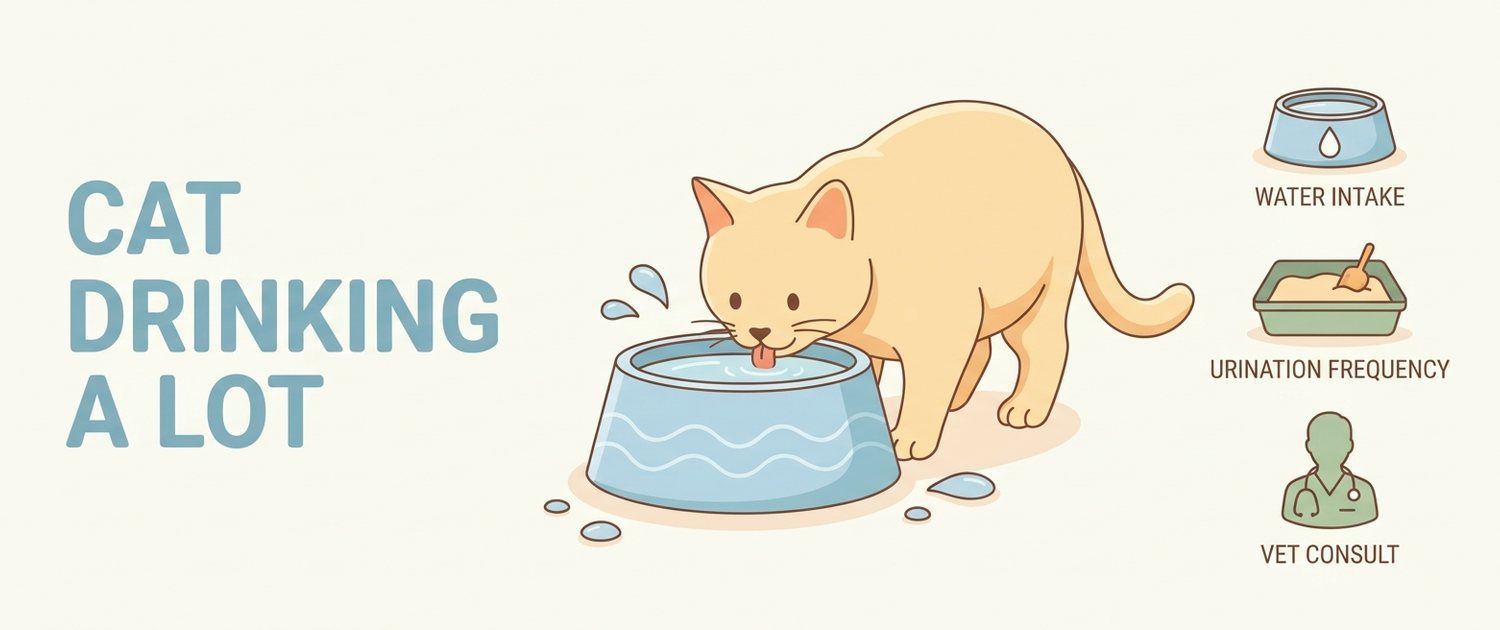
Of all the early signs of illness in a cat, thirst is the most honest: it shows up long before lethargy or weight loss. It is also the least reliable by eye, because a cat drinks from taps, vases and other bowls, and owners tend to notice the change only once it has doubled. So the conversation starts with measurement, not with theories.
How Much Water Should a Cat Drink
The only way to separate an impression from a fact is a measuring jug:
- Close off the alternatives — taps, the toilet, vases — and leave water in one or two bowls only.
- Pour a measured volume and check what remains once a day. Set a second bowl where the cat cannot reach it: that one shows how much simply evaporated.
- Repeat for two or three days and average, because day-to-day variation is wide.
- Divide the millilitres by the cat's weight in kilograms.
The benchmarks: over 100 ml/kg per day is polydipsia on any diet and the cause gets investigated. On dry food, 50–100 ml/kg sits in a grey zone — normal for some cats, the first sign of disease in others. Under 50 ml/kg is usually reassuring. Look at the litter tray as well: bigger and more numerous clumps mean urine output has risen too, and that pairing of polyuria with polydipsia nearly always has a medical explanation.
Why Dry Food Skews the Picture
In the wild a cat takes almost all of its water from prey. Wet food is 75–80 % water, dry food 8–10 %. A cat on dry food will legitimately drink three to four times more from the bowl than a cat on wet food, and that is not disease. The mistake is comparing her with another cat or with a previous household. Compare her with herself on the same diet: what matters is change at a constant ration. How the diets differ is set out in choosing food for a cat; if the food changed recently, the clock restarts.
Kidney Disease: The Leading Cause After Seven
Chronic kidney disease tops the list. The mechanism is direct: damaged kidneys stop concentrating urine, the cat loses fluid and has to make it up by drinking. The order matters — urine volume rises first, thirst follows. Other signs are gradual weight loss, a dull coat, bad breath, a shrinking appetite and vomiting. The catch is that visible symptoms appear when roughly a quarter of functioning kidney tissue is left, which is why thirst alone justifies testing an older cat. What changes in the bowl once the diagnosis is confirmed is covered in feeding a cat with kidney disease.
Diabetes: Drinking, Urinating and Losing Weight
Feline diabetes is commonest in neutered, overweight male cats. Excess glucose spills into the urine and drags water with it, which produces large puddles and constant thirst. The telling detail is that the cat eats normally or even more than usual yet loses weight. Later the gait may change, with the cat walking down on its hocks. The combination of heavy drinking plus weight loss with a good appetite argues strongly for a glucose check; weight loss itself is covered in cat losing weight.
Hyperthyroidism: The Thyroid Speeds Everything Up
In cats over eight to ten, hyperthyroidism is the common endocrine cause. Metabolism accelerates: the cat drinks a lot, eats a lot, loses weight, becomes restless and noisy, and the coat looks unkempt. Night-time wandering with loud calling can be part of it — see cat meowing constantly. The diagnosis rests on a single blood value, so in an older cat it is checked alongside the kidneys.
What Else Causes Polyuria and Polydipsia
- Hyperthyroidism and kidney disease together — a common pair in older cats, each masking the other.
- Urinary tract inflammation — but there the picture is dominated by frequent drops and blood: blood in cat urine.
- Liver disease, high blood calcium, rarer endocrine causes.
- Medication — some drugs prescribed for other reasons increase thirst; ask the vet rather than stopping them yourself.
- Heat, lactation, a salty treat — temporary and harmless, resolving in a day or two.
- Dogs have a different ranking of causes — see dog drinking a lot.
When to See a Vet Urgently
Do not leave it to the end of the week if thirst comes with:
- vomiting, refusing food, sudden lethargy — seen in a kidney crisis and in decompensated diabetes (see lethargic cat);
- an acetone smell on the breath, deep noisy breathing;
- not eating for more than a day, which is dangerous in itself: why a cat is not eating;
- rapid weight loss over two to four weeks;
- heavy drinking with almost no urine produced — the opposite picture, equally urgent.
A routine appointment within a week or two if the cat eats, is active, but measurement shows a steady excess and larger urine volumes.
What Not to Do at Home
- Do not restrict water. The thirst is compensating for fluid lost in urine: taking water away does not reduce urine output, it dehydrates the cat within hours. This is the single most dangerous home mistake with this symptom.
- Do not give human medicines: human painkillers and diuretics are lethal to cats, and any medication comes only on a veterinarian's prescription.
- Do not switch to a renal or diabetic diet before the diagnosis: prescription food is chosen for a confirmed disease, as explained in therapeutic pet food.
- Do not fast the cat before bloods for longer than the clinic asks.
- Do not postpone testing because the cat "looks fine": with kidneys and thyroid, outward wellbeing lasts a long time.
What Tests Will Clarify It
One trip to the laboratory usually settles all three leading explanations:
- Biochemistry — urea, creatinine, SDMA, phosphorus, glucose, calcium, liver values. How to read them is in cat blood test.
- Complete blood count — background and signs of inflammation.
- Urinalysis with specific gravity — the key test for kidneys: dilute urine alongside a high urea points at the kidneys almost every time.
- Thyroid hormone (T4) — mandatory in a cat over eight.
- Urine protein-to-creatinine ratio and blood pressure — once kidney disease is confirmed.
- Cat abdominal ultrasound — kidney size and structure, adrenals, liver.
A finished report can be uploaded to pet results interpretation and an ultrasound conclusion to pet imaging interpretation; what numbers can reveal before the appointment is shown in online vet reading. If there are no tests yet, start by describing the symptoms — and other common complaints sit on the cat symptoms page. An older cat is also worth a dietary review: feeding senior pets.
This article is informational. Diagnosis and treatment of your pet are the job of a veterinarian.
For informational purposes only
This article is for informational purposes only and does not constitute medical advice, diagnosis, or treatment. Please consult a healthcare professional for medical guidance.