Pasteurella multocida: Symptoms, Treatment and Prevention
Reviewed by the LabReadAI medical team
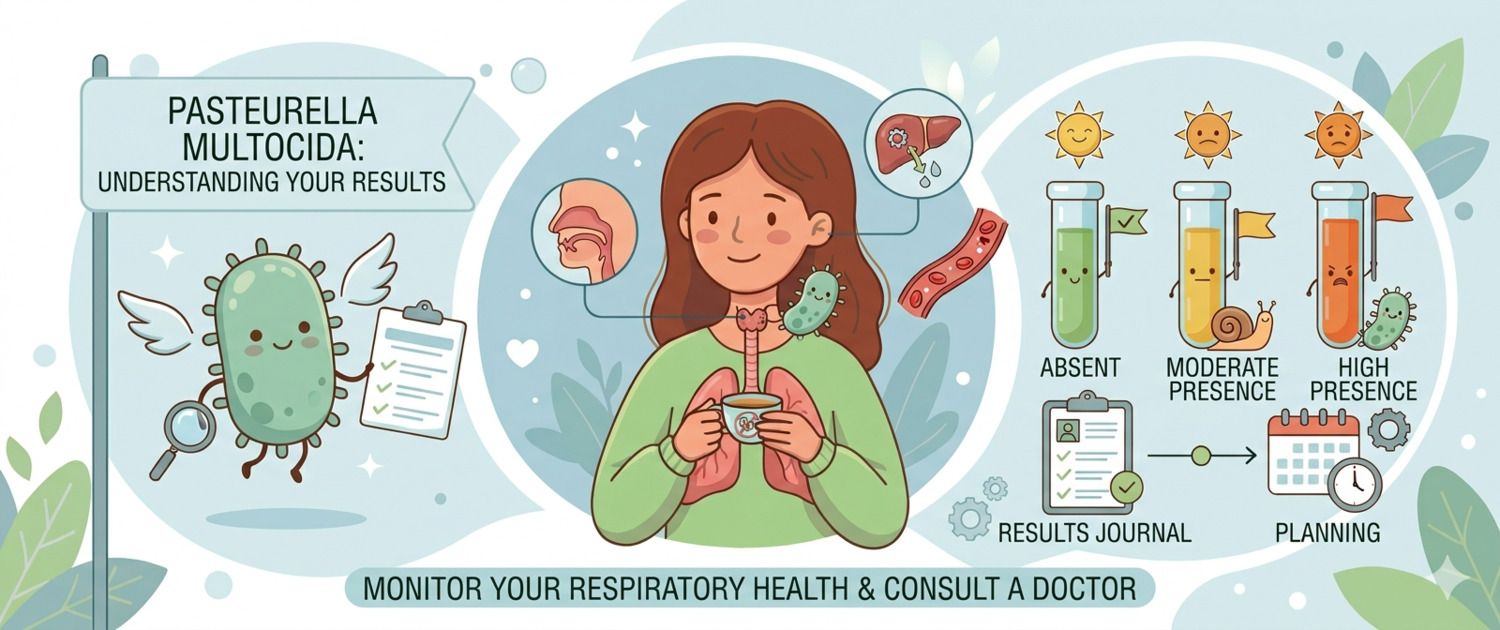
A cat bites your finger — and within a few hours your hand is red, hot, and swollen. Most people assume it will heal on its own. It won't. This is the typical onset of a Pasteurella multocida infection — a bacterium that lives in the mouths of nearly every cat and roughly half of all dogs. Let's break down why it's so dangerous, how it's treated, and when an animal bite becomes a genuine medical emergency.
What Is Pasteurella multocida and Where Does It Live
Pasteurella multocida is a gram-negative coccobacillus — an opportunistic pathogen. For its natural hosts — cats and dogs — it is completely harmless: simply part of the normal microbial flora of the mouth, pharynx, and upper respiratory tract.
The numbers are striking: the bacterium is found in 70–90% of domestic cats and 50–70% of dogs. The animal looks and acts perfectly healthy — there are no signs of infection because there are none. This is exactly why the risk is so often underestimated.
In humans, however, Pasteurella multocida is a true pathogen. Once introduced into tissues through broken skin, it triggers rapidly progressive inflammation. Its defining feature — what sets it apart from most bacterial infections — is its speed: first symptoms appear within 3–24 hours of exposure.
How Infection Spreads: Bites, Scratches and Mucosal Contact
Bites are the primary route of transmission, and cat wounds are more dangerous than dog wounds. Cat teeth are thin and needle-sharp: they create a deep puncture canal that places bacteria far below the surface. The wound is hard to clean, immune cells arrive slowly — ideal conditions for bacterial proliferation.
Dog bites cause more tissue trauma, but the wound is wider and bleeds more actively, partially flushing out bacteria.
Scratches are the second most common route. Bacteria reach the claws when cats groom themselves — they lick their paws and Pasteurella multocida transfers to the nails. A scratch then introduces it directly into the wound.
Licking. If a cat or dog licks an open abrasion, cut, or skin around an unhealed wound — that is sufficient for infection. This is especially relevant for people with diabetes or leg ulcers.
Less common routes: inhalation of aerosols from close animal contact (pneumonia cases have been reported in people who sleep with cats) and occupational exposure in veterinary settings.
Symptoms of Pasteurella multocida Infection
The defining characteristic is speed. While most animal-derived bacterial infections take 2–3 days to declare themselves, pasteurellosis announces itself within hours.
Local manifestations (cellulitis, wound infection):
- Redness around the bite or scratch — appears within 3–6 hours
- Swelling with a sense of pressure — spreads quickly; by the end of the first day it often involves the entire finger or hand
- Pain — intense, disproportionate to the wound size; patients commonly describe it as throbbing or pulsating
- Local skin warmth
- Purulent discharge from the wound — develops later, within 24–48 hours
In more severe cases, lymphangitis develops — a red streak running from the wound toward the nearest lymph node. This signals that the infection is spreading through the lymphatic vessels and requires immediate medical attention.
Systemic manifestations (when infection spreads beyond the wound):
- Fever above 38°C
- Marked weakness and chills
- Elevated leukocytes in blood — leukocytosis as a marker of systemic inflammatory response
Joint involvement. If the bite was near a joint or the infection reaches one, septic arthritis develops: severe pain, inability to move the joint, marked swelling. This is a surgical emergency.
Diagnosis: How to Confirm Pasteurellosis
In most cases the diagnosis is clinical: a characteristic history (animal bite or scratch) combined with a rapid-onset inflammatory picture is sufficient to start treatment without waiting for confirmation.
Laboratory tests are used to assess severity and in atypical presentations:
- Complete blood count — reveals leukocytosis with a left shift in the differential. The count of neutrophils rises sharply; neutrophilia with a band shift is the classic picture of bacterial infection
- C-reactive protein — a sensitive inflammation marker that rises quickly and proportionally to disease severity; useful for monitoring treatment response
- Wound swab or blood culture — confirms the pathogen and determines antibiotic sensitivity; takes 2–5 days and does not affect the initial treatment decision
Imaging. When joint or bone involvement is suspected — X-ray or MRI. Soft tissue ultrasound helps detect fluid collections requiring surgical drainage.
Treatment and Antibiotics for Pasteurella multocida
Good news: Pasteurella multocida is susceptible to several commonly available antibiotics, and treatment started promptly leads to full recovery in the vast majority of cases.
Drug of choice — amoxicillin-clavulanate (Augmentin, Co-amoxiclav). It covers Pasteurella multocida as well as other pathogens common in animal bite wounds. Duration for uncomplicated wound infection: 5–7 days.
Alternatives in case of penicillin allergy:
- Doxycycline — effective, but contraindicated in children under 8 and pregnant women
- Fluoroquinolones (levofloxacin, moxifloxacin) — for adults with severe presentations
- Co-trimoxazole — for moderate cases
Critical to know: several widely used antibiotics have poor activity against Pasteurella multocida. Cephalexin, clindamycin, and erythromycin — frequently prescribed for skin infections — are not reliable choices here. If one of these was prescribed after a cat bite and the wound is worsening, return to the doctor and ask for a treatment review.
Systemic infection (sepsis, meningitis, endocarditis) requires hospitalization, intravenous antibiotics, and 2–6 weeks of treatment depending on the site.
Local wound care runs in parallel: irrigation, antiseptic, and surgical debridement when needed. Primary closure of bite wounds is generally avoided — it increases the risk of anaerobic co-infection.
Complications and High-Risk Groups
In most healthy individuals, pasteurellosis stays localized to the wound and responds well to treatment. But for certain groups, the same bacterium poses a far more serious threat.
Serious complications:
- Septic arthritis and osteomyelitis — from bites near joints or the hand; require surgical drainage and prolonged antibiotic therapy
- Sepsis — systemic inflammatory response with multi-organ involvement; rising creatinine signals acute kidney injury as part of the cascade
- Meningitis — reported in neonates and elderly patients; carries significant morbidity
- Endocarditis — rare but life-threatening in patients with pre-existing valvular heart disease when bacteremia occurs
High-risk groups:
- People with diabetes — impaired wound healing and blunted immune response
- Patients on immunosuppressive therapy (transplant recipients, autoimmune conditions)
- People with liver cirrhosis or chronic kidney disease
- Adults over 65
- Neonates — when transmitted from a mother with animal contact
If you belong to any of these groups, any cat or dog bite warrants medical attention within a few hours — without waiting for visible inflammation to develop.
First Aid After an Animal Bite and Prevention
What to do immediately after a bite or scratch:
- Wash the wound under running water with soap — for at least 5 minutes. This mechanically removes the majority of bacteria. This step matters more than any antiseptic
- Apply an antiseptic — iodine solution, chlorhexidine, or hydrogen peroxide
- Cover with a sterile dressing — do not bandage tightly
- See a doctor or go to urgent care within 24 hours after a cat bite and within 48 hours after a dog bite — even if the wound looks minor
The physician will assess whether preventive antibiotic therapy is warranted. It is indicated for cat bites, wounds on the face, hands or near joints, and in immunocompromised patients — even before any inflammation appears.
Don't forget tetanus. If the last vaccine was more than 5 years ago, a booster is needed. Urgent care will check this automatically.
Long-term prevention: don't let cats or dogs lick open wounds or abrasions. Wash hands with soap after any scratch. People in high-risk groups should discuss a bite management plan with their doctor in advance — before it's needed.
There is a flip side worth knowing: the same bacterium harms the animals themselves. In cats, fights end in an abscess at the bite site, and it shows up not as a visible wound but as sudden limping and pain — how to tell that apart from an injury or arthrosis is unpacked in cat limping; other worrying signs in a pet can be described on the cat symptoms page. In rabbits, Pasteurella multocida causes a disease of its own, with sneezing and nasal discharge — that, and when a small pet needs lab tests at all, is covered in small pet diseases.
This article is for informational purposes only and does not replace professional medical advice. After any animal bite, visit urgent care or a general practitioner — especially for wounds on the hand or face.
For informational purposes only
This article is for informational purposes only and does not constitute medical advice, diagnosis, or treatment. Please consult a healthcare professional for medical guidance.