AI for Weight Loss: What Apps Do and Why Blood Tests Help
Reviewed by the LabReadAI medical team
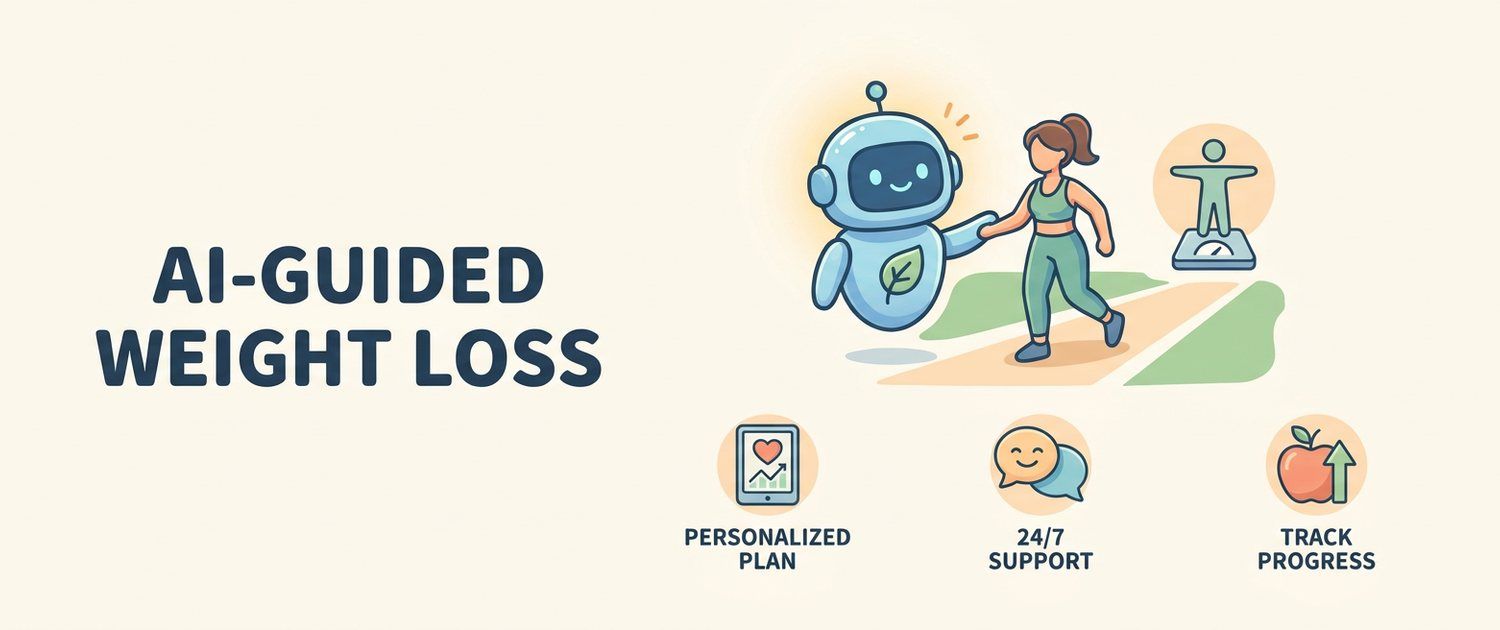
Can AI help you lose weight? Yes, but indirectly: artificial intelligence is good at counting calories, keeping a food diary, sending reminders and supporting discipline — and consistency is what decides the outcome of weight loss. But AI does not replace a doctor, does not make a diagnosis and does not prescribe treatment. There's an important consequence: ordinary weight-loss apps count calories "for everyone" and cannot see your blood tests, so they can't explain why your weight in particular is stuck — and the reason is often precisely in your labs.
The niche is growing fast: interest in "AI weight loss" has more than doubled in two years, and calorie-counting apps are searched for tens of thousands of times a month. Let's be honest about what these tools actually do, what they fundamentally can't see, and when you truly need a doctor.
What AI Weight-Loss and Calorie-Counting Apps Can Do
Modern apps and chatbots really do remove some of the friction that makes people abandon a food diary by day three:
- Counting calories and macros from a photo or text. You photograph your plate or type "oatmeal with banana" — the model recognises the dish and estimates the calories. It's imprecise (the AI only guesses portions), but it lowers friction: tracking stops feeling like a chore.
- Food diary and tracking. The app builds up a history, shows trends in weight and calories, and points out where you consistently undercount (snacks, drinks, oil in the pan).
- Personalised reminders and motivation. The chatbot messages you, answers questions about foods and keeps you going — and it's this retention, not a "smart algorithm", that delivers most of the effect.
- Guidance on your regimen. A daily calorie target for your goal, protein distribution, swap ideas ("sweets → fruit").
What the science says: systematic reviews and meta-analyses show apps produce modest but statistically significant weight loss — on average 1–2 kg over 4–6 months versus control. The key caveat is engagement: people who genuinely log every day lose up to 7 kg, while low engagement gives almost nothing. So an AI app is not magic — it's a discipline tool. It works exactly as much as you use it.
What AI Apps CAN'T Do: They Can't See Your Blood Tests
This is the main dividing line. An ordinary calorie-counting app runs on a simple model: "eat less, move more, lose weight." For most people that works. But if your weight stalls despite an honest calorie deficit, the cause often lies in biochemistry the app simply cannot see.
An AI calorie counter doesn't know:
- your insulin level or whether you have insulin resistance — with it, the body stubbornly holds on to fat and a standard deficit works less well (more on insulin resistance);
- how your thyroid is working — with an elevated TSH metabolism slows down and weight can rise even without overeating;
- whether low ferritin is hiding behind your fatigue and food cravings — iron deficiency drains energy and exercise tolerance;
- your overall hormonal and metabolic picture — cortisol, glucose, lipids, sex hormones.
That's why a person can "do everything right" by the app and still not budge. The app will faithfully count calories — but it won't explain why your weight is not moving. And international guidelines on the work-up for obesity explicitly recommend testing thyroid function in everyone — because excess weight often hides an endocrine cause visible only in the labs.
| Ordinary app / chatbot | AI that reads labs (LabReadAI) |
|---|---|
| Counts calories and macros | Reads insulin, TSH, ferritin, glucose, lipids |
| One model "for everyone" | Interpretation of your specific numbers |
| Knows nothing about hormones or metabolism | Explains what is metabolically holding back weight |
| Motivation and diary | What to show the doctor and which tests to add |
| Doesn't replace a doctor | Also doesn't — but prepares you for the visit |
How an AI That Reads Labs Actually Helps
LabReadAI is not just another calorie counter. It's an AI that reads real blood tests and explains them in plain language: what's within range, what's concerning and how it relates to your weight. The interpretation is often the most careful reading of your results you'll get — but it does not make a diagnosis and does not prescribe treatment. Its job is to help you understand your numbers and arrive at the doctor prepared, not with a folder of confusing forms.
In practice, for weight this means:
- You can see what is holding back your weight. If insulin is high and TSH is at the upper limit, it becomes clear why a deficit alone didn't work and why it's worth discussing with an endocrinologist. More on the metabolic weight-loss model in a separate article.
- You learn which tests are missing. The AI can suggest what to test for weight loss — for example ferritin for persistent fatigue, or fasting glucose.
- Less anxiety from "scary flags". A calm, honest read defuses the panic of a single red-marked value and shows the context.
- Saves the doctor's time. You arrive with a structured picture rather than the question "what does this even mean?"
Here are the markers that most often explain "stuck" weight — the ones the AI reads on your form:
| Marker | What it shows for weight work |
|---|---|
| Fasting insulin | A high level marks insulin resistance: the body holds fat and a deficit works less well |
| TSH | Elevated — the thyroid slows metabolism, weight rises even without overeating |
| Fasting glucose | Early glucose-metabolism problems and prediabetes, often alongside excess weight |
| Ferritin | Low — iron deficiency: fatigue, weakness, poor exercise tolerance |
| Lipid profile | Associated lipid-metabolism problems and cardiometabolic risk |
An ordinary app requests and accounts for none of these. That's why two people on the same calorie intake lose weight differently: one has clean labs, the other quiet insulin resistance or an underactive thyroid. An AI that reads labs makes that difference visible — but the final assessment and management are set by a doctor.
Importantly, obesity is a chronic disease, not "a lack of willpower". When an endocrine or metabolic cause is behind excess weight, no calorie counter will fix it — a doctor is needed. Here AI is the bridge between your labs and that visit.
How It Works
The mechanics are simple and require no medical knowledge:
- Upload your tests. A photo of the form, a lab PDF or a scan — your own results, voluntarily and with consent. The material reaches the model de-identified.
- The AI reads and interprets. Each value comes with an explanation of what it means, whether it's in range, and how it relates to your situation and weight.
- You get a clear read. In plain language: what's fine, what to watch, which questions to ask the doctor, and which tests to add.
- You go to the doctor prepared. The interpretation isn't a substitute for a consultation — it's preparation for one. Decisions about treatment, doses and prescriptions are made by the doctor alone.
No prescriptions, no doses, no "neural-network weight-loss programmes" — only honest interpretation of your results. It's the same work a clinician does when reading your labs — available any time, without the rush.
When You Still Need a Real Doctor or Dietitian
AI is a helper, not a doctor. There are situations where seeing a specialist is essential and no app can substitute for it:
- Weight stalls or rises despite an honest calorie deficit for several months — a reason to look for an endocrine cause (thyroid, insulin resistance, cortisol) together with a doctor.
- Rapid unexplained weight loss — losing weight without dieting warrants an in-person work-up; it can be a symptom of disease.
- Abnormal test results — if the read showed elevated TSH, high insulin or other shifts, a doctor must interpret them clinically and prescribe treatment.
- Obesity with complications — high blood pressure, glucose problems, metabolic syndrome: this needs medical management and sometimes medication.
- Disordered eating — anxiety around food and weight, binge eating or compulsive overeating need a specialist, not a calorie counter.
A real dietitian will build an individual plan around your labs, lifestyle and preferences; an endocrinologist will find and treat a hormonal cause. AI helps you come to them not from scratch, but with a picture already understood. Weight loss with AI is about preparation, discipline and understanding your labs. Diagnosis and treatment always belong to the person in the white coat.
This article is for informational purposes only. AI does not make a diagnosis or prescribe treatment — that is the job of an endocrinologist, general practitioner or dietitian.
For informational purposes only
This article is for informational purposes only and does not constitute medical advice, diagnosis, or treatment. Please consult a healthcare professional for medical guidance.