Excessive and Night Sweating: Causes and Which Tests to Take
Reviewed by the LabReadAI medical team
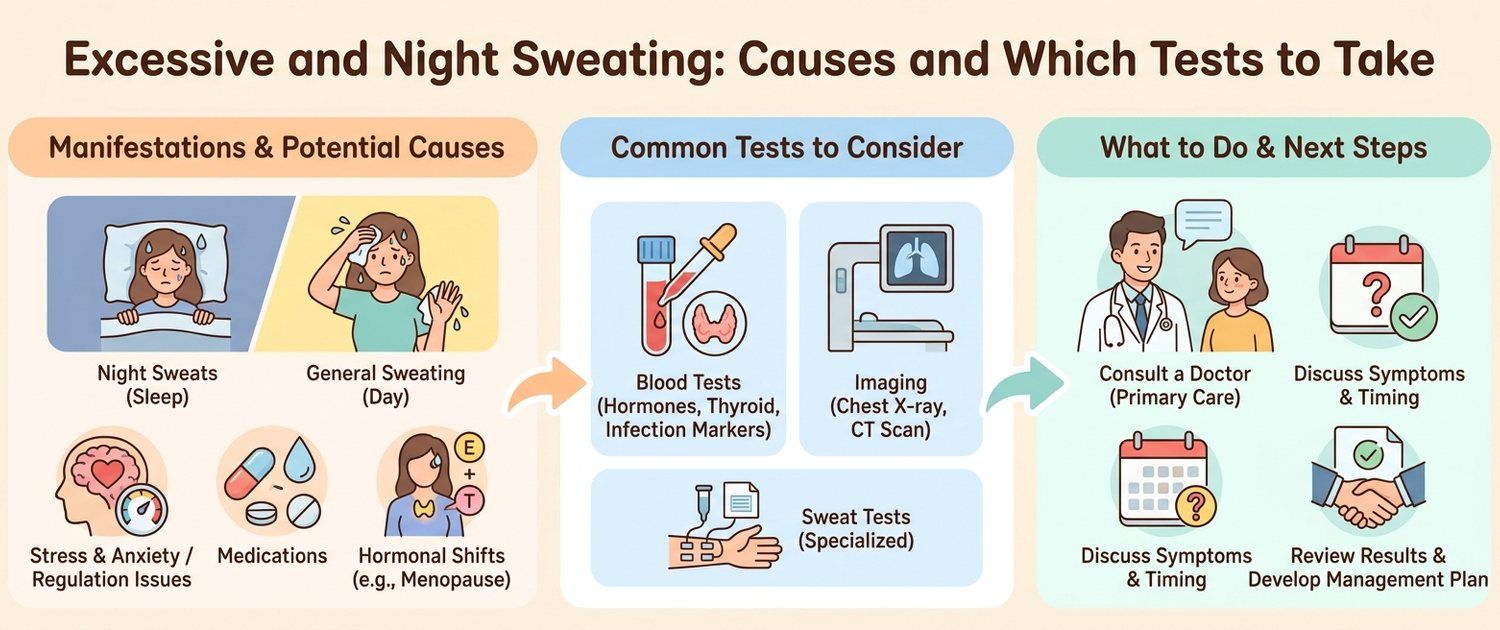
Sweating is a normal mechanism of temperature control: we sweat in heat, with exertion and when anxious. But if sweating has become excessive, appears for no clear reason, or wakes you at night in a wet bed, it can be a signal of hormonal disorders, infection or other disease. Here is when excessive sweating is a reason to get tested, and when it is a "local" trait.
When Sweating Is Normal and When It Is a Symptom
Sweating in heat, during sport, with spicy or hot food, or under stress is normal. It becomes a symptom when it is clearly excessive for the situation, started recently in adulthood, became generalized (whole body), wakes you at night, or comes with weight loss, fever, palpitations and weakness. Such "general" sweating calls for ruling out secondary causes.
The Thyroid (Hyperthyroidism) and Sweating
An overactive thyroid (hyperthyroidism) speeds up metabolism — sweating, a feeling of heat, tremor, palpitations and weight loss appear. It is one of the most common hormonal causes. The basic check is TSH and free T4; more detail in the article on hyperthyroidism.
Infections and Night Sweats
Night sweats with fever are a classic sign of infections (from common viral ones to tuberculosis). CRP and a complete blood count help assess inflammation. Persistent night sweats without a cold, especially with weight loss and swollen lymph nodes, call for ruling out serious causes with a doctor.
Menopause and Hormonal Causes
In women, "hot flushes" with sweating are a typical sign of menopause and perimenopause. Hormonal fluctuations cause sudden waves of heat, more often in the evening and at night. It is a common and benign cause, but when in doubt the thyroid should also be ruled out.
Anxiety, Obesity and Medications
Anxiety states intensify sweating (palms, armpits, forehead), especially in stressful situations. Excess weight raises sweating on exertion. A number of drugs (some antidepressants, antipyretics, hormones) and low blood sugar also cause sweating — it is useful to check glucose too.
Localized Hyperhidrosis (Palms, Armpits)
If the palms, soles or armpits specifically sweat heavily from a young age, with no sweating at night, this is more often primary (localized) hyperhidrosis: a trait of the sweat glands, not a disease. It is not dangerous and needs no tests, but it lowers quality of life; special products and procedures at a dermatologist help.
Which Tests to Take for Sweating
A sensible starting set for generalized or night sweating:
- Thyroid hormones — TSH and free T4.
- Complete blood count and CRP — infections and inflammation; glucose.
- In women of the relevant age — assessment of menopause.
If you are not sure where to begin, you can describe your symptoms — the service suggests likely causes and which tests to discuss with your doctor.
When to See a Doctor
Do not delay if night sweats come with unexplained weight loss, a prolonged fever, swollen lymph nodes or marked weakness — these combinations call for ruling out infections and blood disorders. You should also see a doctor for generalized sweating that started recently in adulthood. Localized hyperhidrosis from youth carries no danger.
In children the causes and norms differ entirely — see child sweating in sleep.
This article is for informational purposes only and does not replace a doctor's consultation. The set of tests and any treatment are chosen by a specialist.
For informational purposes only
This article is for informational purposes only and does not constitute medical advice, diagnosis, or treatment. Please consult a healthcare professional for medical guidance.