ADHD and Military Service in Russia: What the Documents Decide
Reviewed by the LabReadAI medical team
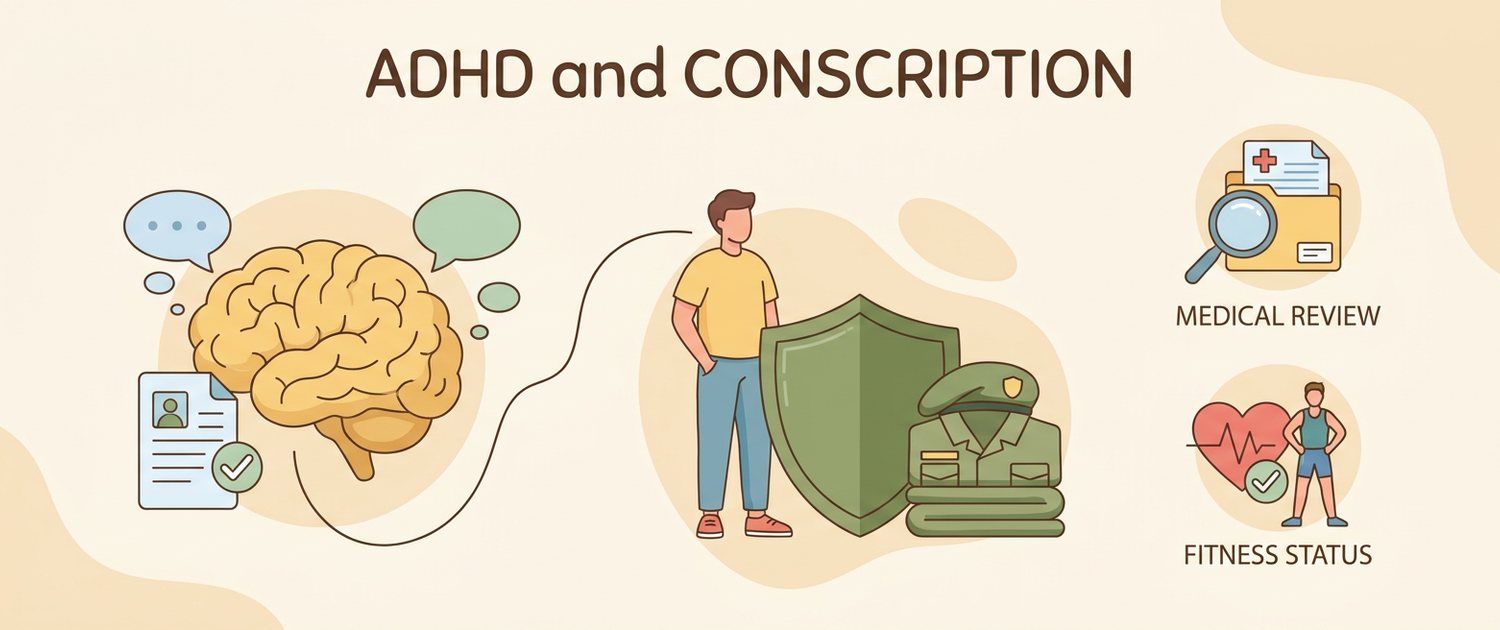
The short honest answer: there is no blanket "yes" or "no". Fitness category is decided not by the name of a diagnosis and not by how a person feels, but by the severity of the impairment and how well it is documented. The same diagnosis in a medical record can lead to different decisions — and the difference is almost always in the documents rather than in the wording.
Which article applies to ADHD
The Schedule of Diseases is an annex to the Russian regulation on military medical assessment; mental disorders sit in its fifth chapter (articles 14–20). Under ICD-10 ADHD is coded in category F90 and belongs to disorders beginning in childhood and adolescence — and those are explicitly covered by article 18: its notes list "behavioural and emotional disorders beginning in childhood and adolescence" and "disorders of psychological development".
What matters about this article:
- the decision depends on severity and compensation, not on the fact of an entry in a record;
- assessment under the mental-disorders chapter is carried out after examination in a specialist medical organisation;
- the conclusion is issued by a board, and it requires medical documents rather than an account.
Article 18 itself — both of its clauses and what else it covers — is unpacked on a separate page: personality disorders, ADHD and autism at the board. How the same works for neighbouring articles of the chapter can be seen in depression and article 17 and anxiety disorder.
Why the document decides, not the diagnosis
This is the main thing to understand before going to the board. The board works with medical documentation: when the person first sought help, what was recorded, what was confirmed by examination, how long the condition has been observed and what has happened with compensation. A wording in someone else's discharge summary or a private clinic's conclusion does not replace a decision by itself — it is weighed alongside the other documents.
Hence the practical conclusion: the history has value, the label does not. Without observation from childhood, a diagnosis made for the first time at eighteen has to be confirmed by examination — and that takes time.
What to gather in advance
- Medical documents from childhood: the paediatric clinic record, entries by a neurologist and a psychiatrist, discharge summaries, referrals.
- School documents: reports, psychologist's conclusions, anything recording difficulties.
- A current assessment by a psychiatrist — how that works is in the article on how adults are diagnosed with ADHD.
- Blood work, if any has been done: it closes off conditions with the same picture.
A history gathered in advance saves both the board's time and yours. Part of it you can prepare yourself: the adult ADHD test collects the answers into a PDF that is convenient for a doctor's appointment. It is not a document for the board and does not replace an examination — it is a way of not recounting everything from memory. The short free entry point is the ASRS screening scale.
What an online test cannot do
No online test — ours or anyone else's — carries legal weight. It does not confirm a diagnosis, does not remove one, does not affect a fitness category and is not a document. All it can do is show how closely a pattern of answers resembles what a doctor checks, and help you formulate questions.
Separately: self-diagnosis from internet descriptions is doubly harmful in this storyline. Individual signs of ADHD occur in everyone — what actually belongs to the condition is unpacked in the article on the signs of adult ADHD, and the general frame is in what ADHD is.
ADHD and disability status
The question comes up often, and the answer is short: disability status is granted for persistent impairment of function and limitation of activity, not for having a diagnosis. Having ADHD in a record creates no grounds by itself; the decision is made by the medico-social expert assessment under its own criteria and on the basis of documents.
Reading the documents before the board
If you already hold discharge summaries, conclusions and examination results, it helps to understand them before they land on the board's desk. Our service can review documents against the Schedule of Diseases: show which articles and wordings appear in them and what the set is missing. This is an informational review, not legal advice and not a guarantee of any category.
What to do about the health side
Regardless of the conscription storyline, the condition remains yours — and there is something to be done about it. What actually works and why "cure" is an inexact word is in can adult ADHD be cured. Why some people describe themselves in terms other than a disorder is in the piece on neurodivergence. And it is worth checking the body separately: iron deficiency (low ferritin) and hypothyroidism (a shifted TSH) produce the same inattention and, unlike ADHD, are fixable; if you already have blood work, the service will help you read the results.
This article is informational, is not legal advice and offers no prediction of a fitness category. The decision is issued by the military medical board on the basis of documents and examination.
For informational purposes only
This article is for informational purposes only and does not constitute medical advice, diagnosis, or treatment. Please consult a healthcare professional for medical guidance.