Can You Drink Water Before a Blood Test: What Fasting Allows
Reviewed by the LabReadAI medical team
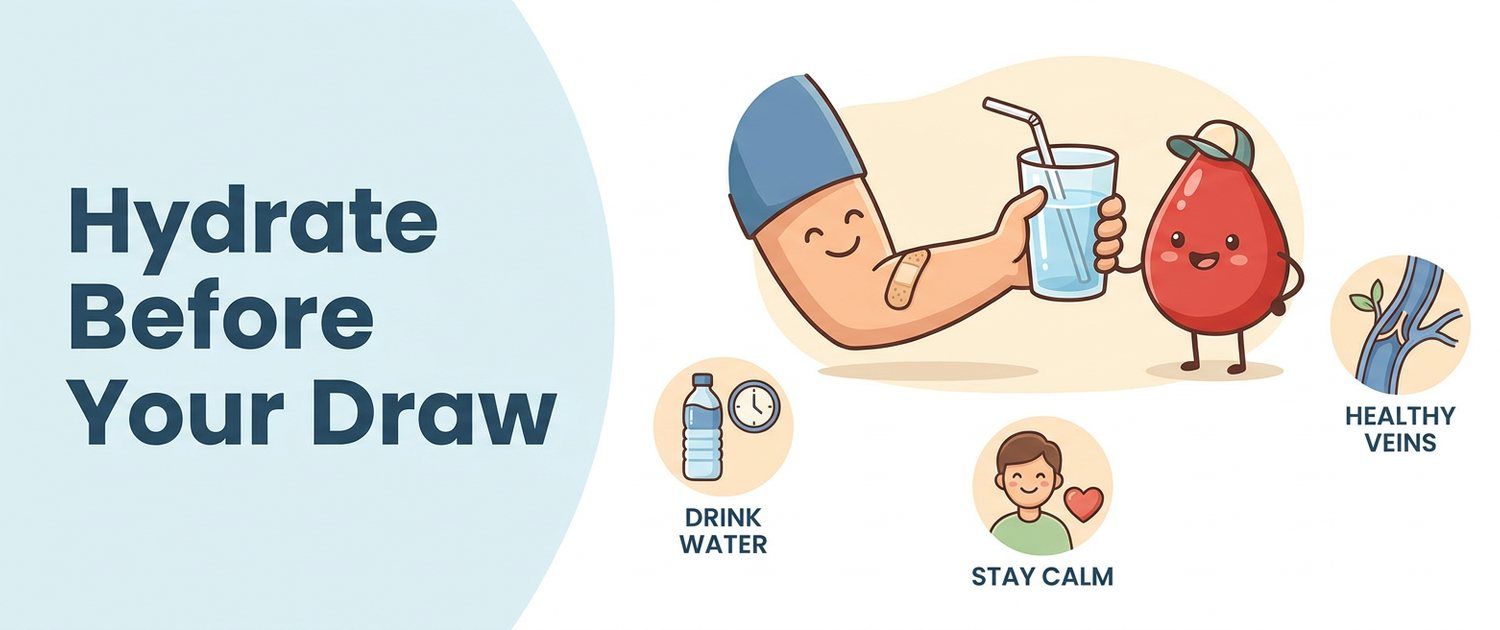
The short answer comes in the very first paragraph, with no "it depends": plain water before a blood draw is allowed and encouraged. Below — why that is, what counts as water and what no longer does, and the full list of what you genuinely must avoid before tests: food, coffee, alcohol, cigarettes, workouts and even the vitamins in your supplement jar.
Can You Drink Water Before a Blood Test — the Short Answer
Yes. This means plain drinking water — still, with no sugar, lemon, syrups or "vitamin" additives. It has no calories and does not start digestion, so it distorts neither glucose, nor lipids, nor hormones — "fasting" and "no water" have never been synonyms.
More than that, drinking water helps the test itself. Dehydrated blood is thicker: less plasma, relatively more cells — this is called haemoconcentration. On the report it shows up as falsely elevated haemoglobin, haematocrit, red cells and total protein — the doctor sees a "thickening" you do not actually have. On top of that, dehydrated veins collapse, and the venepuncture turns into a search: harder for the nurse, more painful for you. One or two glasses of water in the morning solve both problems.
What Does Not Count as Water
The most common mistake is treating every "liquid that is not food" as water. While fasting, the following do not count:
- Coffee and tea, even unsweetened. Caffeine stimulates the nervous system: blood pressure, pulse and cortisol rise, and blood sugar can shift too. An "innocent sugar-free espresso" is the most common cause of a strange morning glucose.
- Juice, fruit drinks, soda, sweetened water. These are sugar solutions: glucose and insulin respond to them as to a full meal. "Zero" drinks with sweeteners are not water either — an insulin response to them is possible.
- Chewing gum and lozenges. Even sugar-free, chewing starts digestion: saliva, gastric juice and gut hormones are released — the body prepares for food, and the fast is over.
- Milk and kefir. These are food in liquid form: protein, fat and carbohydrates, the full set.
The rule is simple: if a drink has a taste, it is no longer water.
What to Avoid Before a Blood Draw
The full list of restrictions is shorter than it seems, and every item has a concrete reason:
- Food — 8–12 hours before. Critical for glucose, insulin and the lipid profile: after a meal these numbers naturally rise, and "high cholesterol" may simply be breakfast. The complete blood count is more forgiving — many labs accept 2–3 hours without food. Which tests truly need fasting and which do not — in the guide to the fasting blood test.
- Alcohol — 48–72 hours before. Alcohol leaves a trace longer than one evening: GGT, triglycerides and uric acid rise, liver enzymes suffer. "A glass of wine the night before" can ruin a biochemistry panel taken perfectly fasted.
- Smoking — at least 1 hour before. Nicotine constricts vessels and raises blood pressure, catecholamines and cortisol; better not to smoke all morning before the draw, vapes and heated tobacco included.
- Workouts — the day before. Intense exercise raises CK, ALT, AST and lactate: after a good training session the report looks like "liver and muscle problems". The day before — ordinary daily activity only.
- Biotin (vitamin B7) in supplements. A common ingredient of "hair and nails" vitamins technically breaks immunoassays: TSH, troponin, vitamin D and others can come out falsely high or low. The standard advice is a pause of at least 8 hours, up to 72 hours for high doses.
- Medications — never stop them on your own. Skipping vital drugs (blood pressure, thyroid, anticoagulants) is more dangerous than testing "on treatment". The right move is to tell the lab and your doctor what you take and when: some tests are drawn before the morning dose.
The Morning of the Draw: Allowed, Not Allowed, Debatable
| On the morning of the draw | Verdict | Why |
|---|---|---|
| Still water, 1–2 glasses | Allowed | Does not distort results, makes venepuncture easier |
| Coffee and tea, even unsweetened | Not allowed | Caffeine: blood pressure, pulse, cortisol, glucose shift |
| Juice, soda, "zero" drinks | Not allowed | Sugar and sweeteners: glucose and an insulin response |
| Chewing gum, lozenges | Not allowed | Chewing starts digestion |
| Cigarette, vape | Not allowed (at least an hour before) | Nicotine: vessels, blood pressure, catecholamines |
| Brushing teeth | Debatable | Usually fine; before glucose tests do not swallow paste, skip sweet mouthwash |
| Morning pills | Debatable | Never stop vital drugs; agree the timing with your doctor |
Special Cases: When the Rules Are Stricter
- Glucose tolerance test. The strictest protocol: 3 days of normal eating with no diets, then an 8–14 hour fast, and during the test — sit still, no smoking, no walks down the corridor. Water is allowed. The full procedure is on the glucose tolerance test page.
- Hormones. Taken in the morning: cortisol, TSH and sex hormones have a pronounced daily rhythm, and "evening cortisol" and "morning cortisol" are different norms. Before a cortisol draw, sit quietly for 15 minutes — running up the stairs already raises it.
- Children. The rules are softer: for ages 1–5 a 3–4 hour gap after food is acceptable, and infants are fed on schedule. Water is allowed at any age. Age-by-age details are in the guide to what tests a child needs.
- Pregnancy. Water is allowed and encouraged — dehydration in pregnancy is especially unwelcome. The glucose tolerance test at 24–28 weeks follows the same strict protocol; enduring thirst is not part of it.
If You Broke the Preparation
Ate a sandwich on autopilot, had a coffee, drank alcohol last night — do not silently test "as is". Say so at the front desk: some tests on your list can still be run the same day, while the preparation-critical ones — glucose, lipids — are better moved to tomorrow. Silence is worse than rescheduling: a result taken "against the rules" looks like pathology and leads to re-draws, extra work-ups and needless worry.
The Short Version
Water before a blood draw is allowed and helpful: drink plain still water, your vein will thank you and the report will not lie. Everything else — coffee, tea, juice, gum, food, alcohol, cigarettes and yesterday's workout — can distort results, each with its own "quarantine" period. And once the result is ready, you can upload it for decoding — the service explains every value against your lab's reference ranges and suggests what to discuss with your doctor.
For informational purposes only
This article is for informational purposes only and does not constitute medical advice, diagnosis, or treatment. Please consult a healthcare professional for medical guidance.