Oral glucose tolerance test (OGTT): how it works and shows
Reviewed by the LabReadAI medical team
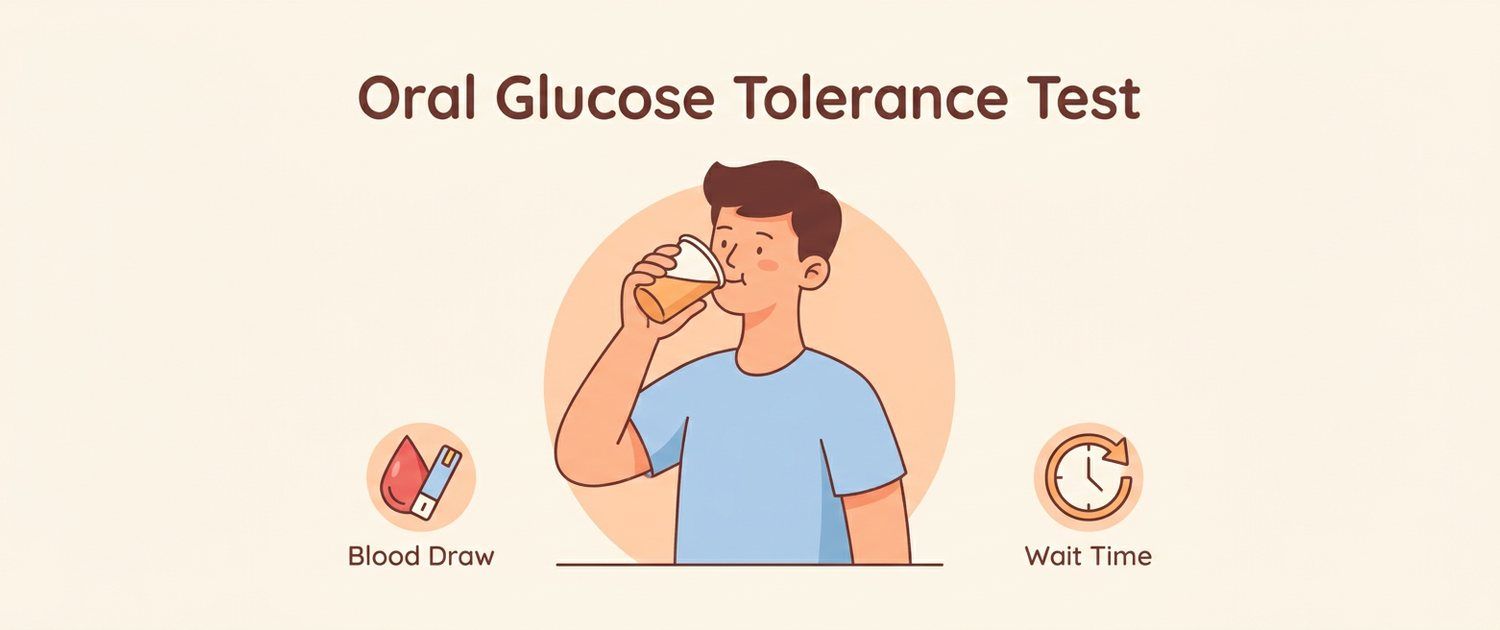
The glucose tolerance test is not a «sugar test» but a challenge test. It answers not «what is your glucose now» but «how does your body cope when glucose arrives». The difference is fundamental: some people are fine fasting but no longer fine under a load.
How the oral glucose tolerance test is done
The protocol is standard. Blood is taken fasting — the first point. Then you drink a solution containing 75 g of glucose (in children the dose is calculated by weight), usually in 250–300 mL of water. After 2 hours blood is taken again — that is the main assessment point.
Sometimes a doctor orders an extended version with intermediate samples (for example at 30 and 60 minutes) and simultaneous insulin measurement. That shows not only the glucose level but how much insulin is required to hold it — linking the picture to insulin resistance.
Both hours must be spent quietly within the laboratory: no eating, no drinking except a little water, no smoking, no walking about. Physical activity lowers glucose on its own and will distort the result.
Preparation: why it cannot be skipped
This is the test where preparation affects the result more than anything else.
Fasting for 8–14 hours before the first sample — water only (what counts as water and what does not is covered in water before a blood draw). Normal eating for the preceding 3 days: an important and frequently broken condition. If someone «goes on a diet» before the test and sharply restricts carbohydrates, the result can come out falsely high — the body loses its adaptation to a carbohydrate load. Preparing for an OGTT by cutting carbohydrates is unnecessary and harmful.
The test is not done during acute illness, immediately after surgery or trauma, or during bed rest — stress and illness distort results. Tell your doctor in advance about medicines you take, especially glucocorticoids.
What the glucose tolerance test shows: values
The 2-hour value is what is primarily assessed. Widely used landmarks: below 7.8 mmol/L normal; 7.8–11.0 impaired glucose tolerance; 11.1 and above meets the criterion for diabetes.
Fasting glucose has its own landmarks: up to 6.1 mmol/L normal, 6.1–6.9 impaired fasting glucose, 7.0 and above meeting the criterion for diabetes.
Important caveats. A diagnosis is not made from a single test — it is confirmed by repeat testing or supplemented with HbA1c. Your laboratory's units and reference values are printed on the report, and the result should be read against those. Interpretation belongs to a doctor, not to a table found online.
How the OGTT differs from other glucose tests
Fasting glucose shows one point in the morning. Simple and cheap, but it misses isolated impaired tolerance.
HbA1c reflects average glucose over 2–3 months, needs no fasting and is convenient for screening. But in isolated IGT it often stays normal: post-meal peaks may not pull the average across the threshold.
The OGTT is the only one of the three that sees the response to a load. It is also the least convenient: two hours in the laboratory and strict preparation. That is why it is ordered on indication rather than for everyone.
Who it is ordered for
A doctor considers the test with excess weight around the abdomen, type 2 diabetes in close relatives, previous gestational diabetes, polycystic ovary syndrome, raised HOMA-IR with normal fasting glucose, and borderline glucose or HbA1c values needing clarification.
Pregnancy is a separate matter. Gestational diabetes screening is performed at defined times with stricter criteria, and it is arranged as part of antenatal care. More in the article on gestational diabetes.
What to do with the result
A normal result with risk factors present means only that things are fine today — how often to repeat is decided by your doctor. A value in the impaired-tolerance range is not a diagnosis of diabetes but a signal you can genuinely act on at this stage; what to do is covered in the articles on IGT and managing insulin resistance.
If you already have the curve and your other markers, a read of your labs will take them together: glucose with insulin, lipids, liver and thyroid — separately these numbers say considerably less.
For informational purposes only
This article is for informational purposes only and does not constitute medical advice, diagnosis, or treatment. Please consult a healthcare professional for medical guidance.