Impaired glucose tolerance: what it means and what to do
Reviewed by the LabReadAI medical team
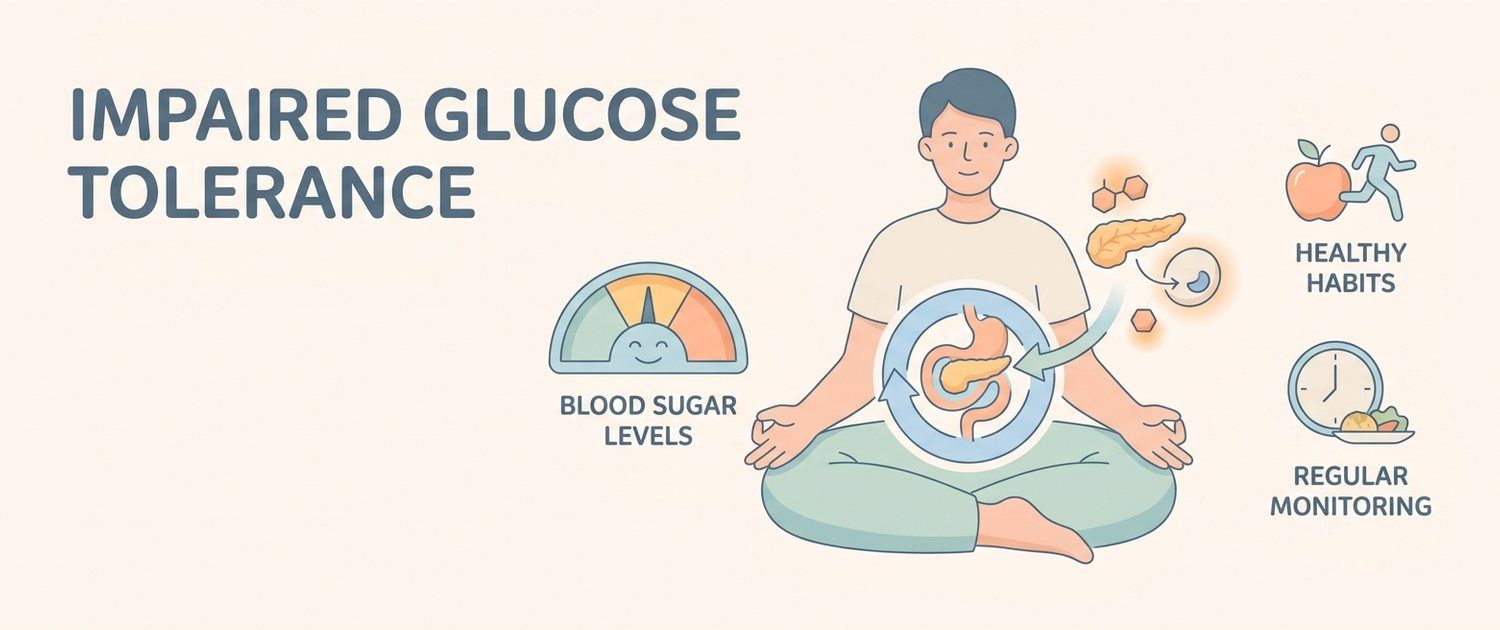
A common situation: someone regularly checks fasting glucose, it is normal, and the question feels settled. Several years later type 2 diabetes turns up. Between those two points there is almost always an intermediate stage that nobody was in a position to see — impaired glucose tolerance.
What it means
Normally, glucose rises after a meal and returns to baseline within about two hours: insulin does its job. With impaired tolerance that return is slowed — glucose stays elevated longer than it should.
The key detail: fasting values can be entirely normal. The body manages to bring levels down overnight but can no longer cope with a load. That is exactly why a routine morning test misses this state.
How IGT differs from prediabetes
Formally, prediabetes is an umbrella term covering two different variants. The first is impaired fasting glucose: the morning value is raised. The second is impaired glucose tolerance: the morning value is normal while the 2-hour post-load value is raised. They occur separately and together.
The practical significance is that they are detected by different tests. Someone with isolated IGT will be told «glucose normal» for years unless a load test is ever performed.
How it is detected
The only way to see IGT is an oral glucose tolerance test. Blood is taken fasting, a glucose solution is drunk, and blood is taken again after 2 hours. It is that second point that is assessed.
The landmarks for the 2-hour value are widely used: below 7.8 mmol/L is normal, 7.8–11.0 indicates impaired glucose tolerance, 11.1 and above meets the criterion for diabetes. Exact values and units are printed on your report, and the result should be read against those.
HbA1c is convenient for screening but often stays normal in isolated IGT: an average over months may not cross the threshold when only post-meal peaks are raised. So HbA1c alone cannot rule this out.
Measuring insulin at the same points is useful too — then you see not only «how much glucose» but «at what cost» it is held. That connects the picture to insulin resistance, which usually underlies IGT.
Who should consider testing
People with excess weight, especially around the abdomen; those with type 2 diabetes in close relatives; after gestational diabetes; with polycystic ovary syndrome; with hypertension and lipid abnormalities; and when HOMA-IR is raised while fasting glucose is normal. Indications are set by a doctor — a load test is not something to order for yourself.
How serious it is
Serious enough not to ignore: IGT substantially raises the risk of developing type 2 diabetes in the coming years and is linked to increased cardiovascular risk — and that risk rises before diabetes appears.
But there is a good part too: this is one of the most rewarding stages for intervention. Large lifestyle programmes showed a meaningful reduction in progression to diabetes through moderate weight loss and regular physical activity. At this stage, effort genuinely pays off.
What to do
The direction is the same as for insulin resistance and is covered in a separate article: weight loss where there is excess, regular activity with a mandatory resistance component, eating structured around adequate protein and fibre rather than fast carbohydrates, and proper sleep.
On post-meal peaks specifically: they are the main target here. Meal composition and a short walk after eating both help — working muscles take up glucose without insulin.
How often to recheck is decided by your doctor; usually annual review while risk factors persist. If you already have results, a read of your labs will show how glucose, insulin, lipids and liver connect in your particular picture.
For informational purposes only
This article is for informational purposes only and does not constitute medical advice, diagnosis, or treatment. Please consult a healthcare professional for medical guidance.