Inflammation and Depression: CRP as a Marker of Inflammatory Type
Reviewed by the LabReadAI medical team
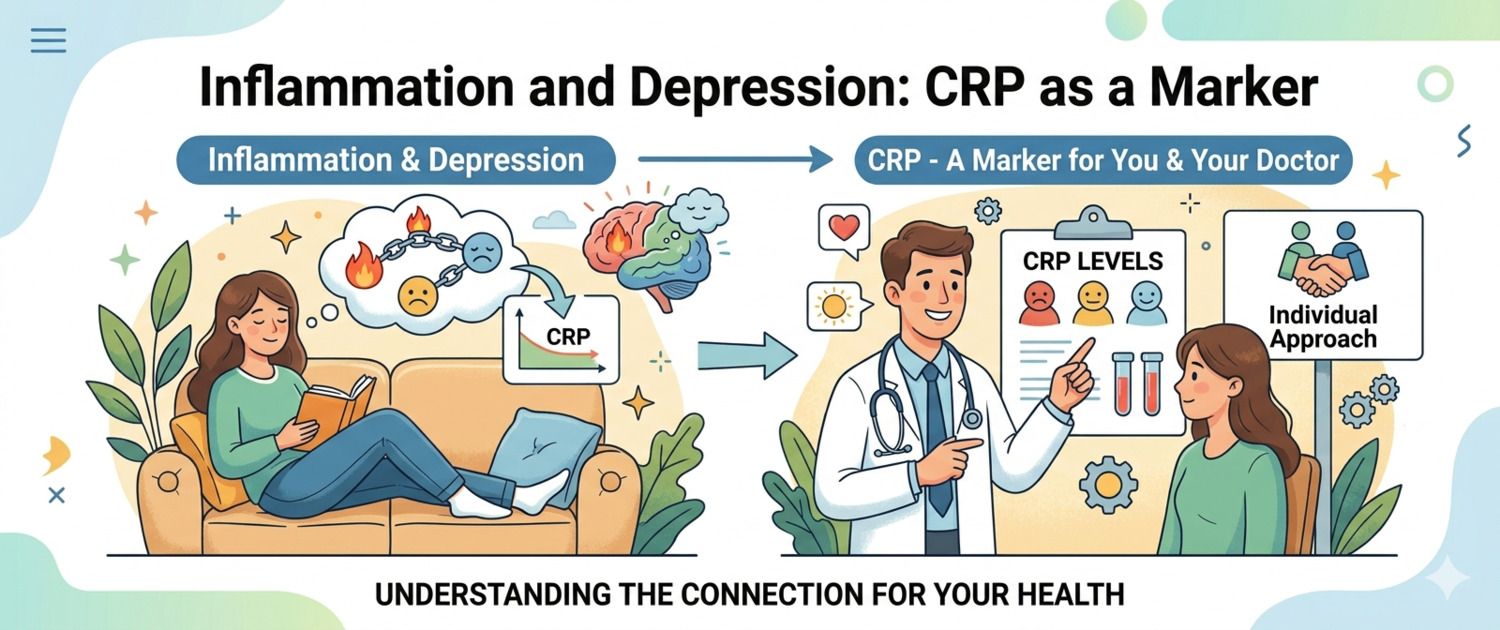
"Inflammatory depression" is a concept that has moved from academic biochemistry into clinical practice. Numerous meta-analyses have shown: with high-sensitivity CRP above 3 mg/L, SSRI antidepressants work significantly worse. This isn't an alternative to psychopharmacology — it's a refinement of its effectiveness and a clue that some patients with depression need a parallel anti-inflammatory strategy. Here's how it works and which lab tests are critical.
Inflammatory Depression and the Cytokine Theory
Modern neurobiology views depression as a heterogeneous condition with several subtypes. One is "inflammatory depression," characterized by:
- Elevated hs-CRP > 3 mg/L
- Elevated pro-inflammatory cytokines (IL-6, TNF-α, IL-1β)
- Microglial activation in the brain
- Disrupted serotonin synthesis through IDO enzyme activation (tryptophan diverted to kynurenine pathway instead of serotonin)
Sources of chronic inflammation provoking the depressive-anxious phenotype:
- Visceral obesity — adipose tissue as an endocrine-inflammatory organ
- "Leaky gut" and dysbiosis
- Chronic infections (Helicobacter, latent viral, periodontitis)
- Autoimmune diseases
- Chronic sleep deprivation and shift work
- Smoking
- Chronic stress and hypercortisolism
In inflammatory depression, the standard SSRI strategy is often insufficient. Either inflammation must be reduced, or alternative approaches used.
CRP and Antidepressant Effectiveness in Depression
Key clinical observation: with hs-CRP > 3 mg/L, SSRI effectiveness drops 30–50% relative to patients with CRP < 1 mg/L (STAR*D and similar work meta-analyses).
What this means in practice:
- Before starting antidepressant therapy, hs-CRP testing is desirable
- With CRP > 3 mg/L — search for the inflammation source in parallel
- With treatment-resistant depression (no SSRI response at 6–8 weeks) — hs-CRP testing is mandatory
- Anti-inflammatory strategies (omega-3, in some studies — celecoxib, minocycline) can augment SSRIs in this group
This isn't a reason to discontinue an antidepressant — it's a reason to add to the plan. The decision belongs to a psychiatrist.
Which Tests to Take
Base "inflammatory depression" block:
- hs-CRP — target < 1 mg/L; with anxiety/depression > 3 is grounds for further workup
- Homocysteine — methylation and inflammation marker, target < 10 µmol/L
- Ferritin — acute-phase marker, with hemoglobin assessed as inflammatory
- Fibrinogen — additional inflammation marker
- IL-6, TNF-α — in some labs, informative for complex cases
Inflammation source search:
- Stool calprotectin — gut inflammation
- HbA1c — metabolic inflammation
- Complete blood count — leukocytes, neutrophils, monocytes
- With suspected infections — Helicobacter antibodies, HIV/hepatitis screening
Parallel standard anti-anxiety/depression pack:
- TSH + anti-TPO
- Vitamin B12 and folate
- Vitamin D — deficiency itself is pro-inflammatory
- Glucose + insulin
Conveniently via the anxiety causes panel with inflammation marker focus.
Omega-3 and Anti-Inflammatory Therapy
Evidence base for anti-inflammatory strategies in depression:
High effectiveness:
- Omega-3 (EPA > 1 g/day) — the most evidence-based nutrient strategy in inflammatory depression. Several meta-analyses confirmed 20–30% symptom reduction, especially with high CRP.
- Weight loss (in obesity) — eliminates a key source of systemic inflammation
- Regular moderate exercise — reduces CRP 30–40%
- Adequate sleep 7–9 hours — sleep loss raises inflammatory cytokines
Moderate effectiveness:
- Curcumin 500–1000 mg/day — several RCTs in depression showed effect; the issue is low bioavailability of standard forms
- Mediterranean diet — reduces CRP and improves mood in comparative studies
- Reducing alcohol — alcohol is pro-inflammatory
Therapeutic (under medical supervision):
- Celecoxib 200 mg/day as SSRI augmentation — in several trials showed improved response in inflammatory depression
- Minocycline 200 mg/day — anti-inflammatory antibiotic, studied as augmentation
- Treating the inflammation source (celiac disease, Helicobacter, autoimmune diseases)
What doesn't work or works at the placebo edge:
- "Antioxidant" general supplements
- Isolated vitamin complexes without confirmed deficiency
- Standard curcumin in low doses (< 500 mg)
When to See a Doctor
To a primary care doctor / gastroenterologist for:
- hs-CRP > 3 mg/L on two measurements
- Concurrent somatic symptoms (GI, joints, skin)
- Suspected infectious or autoimmune process
To a psychiatrist for:
- Treatment-resistant depression — discuss the role of inflammation in the treatment plan
- Depressive-anxious symptoms with high CRP
For details on biochemical resistance causes see antidepressants not working. For the inflammation-gut link see gut and anxiety.
This article is for informational purposes only and does not replace professional medical advice. Psychopharmacotherapy changes are the psychiatrist's domain.
For informational purposes only
This article is for informational purposes only and does not constitute medical advice, diagnosis, or treatment. Please consult a healthcare professional for medical guidance.