Gut and Anxiety: Gut-Brain Axis, Serotonin and Microbiome
Reviewed by the LabReadAI medical team
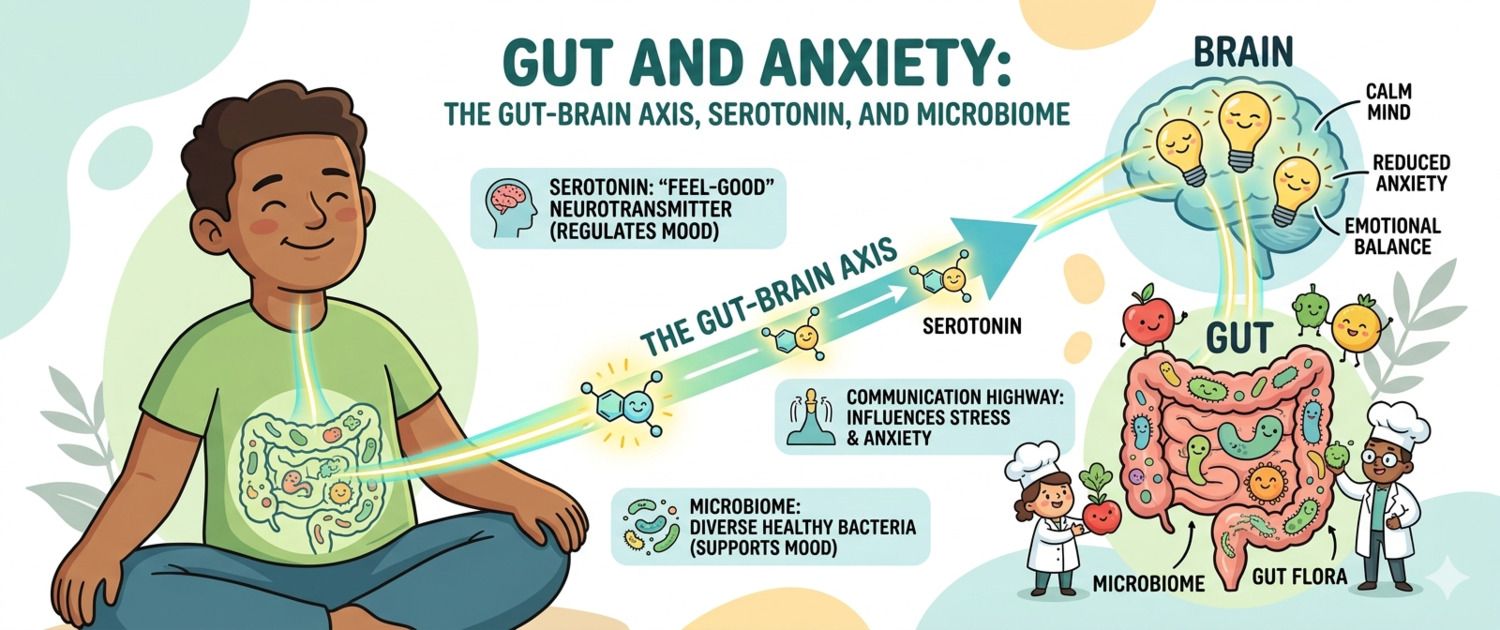
The "gut-brain axis" idea has stopped being alternative medicine — it's a confirmed scientific concept. 95% of serotonin is produced in the gut, gut bacteria synthesize GABA, and chronic gut inflammation affects anxiety and mood directly through cytokines. Here's which laboratory markers actually work for this link, and which "gut" interventions have shown effect.
Gut-Brain Axis and Serotonin: How It Works
Gut and brain are connected by two paths: neural (vagus nerve) and biochemical (hormones, neurotransmitters, cytokines). Key mechanisms:
- 95% of serotonin in the gut: enterochromaffin cells of the GI mucosa are the main producer. Although gut serotonin doesn't cross the blood-brain barrier and doesn't directly affect the brain, it regulates motility, tone, and the overall "message" to the brain via the vagus nerve.
- Gut microbiota: some bacterial strains synthesize GABA (Lactobacillus rhamnosus), serotonin precursors, short-chain fatty acids with anti-inflammatory effects.
- "Leaky gut": increased mucosal permeability → bacterial endotoxins (LPS) enter the bloodstream → immune activation → neuroinflammation → anxiety and depression.
- Chronic gut inflammation in SIBO, IBS, celiac disease, Crohn's: cytokines (IL-6, TNF-α) directly affect mood through microglial activation and neurotransmitter synthesis disruption.
For more on serotonin and its microbiome link see serotonin: what it is and neurotransmitters: serotonin, dopamine, GABA.
Calprotectin, Zonulin and CRP: Tests That Actually Work
Most "microbiome diagnostics" is marketing. What has real clinical value:
Stool calprotectin — a protein released by neutrophils in gut inflammation. Target — < 50 µg/g. Elevated (> 150) — sign of active inflammation requiring gastroenterology evaluation. Cheap, informative, evidence-based marker.
Blood or stool zonulin — protein regulating gut barrier permeability. Elevated levels mark "leaky gut." The method is debated but used in functional medicine.
C-reactive protein (hs-CRP) — general systemic inflammation marker. > 3 mg/L — search for source, including gut.
Vitamin B12 + folate + vitamin D — their deficiency is often linked to impaired absorption from gut problems.
Ferritin — low ferritin can result from chronic gut inflammation (including occult celiac or SIBO).
Homocysteine — methylation and cofactor deficiency marker.
With prominent GI symptoms alongside anxiety:
- Anti-gliadin and anti-tissue transglutaminase antibodies — celiac screening
- Hydrogen lactulose breath test — SIBO diagnostics
- Stool occult blood, parasites
Conveniently through the anxiety causes panel extended with gut markers as indicated.
"Microbiome analysis" through 16S sequencing — does not yet have validated clinical applicability and is usually not needed.
Psychobiotics and Probiotics for Anxiety
Evidence base for "psychobiotics" (probiotics affecting mood):
- Lactobacillus rhamnosus — reduces anxiety in animal models and some clinical trials; the most studied strain
- Lactobacillus reuteri — modulates GABAergic pathways
- Bifidobacterium longum — reduces cortisol and improves mood
- Lactobacillus + Bifidobacterium mixes in trials showed 20–30% anxiety reduction over 4–8 weeks
The effect is modest compared to antidepressants but justified as a complementary strategy, especially with anxiety + IBS.
What truly works (evidence base stronger than most supplements):
- Fiber 25–35 g/day — food for beneficial microbiota, source of short-chain fatty acids
- Fermented foods (sauerkraut, kimchi, kefir) — natural probiotics
- Omega-3 (EPA > 1 g/day) — anti-inflammatory effect on gut and brain
- Reducing chronic stress — cortisol worsens the gut barrier
- Adequate sleep — circadian rhythm matters for the microbiota
What does NOT work (or works at the placebo edge):
- "General" low-dose probiotics
- "Gut cleanses," enemas, detox
- Strict elimination diets without confirmed intolerance
Microbiome, Inflammation and Autoimmune Disease
Chronic gut inflammation is a risk factor for autoimmune diseases, many of which accompany anxiety:
- Celiac disease — gluten in genetically predisposed people causes gut inflammation and nervous system attack. 30–50% of celiac patients have anxiety/depression. Screening — anti-tissue transglutaminase antibodies.
- Autoimmune thyroiditis (Hashimoto's) often coexists with celiac disease and gut inflammation; causes anxiety, see thyroid and anxiety.
- Inflammatory bowel disease (IBD) — Crohn's, ulcerative colitis — high frequency of depression and anxiety.
With anxiety + GI symptoms (bloating, irregular stools, pain), gastroenterology workup with screening for these is mandatory.
When to See a Doctor
To a gastroenterologist for:
- Anxiety + GI symptoms (bloating, diarrhea, constipation, pain)
- Calprotectin > 150 µg/g
- Suspected celiac or SIBO
- Family history of IBD
To a psychotherapist/psychiatrist in parallel for:
- Chronic anxiety unresponsive to gut problem correction
- Depressive-anxious symptoms
For details on the inflammation-mind link see inflammation and depression: CRP.
In children the same link usually shows as recurrent abdominal pain — see abdominal pain in children.
This article is for informational purposes only and does not replace professional medical advice. Self-administered probiotics with GI symptoms don't replace workup.
For informational purposes only
This article is for informational purposes only and does not constitute medical advice, diagnosis, or treatment. Please consult a healthcare professional for medical guidance.