Serotonin: What It Is, Where It Is Made and What It Does
Reviewed by the LabReadAI medical team
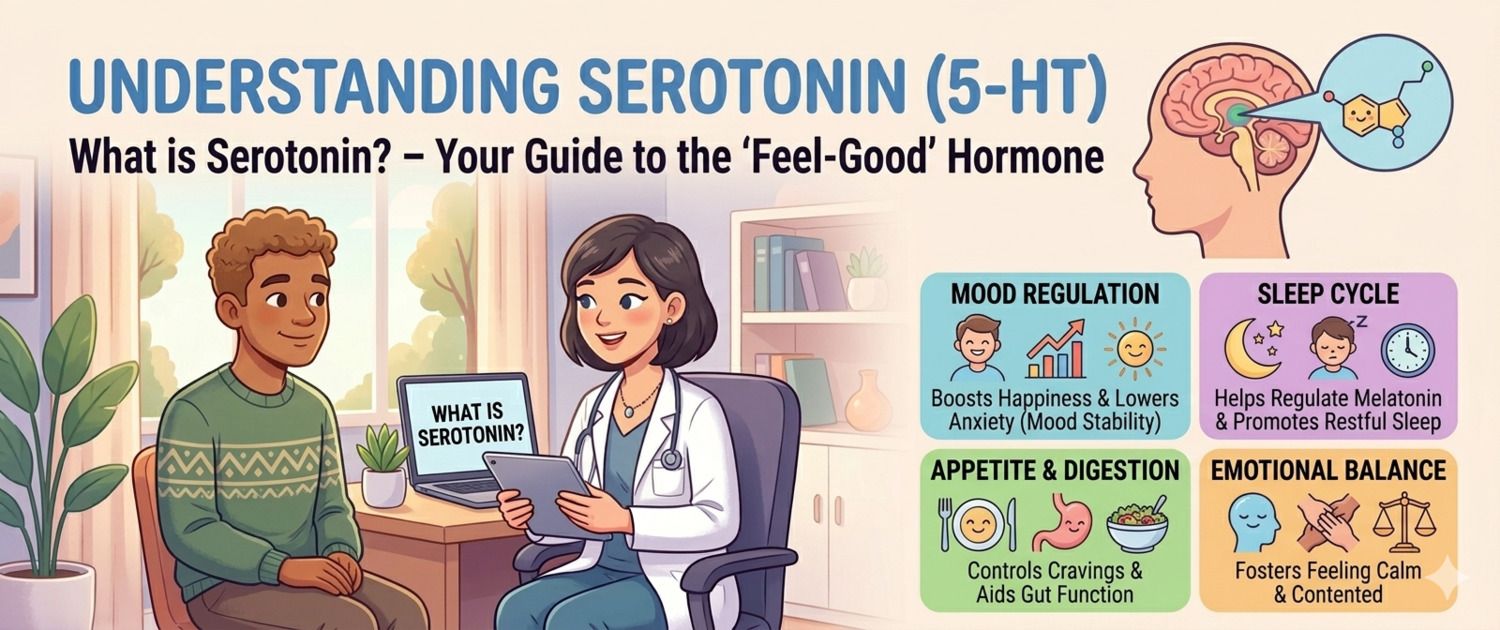
"Serotonin is the happiness hormone" — one of the most popular and simultaneously most misleading simplifications in biology. Yes, serotonin affects mood. But 95% of all serotonin in the body is not in the brain — it is in the gut, where it regulates intestinal motility and has nothing to do with emotions. Let's look at what serotonin actually is, why it serves three entirely different roles in the body, and why a blood test for serotonin tells you almost nothing about your mood.
What Is Serotonin and Where Is It Made
Serotonin (5-hydroxytryptamine, 5-HT) is a biologically active substance that functions simultaneously as a neurotransmitter, a local hormone, and a signalling molecule. It is synthesised from the amino acid tryptophan in two steps: tryptophan → 5-hydroxytryptophan (5-HTP) → serotonin. The key enzyme in the second step is DOPA-decarboxylase.
Serotonin synthesis occurs in three main locations — and understanding this is fundamental to understanding its functions:
The gut (~95%) — enterochromaffin cells of the small intestinal mucosa synthesise the vast majority of the body's serotonin. This serotonin regulates intestinal motility and does not cross the blood-brain barrier — it has no effect on mood whatsoever.
The brain (~5%) — neurons in serotonergic nuclei (primarily the raphe nuclei) synthesise serotonin that acts as a neurotransmitter. This small pool is responsible for regulating mood, sleep, appetite, and cognitive function. Tryptophan enters the brain from the blood — so diet and plasma tryptophan levels indirectly influence brain serotonin synthesis.
Platelets — do not synthesise serotonin themselves but take it up from blood and store it. When platelets activate, serotonin is released and participates in aggregation and vasoconstriction.
Three Roles of Serotonin: Neurotransmitter, Gut Regulator, Platelet Factor
Serotonin in the Brain: Mood, Sleep, Appetite
In the central nervous system, serotonin modulates a wide range of functions: mood and emotional stability; the sleep-wake cycle (serotonin is the precursor of melatonin); appetite and satiety; pain sensitivity; anxiety and impulsivity.
Reduced serotonergic transmission is linked to depression, anxiety disorders, and OCD. This is why most modern antidepressants are selective serotonin reuptake inhibitors (SSRIs): they increase serotonin concentration in the synaptic cleft without boosting its synthesis.
An important clarification: serotonin is not the "happiness hormone" in any direct sense. It creates a background emotional tone — calm, stability, contentment. Acute pleasure and euphoria involve dopamine and endorphins, not serotonin.
Serotonin in the Gut: Peristalsis and the "Second Brain"
The gut is called the "second brain" for good reason — it has its own nervous system (the enteric nervous system), in which serotonin plays a central role. It triggers peristaltic reflexes, regulates the speed of intestinal transit, stimulates secretion, and influences abdominal pain perception.
In irritable bowel syndrome, serotonergic signalling is disrupted — which is why some IBS medications target serotonin receptors (5-HT3 and 5-HT4 agonists and antagonists).
The gut-brain connection through serotonin works in both directions: stress disrupts intestinal motility, and an unhealthy gut can influence mood — through the vagus nerve and systemic inflammation.
Serotonin in Blood: Platelets and Vessels
Platelet serotonin, released on platelet activation, causes vasoconstriction of damaged vessels and enhances aggregation — an important component of primary haemostasis. This platelet pool is what a standard blood test measures — and it has no direct relationship to brain serotonin.
Blood Test for Serotonin: When and Why It Is Ordered
An important misconception to address: a blood test for serotonin does not measure serotonin levels in the brain. It reflects serotonin in platelets and plasma — primarily of intestinal origin. Brain serotonin does not reach peripheral blood because of the blood-brain barrier.
Genuine indications for a serotonin blood test:
Carcinoid tumours — neuroendocrine tumours of the gut or lungs that autonomously produce large amounts of serotonin. Carcinoid syndrome: episodes of flushing, diarrhoea, bronchospasm, cardiac valve involvement. Blood serotonin in carcinoid: 300–1700 nmol/L (vs normal 40–80 nmol/L). The 24-hour urine 5-HIAA (5-hydroxyindoleacetic acid) — a serotonin metabolite — is actually a more specific diagnostic marker.
Normal serotonin level in blood — 40–80 nmol/L (50–200 ng/mL; reference ranges vary between laboratories).
Ordering a serotonin test "to check for depression" or "to assess mood" has no clinical rationale. Depression is diagnosed using clinical scales and interviews — not blood serotonin levels.
What Affects Brain Serotonin
Since brain serotonin is synthesised from dietary tryptophan, nutrition and lifestyle indirectly influence its level.
Dietary tryptophan. Turkey, eggs, cheese, fish, nuts, legumes, pumpkin seeds — rich tryptophan sources. But intake alone is not enough: transport into the brain depends on the ratio of tryptophan to other large neutral amino acids (they compete for the same transporter). Carbohydrates indirectly increase brain tryptophan availability by stimulating insulin release — which is why people crave sweets when mood is low.
Physical activity. Regular aerobic exercise increases serotonin synthesis and release in the brain — one of the proven mechanisms behind the antidepressant effect of exercise.
Sunlight. Bright light stimulates the serotonergic system and vitamin D synthesis. This explains seasonal affective disorder (winter depression) — shorter days reduce serotonergic activity and accelerate melatonin synthesis.
Gut microbiome. Intestinal bacteria regulate serotonin synthesis in enterochromaffin cells. Microbiome disruption (dysbiosis) reduces intestinal serotonin and may influence the central serotonergic system through the gut-brain axis.
Cortisol. Chronic stress and chronically elevated cortisol reduce serotonin receptor expression and impair serotonergic transmission. This is the biochemical mechanism linking chronic stress and depression.
Serotonin Syndrome: When There Is Too Much Serotonin
Excess serotonin is dangerous. Serotonin syndrome develops from excessive serotonergic stimulation — most commonly from combinations or overdoses of serotonergic drugs: SSRIs + MAOIs, SSRIs + triptans, SSRIs + tramadol, SSRIs + lithium, and others.
The classic symptom triad:
- Neuromuscular abnormalities — tremor, myoclonus, hyperreflexia, muscle rigidity
- Autonomic dysfunction — tachycardia, hypertension, hyperthermia, diaphoresis, diarrhoea
- Altered mental status — agitation, confusion, restlessness
Serotonin syndrome is a medical emergency: in severe cases body temperature can exceed 41°C, and rhabdomyolysis and multi-organ failure may develop. The first step is immediate discontinuation of all serotonergic agents.
Serotonin and Melatonin: A Direct Biochemical Link
Serotonin is the immediate precursor of melatonin: in the pineal gland, serotonin is converted to N-acetylserotonin and then to melatonin. This process is activated by darkness and suppressed by light.
Practical implication: tryptophan deficiency → reduced serotonin → reduced melatonin → disrupted sleep. This is why depression and sleep disorders so frequently co-occur — they share a common biochemical substrate.
Under chronic stress with elevated cortisol, both serotonergic transmission and the nocturnal melatonin peak are disrupted simultaneously — a double hit to sleep and mood.
When to See a Doctor
Immediately for symptoms of serotonin syndrome: tremor + tachycardia + high temperature + agitation after starting or combining serotonergic medications.
Routine referral to a psychiatrist or neurologist: persistent low mood, anxiety, or sleep disturbance lasting more than 2 weeks; suspected carcinoid tumour (episodic flushing, chronic diarrhoea, bronchospasm).
Summary
Serotonin is a multifunctional molecule with three entirely different roles. 95% of it is in the gut, where it regulates motility. 5% is in the brain, where it shapes mood and sleep. A blood serotonin test measures the platelet pool — not the brain pool — and is not used for depression diagnosis. Its synthesis depends on tryptophan, physical activity, light, and gut microbiome health. And the most important fact about serotonin: too much is just as dangerous as too little.
This article is for informational purposes only. For symptoms of depression, anxiety, or sleep disorders — medical consultation is essential.
For informational purposes only
This article is for informational purposes only and does not constitute medical advice, diagnosis, or treatment. Please consult a healthcare professional for medical guidance.