Iron and the Nervous System: Ferritin, Dopamine and Anxiety
Reviewed by the LabReadAI medical team
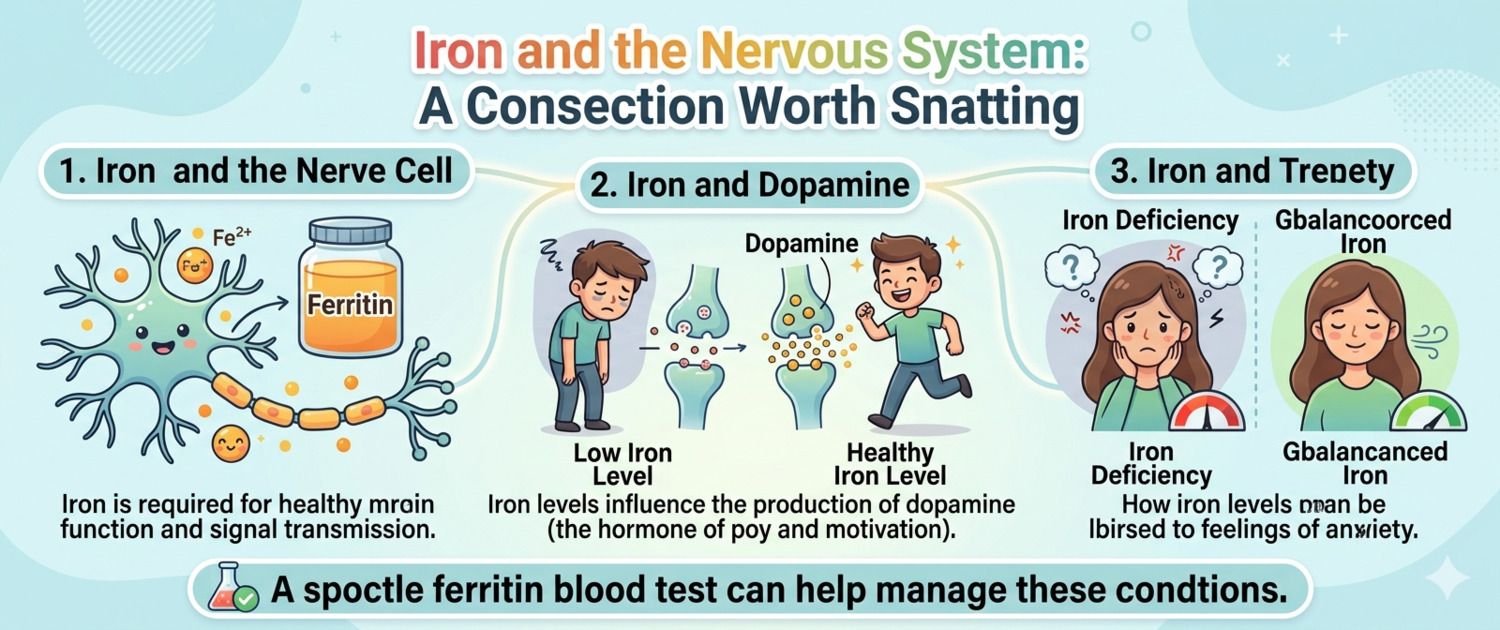
Iron is associated with hemoglobin and anemia, but its role in the nervous system is much broader. Iron is a mandatory cofactor of tyrosine hydroxylase, the enzyme converting tyrosine to dopamine. Without sufficient iron, dopamine isn't synthesized adequately — hence apathy, low motivation, anxiety, and sleep disturbance. These symptoms appear before anemia develops, in "masked" iron deficiency with normal hemoglobin.
Iron in Neurotransmitter Synthesis
Iron participates in several brain-critical processes:
- Dopamine synthesis — the iron-dependent enzyme tyrosine hydroxylase converts tyrosine to L-DOPA, the dopamine precursor
- Serotonin synthesis — iron is needed for tryptophan hydroxylase, converting tryptophan to 5-HTP
- GABA synthesis — iron participates in several steps
- Myelination — iron is required for myelin sheath formation
- Neuronal energy metabolism — iron in the mitochondrial respiratory chain
With iron deficiency, these processes fail, producing the characteristic clinical picture — apathy, anxiety, sleep disturbance, restless legs syndrome, brain fog.
A particular feature: brain iron deficiency can occur with normal hemoglobin. Hemoglobin is the last marker to fall in iron deficiency. Stores deplete first (low ferritin), then transport (transferrin), and only at the end — hemoglobin.
Dopamine and Anxiety: A Paradoxical Link
It's commonly assumed that anxiety is "excess neurotransmitters." In fact some anxiety is a consequence of deficiency — particularly dopaminergic. Dopamine drives motivation, pleasure, and focus — and it is dopamine that popular texts blame for the "dopamine pit"; what is true there is unpacked in a separate article. With its deficit:
- Drive and initiative fall
- Paradoxical anxiety appears through depleted motivational systems
- Anhedonia develops — inability to feel pleasure
- Focus suffers — "brain fog"
- Stimulant cravings intensify (coffee, nicotine, sugar)
Low dopamine often masquerades as depression but has an anxious component, especially combined with GABA deficiency (magnesium). For more on neurotransmitters see neurotransmitters: serotonin, dopamine, GABA.
Low Ferritin: Symptoms
Ferritin is the principal marker of iron stores. Target for well-being — > 50 ng/mL, optimally 70–100. Levels 20–50 are formally "normal" but clinically often linked to symptoms.
Low ferritin symptoms:
- Psychoemotional: anxiety, irritability, emotional lability, apathy, low motivation, depressive background
- Sleep: sleep-onset difficulty, night awakenings, restless legs syndrome (evening "leg jerking")
- Cognitive: brain fog, reduced concentration, forgetfulness, slowed thinking
- Physical: fatigue, exertional dyspnea, dizziness, hair loss, brittle nails
- GI: taste perversion (cravings for ice, chalk, soil — pica)
- Skin: pallor, dryness
At-risk groups:
- Women of reproductive age with heavy menstruation
- Pregnant and breastfeeding women
- Vegans and vegetarians
- Blood donors
- Endurance athletes
- Post-bariatric surgery patients
- Chronic blood loss (ulcers, hemorrhoids, endometriosis)
Which Tests to Take
A standard "complete blood count" is insufficient — it shows hemoglobin, which falls late. Informative:
Base block:
- Ferritin — main store marker; target > 50 ng/mL
- Hemoglobin (CBC) — last line of defense
- MCV (mean cell volume) — falls in iron deficiency
Extended block:
- Serum iron — less informative, fluctuates strongly
- Transferrin and transferrin saturation — to differentiate causes
- C-reactive protein — ferritin can be artifactually elevated in inflammation
For suspected occult iron deficiency:
- Stool occult blood — for suspected GI losses
- Gastroscopy and colonoscopy — in patients over 50 with iron deficiency
- Heavy menstruation — gynecology workup
- Celiac disease (anti-TTG antibodies) — gut malabsorption
Conveniently via the anxiety causes panel with ferritin focus or the hormone panel.
How to Raise Ferritin
Iron repletion requires patience — the target is reached in 3–6 months.
Principles:
- Iron form: ferrous sulfate, iron bisglycinate, ferrous lactate — standard. No ideal form; the main thing is compliance.
- Doses: 50–100 mg elemental iron daily; high doses (>200 mg) increase side effects without effect gain
- Timing: fasting or with vitamin C — improves absorption; with food — better tolerated, lower absorption
- Alternate days: for poor tolerance — every other day, comparable absorption
- Avoid: simultaneously with dairy, coffee, tea, calcium, zinc — they reduce absorption
Monitoring:
- Hemoglobin — at 4–6 weeks if was low
- Ferritin — at 8–10 weeks
- With poor response — search for loss source, consider IV iron
The effect on anxious-nervous symptoms typically appears at 6–10 weeks — earlier than hemoglobin and ferritin in blood, because the brain receives iron preferentially.
When to See a Doctor
To a primary care doctor for:
- Confirmed iron deficiency — repletion regimen and monitoring
- Suspected occult blood loss
- Hemoglobin < 110 in women or < 120 in men
To a gastroenterologist for:
- Iron deficiency in men (always suspicious for GI losses)
- Iron deficiency in women over 50
- Positive stool occult blood
To a gynecologist for:
- Iron deficiency + heavy/painful menstruation
- Suspected endometriosis, fibroids
For details on ferritin and full anxiety workup see anxiety: which lab tests.
This article is for informational purposes only and does not replace professional medical advice. Iron repletion is best done with laboratory monitoring.
For informational purposes only
This article is for informational purposes only and does not constitute medical advice, diagnosis, or treatment. Please consult a healthcare professional for medical guidance.