Inositol by the Label: Myo-Inositol vs D-Chiro and the 40:1 Ratio
Reviewed by the LabReadAI medical team

Inositol is a rare case where one word on the shelf covers two different substances, and doses are measured in grams rather than milligrams. Below is how to read an inositol label: how myo-inositol and D-chiro-inositol differ, what the 40:1 ratio means, why a powder serving is 2 g but a capsule serving is 8 pieces, what is usually placed next to it in the formula, and how to compare two products by price per gram of myo-inositol.
The conditions in which inositol is discussed with a doctor — above all PCOS and insulin resistance — are covered in the dedicated articles. Here — the label only.
Myo-inositol or D-chiro-inositol: forms on the label
| Form on the label | What it is | Typical dose per serving | Notes |
|---|---|---|---|
| Myo-inositol | main isomer, ~99 % of body inositol | 1,000–2,000 mg | best studied; «inositol» without qualification means this |
| D-chiro-inositol | second isomer, made from myo- in tissues | 25–600 mg | a small share in combinations; less studied alone at high doses |
| Myo + D-chiro 40:1 | combination in physiological proportion | 2,000 mg + 50 mg | the most common «reproductive» formula |
| Inositol hexaphosphate (IP6, phytate) | a different compound | 500–1,000 mg | does not replace myo-inositol; separate topic |
| Inositol nicotinate | ester with nicotinic acid | 500–1,000 mg | a form of niacin, not of inositol; do not confuse |
Myo-inositol is the only isomer with an adequate base of randomised trials; the 2018 Cochrane review of inositol in women with PCOS and subfertility rated the evidence as limited and low quality — the substance is studied, but that does not confirm label promises. The 40:1 combination became popular after a small comparative study by Nordio and Proietti (2012), in which this proportion gave a better metabolic outcome than myo-inositol alone; the study is small and its findings have been only partly replicated. D-chiro-inositol alone at high doses is the least studied option, and there is no basis for buying «pure D-chiro» without a prescription.
How many grams per serving and what that looks like on the shelf
Inositol is neither a vitamin nor a mineral, so the Russian MR 2.3.1.0253-21 has no reference intake for it, and EFSA has not set an upper level. The benchmark is doses from studies: 2 g of myo-inositol twice a day (4 g/day), less often 1–2 g. The international inositol consensus group and the safety review by Carlomagno and Unfer (2011) describe doses up to 12 g/day as tolerated with side effects only from the GI tract (bloating, loose stools) — but that is no reason to take more: the effect of doses above 4 g has not been studied.
On the shelf it looks like this: powder — a 2 g scoop, a 200–400 g tub for 50–100 servings; capsules — usually 500 mg, i.e. 4 capsules per 2 g and 8 for the daily 4 g, a 120-capsule bottle lasts 15 days. On capsule labels the maker often writes «inositol 2000 mg» per serving of 4 capsules — check how many capsules make a serving. 2 g sachets are the same powder with a surcharge for packaging.
What the 40:1 ratio means
40:1 is the ratio of myo-inositol to D-chiro-inositol by mass, mirroring the proportion in blood plasma. On the label look for two lines: «myo-inositol 2000 mg» and «D-chiro-inositol 50 mg». If only «inositol 2000 mg» is listed, that is myo-inositol with no D-chiro, and «40:1» on such a pack is an error or marketing. Ratios of 3.6:1, 10:1 and 1:1 also exist; there is little clinical comparison between them, and the best-studied combination is 40:1. «Pure D-chiro 600 mg» is a different product with a different and less convincing evidence base.
What else to check in the formula
- Folic acid or methylfolate (200–400 mcg) — a standard neighbour in «reproductive» formulas; check it does not duplicate your vitamin complex.
- Sweeteners and flavourings — in flavoured powders; myo-inositol is mildly sweet on its own, and plain powder dissolves easily in water.
- Alpha-lipoic acid, chromium, vitamin D — found in «metabolic» complexes; they do not replace the inositol dose but do raise the price.
- Position in the list. In 500 mg capsules inositol should come first; if a filler comes first, the dose per capsule is below the claim.
- Registration. The registration number on the pack lets you cross-check the formula against the official register.
How to compare two products: price per gram
Divide the pack price by the mass of myo-inositol in grams (for powder — usually the net weight; for capsules — number of capsules × mg per capsule ÷ 1000). Powder usually costs 3–6 times less per gram than capsules; 40:1 combinations cost 30–100 % more than plain myo-inositol for an addition of just 50 mg D-chiro. At 4 g/day the monthly price difference is noticeable, so comparing tubs by price without converting to grams is meaningless.
Checklist before buying
- Find the isomer: «myo-inositol» by default; «40:1» only if both lines with mg are listed in the formula.
- Count grams per serving and servings per pack: 4 g/day is 8 capsules of 500 mg.
- Unflavoured powder is the cheapest way to get grams; capsules are a surcharge for convenience.
- Check the neighbours: folate is appropriate, «metabolic» add-ons are a reason to compare price per gram with the plain product.
- Do not buy «inositol nicotinate» or IP6 if you need myo-inositol — they are different substances.
- Discuss intake with a doctor: inositol replaces neither treatment nor testing.
Is this inositol right for you
The label tells you whether a product is honest and what a gram costs. Whether you need inositol is told by fasting insulin and glucose with the HOMA-IR index, a hormone panel and a gynaecologist's or endocrinologist's opinion: irregular cycles and weight gain have many causes, and inositol replaces neither diagnosis nor treatment. Upload your report — the service will match what you actually need. How products are scored in this section is explained on the method page. Products with inositol and their label score are in the catalogue.
Products with this nutrient in the catalogue
Full catalogue →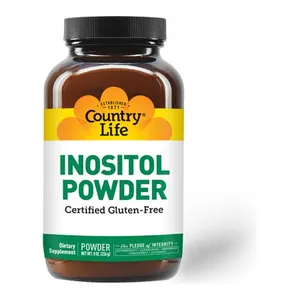
For informational purposes only
This article is for informational purposes only and does not constitute medical advice, diagnosis, or treatment. Please consult a healthcare professional for medical guidance.