High ALT Levels: Normal Range, Causes and When to See a Doctor
Reviewed by the LabReadAI medical team
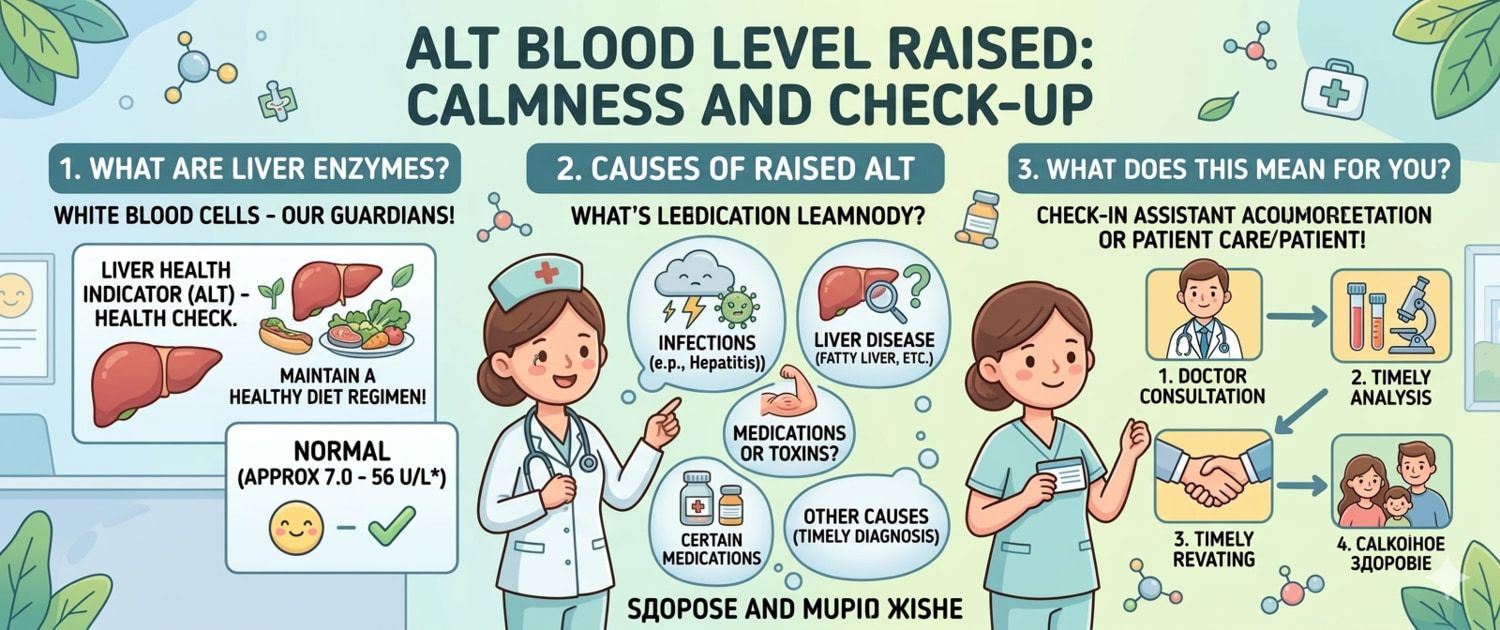
Your blood chemistry came back with ALT flagged — and now you're wondering whether this is something to worry about or just a reason to repeat the test. ALT is one of the most sensitive markers of liver health, but a single abnormal result doesn't automatically mean disease. Here's what alanine aminotransferase is, what counts as normal for men, women, and children, why the enzyme rises or falls, and when a result genuinely calls for urgent medical attention.
What Is ALT and Why Does It Matter in Blood Chemistry
ALT, or alanine aminotransferase, is an enzyme involved in amino acid metabolism. It's found in highest concentrations in liver cells — hepatocytes — and in smaller amounts in the kidneys, heart muscle, and skeletal muscle.
Under normal circumstances, very little ALT enters the bloodstream. When hepatocytes are damaged or destroyed — by inflammation, toxins, or viral infection — the enzyme leaks into the blood and levels rise sharply. This is why ALT is called a specific marker of liver damage: it responds to the problem before any symptoms appear.
In a biochemical blood panel, ALT is almost always reported alongside AST — together, the two enzymes tell the doctor far more than either one alone. On lab reports, the marker appears as ALT or ALAT.
Normal ALT Levels by Sex and Age
ALT reference ranges depend on sex and age. Men have a higher upper limit than women, linked to greater muscle mass and hormonal differences. Infants under one year have higher values than adults due to rapid growth and liver development.
| Group | Normal Range (U/L) |
|---|---|
| Men | up to 41 |
| Women | up to 31 |
| Pregnant women | up to 35 |
| Children under 1 year | up to 54 |
| Children 1–14 years | up to 39 |
Reference ranges can differ slightly between laboratories depending on the measurement method. Always use the ranges printed on your specific lab report — not values from the internet.
Why Is ALT High? Causes and Degrees of Elevation
Elevated ALT almost always signals liver cell damage. But the degree of elevation matters: a mild rise is interpreted very differently from a tenfold or hundredfold increase.
Mild elevation (2–5 times the upper limit) is most commonly linked to non-alcoholic fatty liver disease (fat accumulation in the liver from obesity or metabolic syndrome), medications (statins, antibiotics, high-dose acetaminophen, antifungals), moderate alcohol consumption, or intense physical exercise the day before the test.
Moderate elevation (5–10 times) is characteristic of chronic viral hepatitis B or C, autoimmune hepatitis, early-stage cirrhosis, or bile duct obstruction from gallstones.
Marked elevation (more than 10 times) signals acute liver injury. Acute viral hepatitis A, drug-induced or toxic liver damage, and ischemic hepatitis — which can follow a sudden loss of liver blood supply during events like myocardial infarction — can drive ALT dozens or even hundreds of times above normal.
One important caveat: ALT doesn't only rise with liver disease. Skeletal muscle damage from major trauma, rhabdomyolysis, or very intense training also causes a moderate increase. This is why the result is always interpreted in the context of symptoms and other laboratory findings.
Why Is ALT Low? What to Pay Attention To
Low ALT gets far less attention than high ALT — and that's a mistake.
The most common explanation for below-normal values is vitamin B6 (pyridoxine) deficiency: B6 is a coenzyme that the body needs to synthesize ALT. Without it, production drops. A similar picture appears with prolonged fasting and severe malnutrition.
End-stage cirrhosis produces a counterintuitive but important scenario: when almost no hepatocytes remain, there's nothing left to produce ALT. A normal or low ALT in the context of other signs of liver failure is a warning sign, not reassurance.
Severe renal failure disrupts overall metabolism and can suppress the activity of many enzymes, including ALT. Isolated low ALT without clinical context rarely requires treatment — but it's worth mentioning to a doctor.
ALT and AST: How to Read Both Together
ALT alone gives an incomplete picture. Paired with AST (aspartate aminotransferase), it allows the doctor not just to confirm cellular damage, but to identify which organ is most affected.
| Marker | Main Source | What elevation suggests |
|---|---|---|
| ALT | Liver | Hepatocyte damage |
| AST | Heart, muscles, liver | Heart or muscle damage |
The key tool is the de Ritis ratio (AST/ALT). In health, this ratio hovers around 1. When it falls below 1, liver disease — viral hepatitis, fatty liver — becomes more likely. When it rises above 2, alcoholic liver disease or cardiac muscle damage moves to the top of the list. This simple calculation helps the doctor narrow the differential before any additional tests are ordered.
For a complete picture of liver function, ALT and AST are supplemented with alkaline phosphatase, GGT, and bilirubin. When metabolic dysfunction is suspected, it's worth checking blood glucose at the same time — fatty liver disease and insulin resistance frequently go hand in hand.
How to Prepare for an ALT Blood Test
Poor preparation can skew the result and produce a false elevation. The rules are simple but strict.
Blood is drawn fasting — at least 8–12 hours after the last meal. Fatty food stimulates enzyme release and can temporarily raise ALT. Alcohol and intense physical activity should be avoided for 24 hours beforehand: even a standard gym workout produces a moderate ALT rise from micro-damage to muscle fibers. No smoking for 30 minutes before the draw.
Always tell your doctor about any medications you're taking. Statins, acetaminophen, antibiotics, antifungals, and oral contraceptives all affect ALT levels. Sometimes the doctor will recommend pausing a medication before the test; sometimes they'll simply factor it into the interpretation.
When to See a Doctor Urgently
Seek immediate medical attention if elevated ALT is accompanied by:
- Jaundice — yellowing of the skin or whites of the eyes.
- Dark urine and pale stools.
- Acute pain in the right upper abdomen.
- High fever and signs of systemic illness.
Schedule a routine appointment with a GP or gastroenterologist if:
- ALT exceeds the upper limit of normal by more than twice — even without any symptoms.
- Elevation is confirmed on a repeat test one to two weeks later.
- You are taking hepatotoxic medications and want to monitor their effect on the liver.
A result ten times or more above normal warrants a visit within days, not weeks. Values at that level require urgent investigation.
Conclusion
ALT is an early and sensitive signal of liver health. A mild deviation often turns out to be temporary and resolves after lifestyle changes or stopping a medication. A significant rise calls for a full workup, starting with a GP visit and an expanded chemistry panel. Interpreting ALT in isolation — without AST, clinical context, and the rest of the biochemistry — means risking the wrong conclusion in either direction.
The third member of that trio is the pigment that reports not on cell damage but on whether the liver is coping and whether bile is draining freely. What high bilirubin levels alongside a raised ALT mean, and how the direct fraction differs from the indirect one, is covered separately.
This article is for informational purposes only. Interpreting test results and prescribing treatment is exclusively the responsibility of a physician.
For informational purposes only
This article is for informational purposes only and does not constitute medical advice, diagnosis, or treatment. Please consult a healthcare professional for medical guidance.