What Blood Tests to Take for High Blood Pressure and Why
Reviewed by the LabReadAI medical team
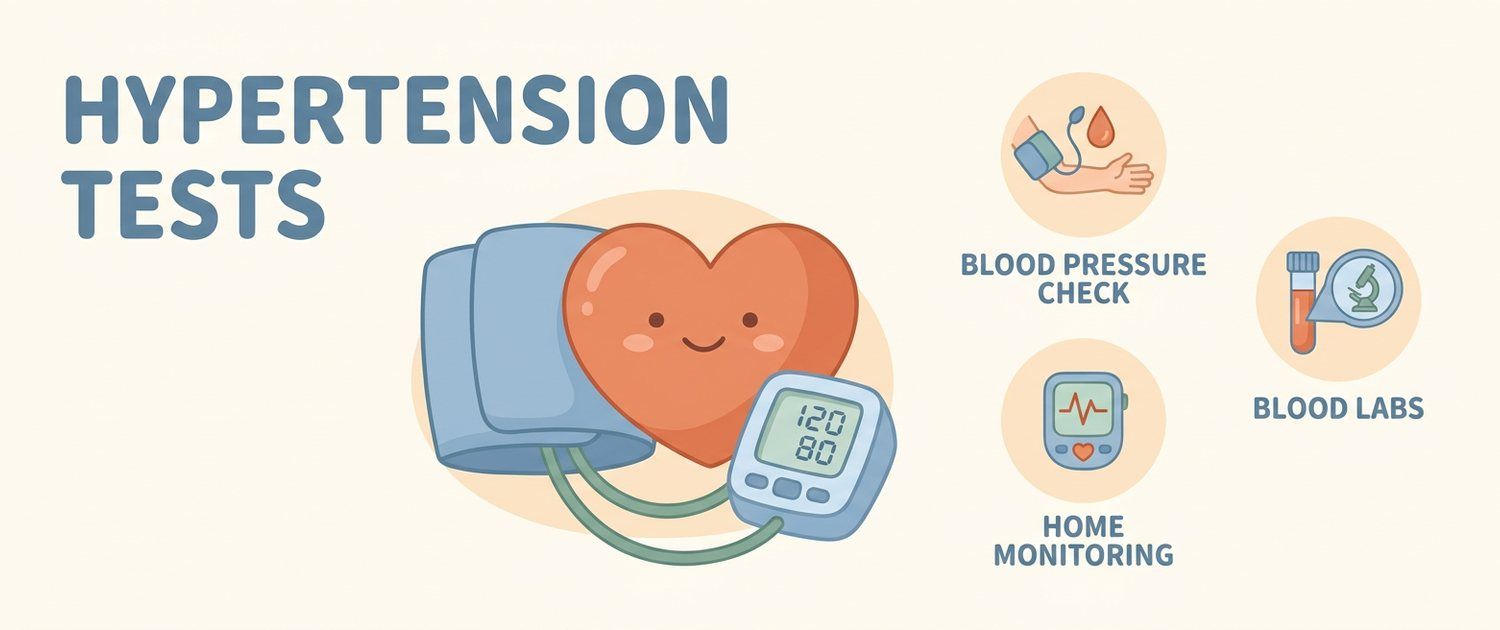
High blood pressure itself is measured with a cuff — so why lab tests? Because the number on the screen cannot answer three key questions: what is the total risk of heart attack and stroke, is the pressure a symptom of another disease, and have the target organs already suffered. The lab answers all three. Below: the guideline base set, the situations where secondary hypertension is suspected, and the follow-up schedule.
Why tests, if the problem is "the pressure"
Hypertension almost never comes alone: it shares roots with lipid and glucose disorders, and its targets — kidneys, heart and vessels — suffer silently. With newly detected high pressure, tests are needed to:
- estimate total risk — doctors treat the probability of heart attack and stroke, not a single number; estimate your ten-year risk in the SCORE2 calculator;
- rule out secondary causes — in roughly 5–10% of patients high pressure turns out to be a symptom of another, treatable disease;
- fix the baseline — before pills are started, baseline creatinine and potassium must be known: several blood pressure drug classes affect exactly these values.
What counts as elevated pressure for your age can be checked in the blood pressure norm calculator.
The guideline base set
| Test | Why in hypertension |
|---|---|
| Lipid panel | Cholesterol and its fractions — the second multiplier of cardiovascular risk |
| Fasting glucose + HbA1c | Diabetes and prediabetes worsen the prognosis and change target pressure |
| Creatinine + calculated GFR | Kidneys are both a cause and a victim of hypertension |
| Potassium and sodium | Low potassium flags secondary hypertension; the baseline is needed before drugs |
| Urinalysis + albuminuria | The early footprint of kidney damage as a target organ |
| Uric acid | Often elevated in hypertension, influences drug choice |
| TSH | Thyroid disease is a removable cause of high pressure |
This is the standard work-up under the Russian clinical guidelines on arterial hypertension — one blood draw and one urine sample.
When secondary hypertension is suspected
In most adults hypertension is primary. But certain red marks make the doctor look for a specific cause:
- onset before age 30–40, or an abrupt severe onset at any age;
- pressure not responding to a three-drug combination;
- low potassium on labs — even once;
- episodes of palpitations with sweating and pallor, or snoring with pauses in breathing during sleep.
The first targeted test is aldosterone and renin with their ratio: this is how primary aldosteronism, the most common curable cause of hypertension, is found. If hypercortisolism is suspected, cortisol is checked. These tests are fussy about conditions and medications, so only a doctor should order and interpret them — testing "just in case" is pointless.
Not only labs: ECG and target organs
Everyone with newly detected high pressure needs an ECG — it sees left ventricular hypertrophy, the footprint of years of cardiac overload. Echocardiography and a fundus exam are added when indicated. The diagnosis of essential hypertension (I10) rests on confirmed numbers at repeat visits or 24-hour monitoring — the lab complements the cuff, it does not replace it.
How often to repeat the work-up
- On stable therapy with controlled pressure — the base panel (creatinine, potassium, glucose, lipids) once a year.
- After a drug or dose change — creatinine and potassium in 2–4 weeks: this is how the kidneys' reaction to the new regimen is caught.
- After 50 the check-up is reasonably widened — what the age panel includes is covered in tests after 50.
- Abnormal kidney values open a separate route — described in the guide to kidney check tests.
When to seek help urgently, not a lab slot
Immediate care is needed with signs of a hypertensive crisis and organ damage:
- pressure 180/120 or higher, especially for the first time;
- high pressure plus chest pain, shortness of breath, slurred speech or one-sided weakness;
- intense headache with nausea and visual disturbance;
- a nosebleed at high pressure that ordinary measures cannot stop.
Here the clock runs in hours — call emergency services; the tests can wait.
The short version
With newly detected high pressure, take a lipid panel, glucose with HbA1c, creatinine with GFR, potassium and sodium, urinalysis with albuminuria, uric acid and TSH, plus an ECG; secondary causes are hunted deliberately and only with a doctor. Age-specific reference numbers are in the guide to blood pressure norms by age. Tests do not replace an examination or make the diagnosis — and once results are in, you can upload them for decoding: the service explains every value and prepares your questions for the cardiologist.
For informational purposes only
This article is for informational purposes only and does not constitute medical advice, diagnosis, or treatment. Please consult a healthcare professional for medical guidance.