Leg Swelling (Edema): Causes, When It Is Dangerous and Tests
Reviewed by the LabReadAI medical team
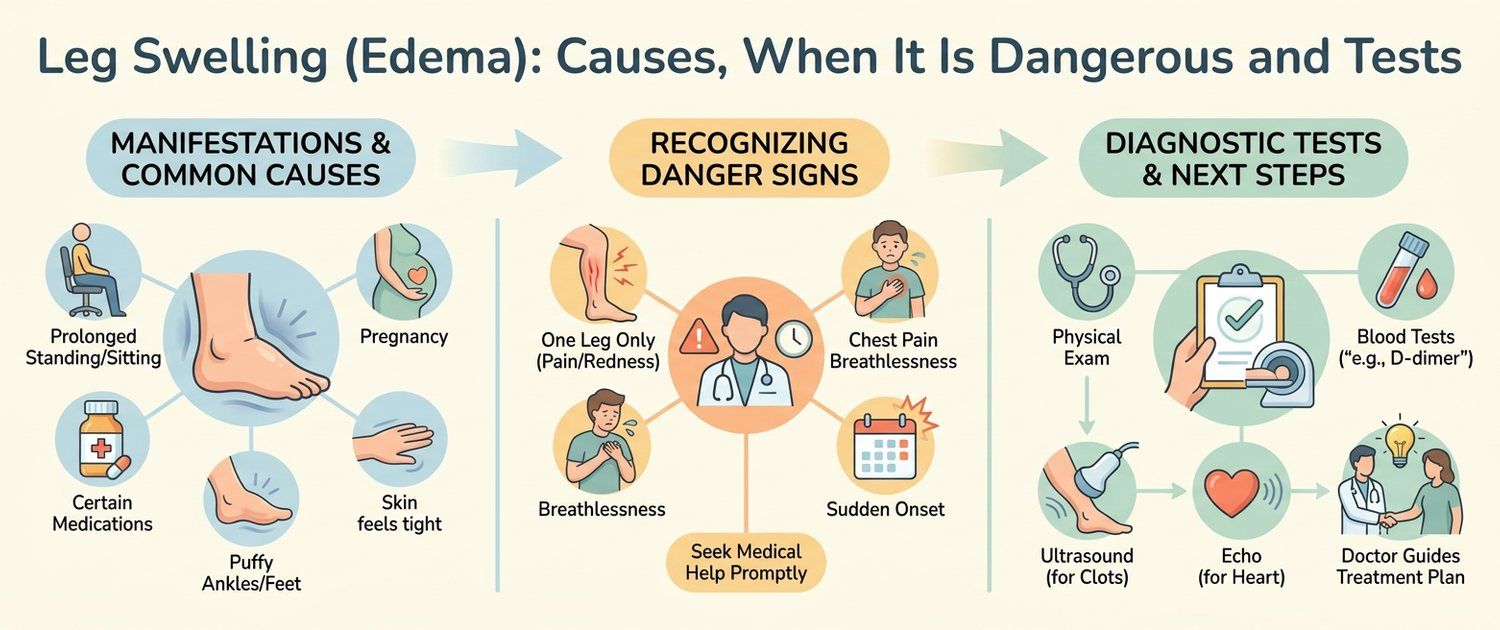
Legs that swell by evening are familiar to many — and often it is simply the result of long standing, heat or salt in the diet. But if the legs swell regularly, symmetrically, do not subside overnight, or appear together with breathlessness, heart, kidney, liver or vein disease may lie behind it. Here is why legs swell and which tests help find the cause.
When Leg Swelling Is Normal and When It Is a Symptom
Mild puffiness by the end of the day that resolves overnight — after long sitting, a flight, heat or excess salt — is usually harmless. Swelling is concerning when it persists, worsens, does not subside by morning, or comes with breathlessness or sudden weight gain. It matters whether it is symmetrical (both legs — more often a systemic cause) or one-sided (one leg — possible vein thrombosis, needs urgent assessment).
Heart: Swollen Legs in Heart Failure
In heart failure the heart pumps blood less effectively, it backs up, and fluid moves into the tissues — both shins swell and breathlessness grows, especially lying down. BNP, a heart-failure marker, helps in the assessment; more detail in the article on heart failure. Cardiac swelling usually worsens by evening and comes with breathlessness on exertion.
Kidneys: Why Legs Swell
Kidney disease impairs the removal of fluid and protein — swelling appears, often on the face and eyelids in the morning too. Kidney function is assessed with creatinine and urea, plus a urine protein test; see the article on chronic kidney disease. With large protein loss in the urine, nephrotic syndrome develops with marked swelling.
Liver, Protein and Swelling
Liver disease lowers production of the protein albumin, which keeps fluid in the vessels; when it is low, fluid leaks into the tissues. Low albumin also occurs in severe bowel disease and malnutrition. So with persistent swelling, blood protein and liver markers are assessed too.
Venous Insufficiency and Varicose Veins
The most common cause of chronic leg swelling in adults is venous insufficiency: the vein valves work less well and blood pools in the legs. Swelling worsens by evening and in heat, often with heaviness, varicose veins and skin changes. It is usually a clinical diagnosis; when in doubt, a vein ultrasound is done.
Medications, the Thyroid and Other Causes
A number of drugs cause swelling (some blood-pressure medications, anti-inflammatories, hormones). An underactive thyroid (hypothyroidism) causes firm swelling — it is worth checking TSH. Pregnancy, prolonged immobility and excess salt also contribute.
Which Tests to Take for Leg Swelling
A sensible starting set for persistent symmetrical swelling:
- Kidney chemistry — creatinine, urea; a urine protein test.
- BNP — when heart failure is suspected; albumin and liver markers.
- TSH — the thyroid.
If you are not sure where to begin, you can describe your symptoms — the service suggests likely causes and which tests to discuss with your doctor.
When to Seek Urgent Care
Seek urgent care if ONE leg has swollen and is hot, red and painful — this may be deep vein thrombosis (assessed with a D-dimer and ultrasound), and with accompanying breathlessness and chest pain it is a reason to call emergency services. A routine work-up is needed for persistent bilateral swelling, especially with breathlessness or weight gain.
This article is for informational purposes only and does not replace a doctor's consultation. The set of tests and any treatment are chosen by a specialist.
For informational purposes only
This article is for informational purposes only and does not constitute medical advice, diagnosis, or treatment. Please consult a healthcare professional for medical guidance.