Semaglutide and tirzepatide side effects: what to do
Reviewed by the LabReadAI medical team
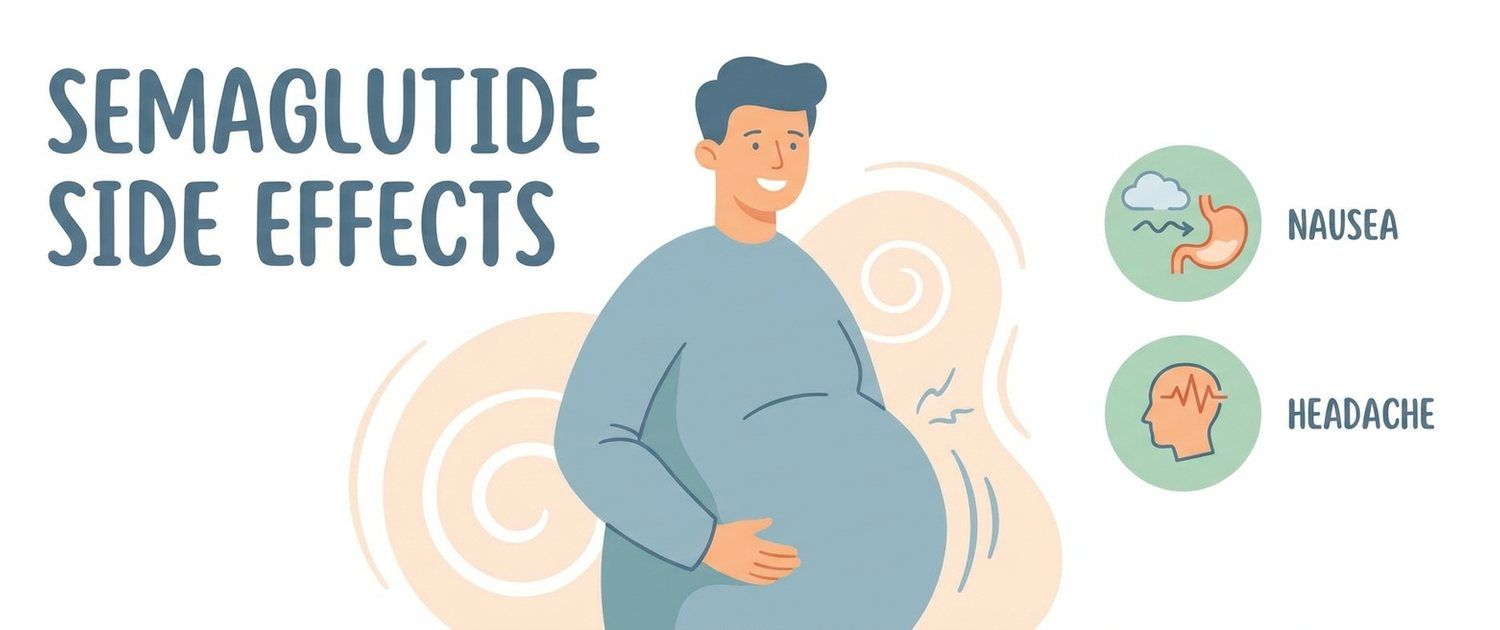
Side effects of these medicines divide neatly into two groups, and the division is practically useful. The first is the direct action of the drug itself, mostly on the gastrointestinal tract. The second follows from rapid weight loss as such: it would occur without any medication if someone lost weight equally fast another way. They call for different responses.
Semaglutide and tirzepatide side effects in the gut
Nausea, fullness, belching, constipation or diarrhoea are the most common side effects of semaglutide and tirzepatide, and the most common reasons people stop treatment. The mechanism is direct: this drug class slows gastric emptying, so food stays longer.
The typical pattern: effects are strongest at the beginning and in the first days after each dose increase, then gradually ease. That is precisely why the dose is raised in steps rather than straight to target.
What usually helps: smaller portions, eating slowly, less fatty and fried food, not lying down straight after eating, enough fluid and fibre for constipation. If nausea prevents normal eating or vomiting persists, that is a reason to contact your doctor rather than endure it — dehydration is more dangerous than the discomfort itself.
Gallbladder: what happens with rapid weight loss
Rapid weight loss is a known risk factor for gallstones regardless of what causes the loss, because bile composition changes and the gallbladder contracts less when food volume drops.
The signal not to ignore: intense pain in the right upper abdomen, often radiating to the back or right shoulder, frequently after fatty food, sometimes with nausea, fever or yellowing. That warrants prompt medical attention.
Pancreas: pancreatitis on semaglutide and tirzepatide
Pancreatitis is a rare but serious effect, and recognising it matters. The characteristic picture: severe upper abdominal pain, often belt-like, radiating to the back, with nausea and vomiting, worse when lying down. This is an emergency.
Routinely checking amylase and lipase in everyone is not useful — asymptomatic elevations occur and do not mean disease. But once that pain appears, those tests together with an examination become central, and a doctor orders them.
Liver: what happens to ALT and GGT
Here the effect is more often positive: as weight falls, fatty liver disease usually regresses and ALT and GGT come down. The opposite also occurs — with very rapid loss, enzymes may rise temporarily.
In practice this means liver markers are worth following over time rather than once: a single elevation says little, a trend says a lot. Including a liver panel in follow-up testing is sensible.
Muscle, hair and deficiencies during weight loss
These are the «weight-loss effects» rather than drug effects, and they are the most underestimated.
Muscle loss. During rapid loss, muscle goes along with fat, and that hurts metabolism: less muscle means lower resting energy expenditure and easier regain later. The countermeasure is known and works — adequate protein and resistance training. That is not advice about appearance but a way to keep the result.
Hair shedding. Usually telogen effluvium — a reaction to an abrupt change in intake and weight, starting 2–3 months after the start and resolving over time. But deficiencies are almost always nearby, and those are worth checking: ferritin, vitamin D, B12, TSH.
Deficiencies. When food volume falls, micronutrient intake falls with it — arithmetic, not a complication. Periodic checks of iron and vitamin stores during long treatment are therefore reasonable.
When to seek help immediately
Severe abdominal pain, especially belt-like, with vomiting. Intense right upper abdominal pain. Repeated vomiting with signs of dehydration. Yellowing of skin or eyes. Everything else should not be endured for months but discussed with your doctor: adjusting dose and pace usually solves it.
To understand what of this shows up in your bloodwork, a read of your labs will separate what the weight loss and the drug explain from what deserves attention on its own.
For informational purposes only
This article is for informational purposes only and does not constitute medical advice, diagnosis, or treatment. Please consult a healthcare professional for medical guidance.