Chronic Stress: Lab Tests and Biochemical Markers of Load
Reviewed by the LabReadAI medical team
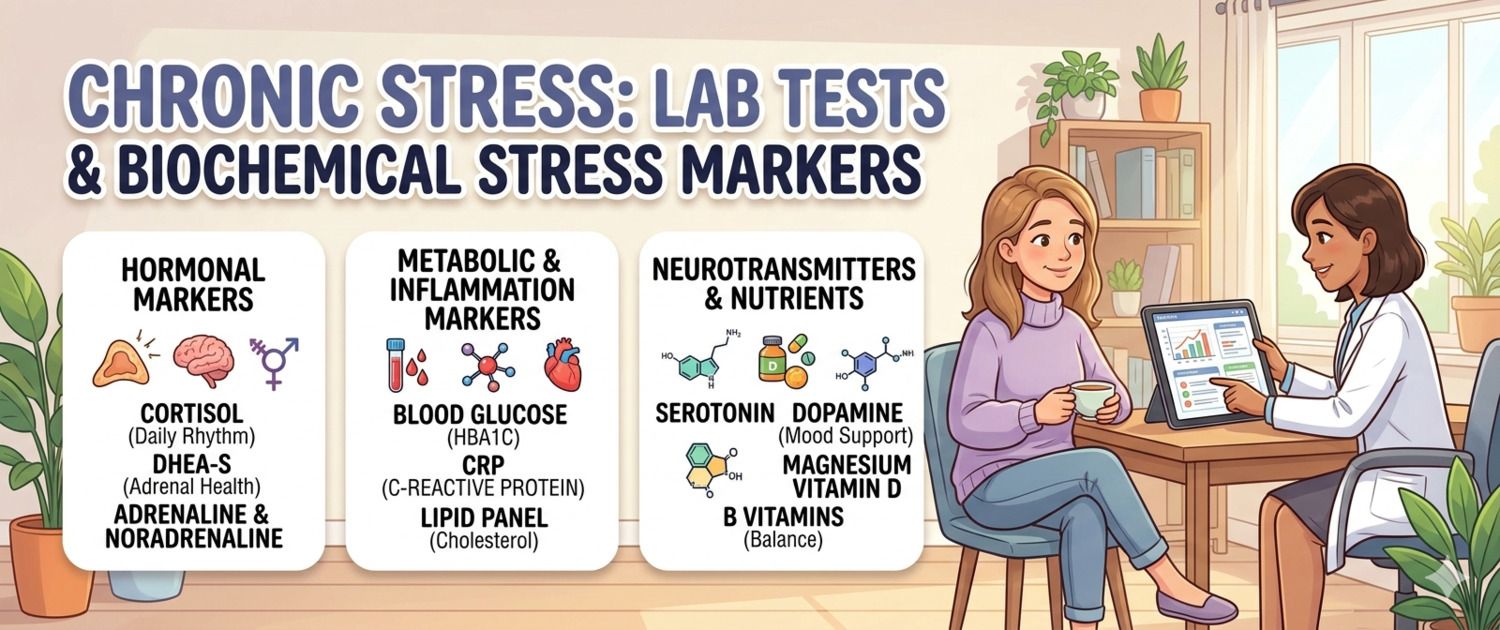
Chronic stress is a phrase that often sounds like a "general complaint" without concrete content. In reality it is a state with clear biochemical markers and definite health consequences. Sustained activation of the hypothalamic-pituitary-adrenal axis changes dozens of hormones and neurotransmitters, and these changes are visible in lab work. The key is knowing which markers to check and how to interpret them in combination.
What Chronic Stress Is
Acute stress is a normal and useful response: a brief mobilization after which the body returns to rest. Chronic stress is weeks-to-months activation of the stress system without adequate recovery. The HPA axis runs "at increased frequency" continuously, leading to gradual resource depletion and systemic changes.
Signs of chronic stress:
- Persistent fatigue not relieved by rest
- Sleep disturbance (insomnia, early awakenings)
- Anxiety, emotional lability
- Concentration issues, forgetfulness
- Weight changes (often gain, especially abdominal)
- Sweet cravings, snacking
- Reduced libido, cycle disruption
- Frequent infections, slow recovery
- Somatic symptoms — headaches, back pain, GI complaints
If 5+ features persist for 3–6 months, lab workup makes sense to assess the degree of functional disturbance.
Biochemical Markers of Chronic Stress
Chronic stress shows up at several levels:
Hormonal:
- Elevated cortisol (especially evening)
- Reduced DHEA-S
- Altered cortisol/DHEA-S ratio (shift toward cortisol)
- Suppressed sex hormones (low testosterone in men, cycle disruption in women)
- Suppressed T4→T3 conversion (functional hypothyroidism with normal TSH)
- Elevated prolactin (in acute stress)
Metabolic:
- Reduced insulin sensitivity (HOMA-IR > 2.5)
- Dyslipidemia — higher triglycerides, lower HDL
- Accelerated glycation (elevated HbA1c)
Nutritional:
- Reduced ferritin — stress impairs iron absorption
- Magnesium deficiency — stress increases urinary loss
- Reduced vitamin D through chronic inflammation
- B-vitamin deficiency (especially B6, B12)
Inflammatory:
- Elevated C-reactive protein (low-grade)
- Elevated fibrinogen
- Cytokine activation (IL-6, TNF-α)
This is a composite picture: no single marker diagnoses "chronic stress," but their combination gives an objective basis for the conversation with a clinician.
Which Tests to Take
Base set for assessing the lab profile of chronic stress:
Stress block:
- Morning (8:00–10:00) and evening (4:00–6:00 PM) cortisol — circadian rhythm
- DHEA-S — ratio with cortisol
- ACTH — to localize the lesion within the HPA axis
- Prolactin — stress marker
Conveniently drawn as one adrenal stress panel.
Thyroid block:
- TSH + free T4
- With high TSH — anti-TPO antibodies, free T3
- Best taken via a thyroid panel
Metabolic block:
- Fasting glucose + insulin (HOMA-IR)
- HbA1c
- Lipid profile
Nutritional block:
- Ferritin (target > 50 ng/mL)
- Vitamin D 25-OH
- Vitamin B12, folate
- Red-cell magnesium
Inflammation block:
- High-sensitivity C-reactive protein
- Homocysteine
This comprehensive approach gives an objective picture of the "biochemical weight" of chronic stress and reveals deficiencies that amplify symptoms and respond to correction.
Stages of Chronic Stress
Chronic stress develops in stages, each with a characteristic lab profile. In the later stages an inability to start tasks almost always joins in — the mechanism is unpacked in the article on procrastination:
Stage 1 — mobilization (1–3 months). HPA axis runs in heightened mode. Cortisol elevated, DHEA-S normal or slightly reduced. Circadian rhythm partly preserved. Symptoms moderate: fatigue, occasional anxiety.
Stage 2 — sustained activation (3–12 months). Cortisol persistently elevated, especially evening. Flattened rhythm. DHEA-S reduced 20–40%. A metabolic shift appears: insulin resistance, weight gain, sleep disturbance. Ferritin and vitamin D fall.
Stage 3 — exhaustion (more than 12 months). Morning cortisol falls; evening may remain elevated. DHEA-S substantially reduced. Overt somatic features develop: hypertension, cycle disruption, reduced libido, depressive episodes. This is already clinical burnout — see emotional burnout: symptoms and tests.
Stage 4 — pathology. With continued load, specific diseases develop: metabolic syndrome, type 2 diabetes, hypertension, anxious-depressive disorders. This is no longer "stress" — these are its complications.
Chronic Stress vs Burnout vs Cushing's
The three overlap clinically but differ in lab signatures:
Chronic stress (functional hypercortisolism):
- Cortisol modestly elevated (20–50%)
- Circadian rhythm preserved but flattened
- Dexamethasone suppression test shows suppression
- No Cushingoid stigmata
Burnout (late stress):
- Morning cortisol low or normal
- Evening cortisol elevated
- DHEA-S substantially reduced
- Linked to specific load (work, caregiving)
Cushing's syndrome:
- Cortisol substantially elevated
- Circadian rhythm lost
- Dexamethasone suppression fails
- Characteristic stigmata: purple striae, central obesity, proximal weakness
Differential diagnosis is by an endocrinologist on combined data. For pathological hypercortisolism, see Cushing's syndrome.
Strategies for Lowering Chronic Stress
Effective stress reduction combines behavioral, lab-targeted, and psychotherapeutic interventions:
- Sleep — priority #1. Regular schedule (in bed by 11 PM), 7–9 hours
- Nutrition — sugar stabilization through regular protein and slow-carb meals
- Physical activity — moderate regular load + strength training 2–3 times per week
- Psychotherapy — CBT is effective for anxious-depressive components
- Replacing deficiencies — ferritin, B12, folate, vitamin D, magnesium per lab results
- Adaptogens — ashwagandha, rhodiola in moderate doses with confirmed stress
- Caffeine and alcohol restriction
For cortisol-lowering biochemistry, see how to lower cortisol. For anxiety tools, see anxiety: which lab tests.
When to See a Doctor
Self-management is appropriate in early stages. Hard criteria for in-person consultation:
- Chronic stress lasting more than 6 months and unresponsive to lifestyle change
- Somatic symptoms (weight loss > 10%, arrhythmias, marked hypertension)
- Depressive thoughts, apathy, suicidal ideation — emergency psychiatric consult
- Stress in pregnancy — mandatory obstetric supervision
- Stress combined with overt endocrine disease (diabetes, thyroid pathology)
Chronic stress rarely comes from nowhere: usually it has an address. What exactly is burning is broken into six areas in the article on burnout at work, and what the evidence supports doing about it is in the text on how to come out of burnout.
This article is for informational purposes only and does not replace professional medical advice. Chronic stress is a clinical, psychological, and organizational matter at once.
For informational purposes only
This article is for informational purposes only and does not constitute medical advice, diagnosis, or treatment. Please consult a healthcare professional for medical guidance.