Who should not take weight-loss medication: contraindications
Reviewed by the LabReadAI medical team
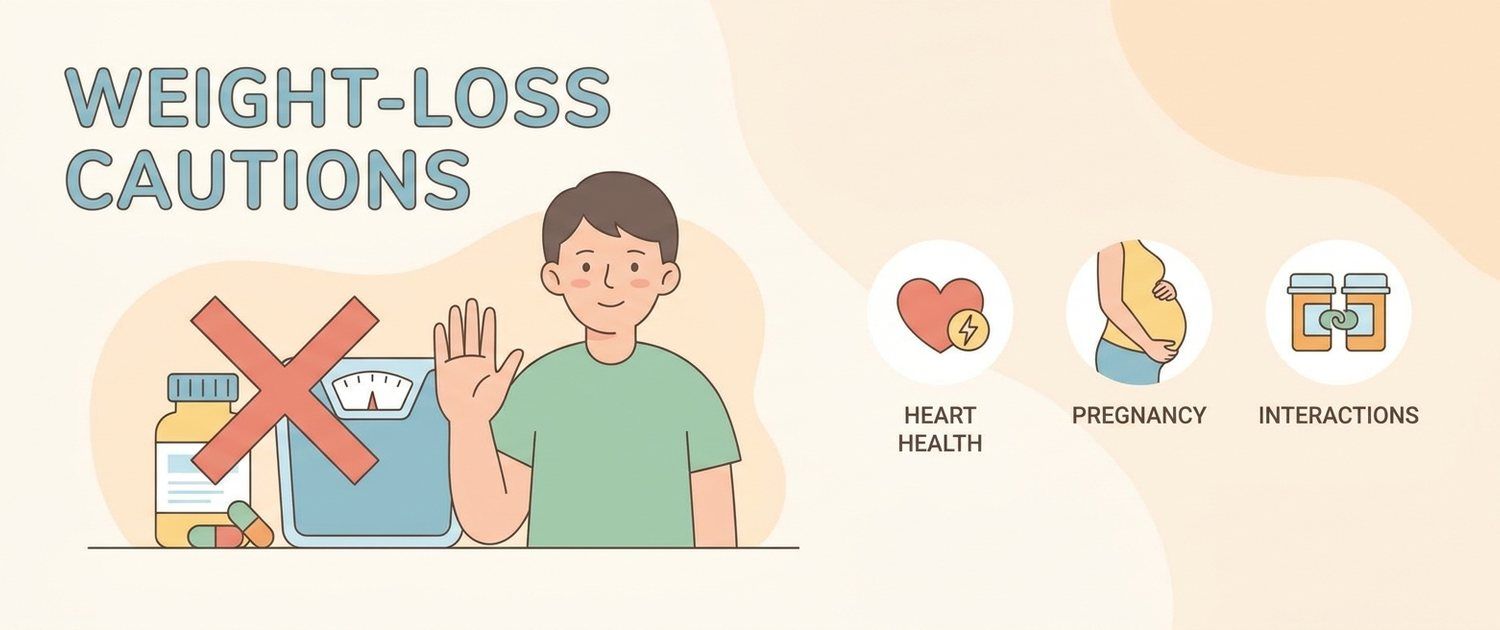
GLP-1 receptor agonists are prescription medicines, and that is not bureaucracy: there are conditions in which they must not be used, and conditions in which they can be used but require caution and monitoring. Below is what falls into each group and what to tell your doctor beforehand.
Absolute contraindications
Personal or family history of medullary thyroid carcinoma and multiple endocrine neoplasia type 2 (MEN 2). This is the defining restriction of the class, based on preclinical data regarding effects on thyroid C-cells. That is why a doctor asks not only about your health but about thyroid disease in close relatives.
Pregnancy and breastfeeding. Weight loss is not a goal during pregnancy, and safety in this period is not established. If you are planning a pregnancy, timing of discontinuation is discussed with your doctor in advance.
Known hypersensitivity to the drug or its components.
Conditions requiring caution
These are not prohibitions but elevated risks, and decisions are individual.
Previous pancreatitis. Pancreatitis is described as a rare adverse effect of the class, so a past episode changes the benefit-risk balance. Warning signs are covered in the article on side effects.
Gallstone disease. Rapid weight loss itself raises the risk of stone formation and flares, regardless of the drug.
Gastroparesis and marked gut motility disorders. These drugs slow gastric emptying — the same direction as the disease.
Inflammatory bowel disease in an active phase.
Severe renal or hepatic impairment — requires medical assessment, and significant vomiting with dehydration can worsen kidney function.
Diabetic retinopathy — temporary worsening has been described with rapid glucose lowering, so the retina is assessed beforehand.
History of eating disorders — a separate and often overlooked situation that calls for a relevant specialist.
Combining with other medicines
The combination needing most attention is with other glucose-lowering agents, above all insulin and sulfonylureas: hypoglycaemia risk rises and doses are revised by a doctor.
Because gastric emptying is slowed, absorption of oral medicines can change. This is not always clinically significant, but if you take drugs with a narrow therapeutic window, mention it explicitly.
What to tell your doctor before starting
Thyroid disease in you and in blood relatives. Previous pancreatitis, gallstones, gastrointestinal surgery. Kidney and liver disease. Diabetes and every medicine you take for it. Pregnancy, pregnancy planning, breastfeeding. Any history of eating disorders. A full list of medicines and supplements.
Which tests may be needed
The specific set is decided by your doctor. Often it is a baseline assessment of metabolism and organ function: glucose and insulin, HbA1c, a lipid panel, liver enzymes, creatinine with filtration estimated, TSH and a thyroid panel if indicated, and calcitonin at the doctor's discretion when the history warrants it.
If you already have results, you can read them as a whole and arrive with a clear picture and specific questions — that saves a noticeable amount of appointment time.
The main point
This article does not replace a consultation and is not a self-check tool for «am I allowed or not». Its purpose is to tell you what to ask about and what not to forget to mention. Prescribing, drug choice, dosing and discontinuation remain with your doctor.
For informational purposes only
This article is for informational purposes only and does not constitute medical advice, diagnosis, or treatment. Please consult a healthcare professional for medical guidance.